Hair loss is a deeply personal journey. Whether you are noticing a thinning crown, a receding hairline, or diffuse shedding, the search for an effective solution can feel overwhelming. You’ve likely seen the ads: sleek caps and helmets promising to restore your hair with light.
But the million-dollar question remains: Do laser red light hair growth caps actually work for hair loss?
The answer, backed by decades of clinical research and FDA clearances, is a resounding yes—provided you choose the right device. In this article, we will explore the science behind Low-Level Laser Therapy (LLLT), and introduce you to two of the most effective solutions on the market: the advanced T02 Laser Hair Growth Helmet and the convenient Laser Red Light Hair Growth Cap .
The Science of Photobiomodulation: How Light Triggers Hair Growth
To understand why these devices work, we must look at the hair follicle itself. Hair loss, particularly Androgenetic Alopecia (male and female pattern baldness), is often caused by a combination of genetics and the hormone DHT, which shrinks hair follicles over time.
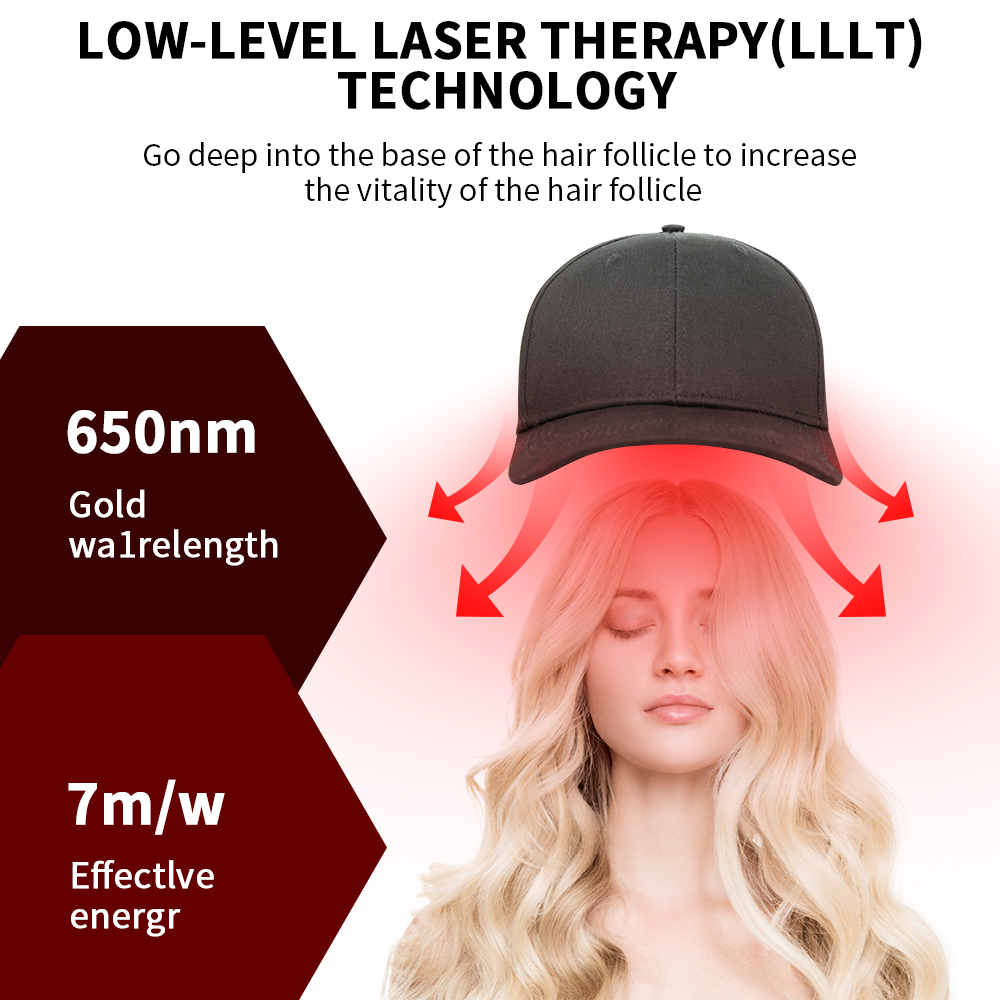
Low-Level Laser Therapy (LLLT), also known as photobiomodulation, works by delivering specific wavelengths of light (typically 650nm) directly to the scalp. Here is what happens at the cellular level:
-
Cellular Energy Boost: The light energy is absorbed by mitochondria within the cells of hair follicles. This stimulates the production of Adenosine Triphosphate (ATP), the fuel that powers cellular activity .
-
Increased Blood Flow: LLLT promotes vasodilation, increasing blood circulation to the scalp. More blood means more oxygen and nutrients delivered to starved follicles .
-
Cellular Proliferation: The light encourages the multiplication of cells in the hair bulb, pushing follicles from the resting (telogen) phase into the active growth (anagen) phase .
As noted in a 2024 systematic review published in Lasers in Medical Science, “Low-level laser therapy is a safe and effective monotherapy for androgenetic alopecia” .
Laser vs. LED: Why “Laser” Matters for Hair
You may have noticed that many skin masks use LED light. For hair growth, however, laser light (coherent light) offers distinct advantages. Lasers provide a concentrated, focused beam that penetrates the scalp more effectively to reach the follicle bulb, which sits deeper in the dermis.
This is why devices like our T02 Laser Hair Growth Helmet utilize medical-grade laser diodes rather than standard LEDs. They deliver precise energy exactly where it is needed.
Meet the Solutions: T02 Helmet and Laser Cap
We offer two FDA-cleared solutions to fit different lifestyles and degrees of hair loss. Both utilize clinically-proven laser technology to combat thinning.
Maximum Coverage and Power: T02 Laser Hair Growth Helmet
For those seeking the most comprehensive treatment, the T02 Laser Hair Growth Helmet is our flagship device.
-
Design: A rigid, ergonomic helmet that ensures consistent, hands-free coverage of the entire scalp. Once you put it on, you can relax, read, or use your phone while it works.
-
Laser Count: The T02 is equipped with a high density of medical-grade laser diodes, ensuring every square inch of your scalp receives a therapeutic dose of energy.
-
Ideal For: Individuals with moderate to advanced thinning who want the most powerful, efficient treatment available. It is also perfect for those who prefer a “set it and forget it” experience.
Portability and Flexibility: Laser Red Light Hair Growth Cap
For the modern, active individual who travels frequently or prefers a more discreet option, the Laser Red Light Hair Growth Cap is the ideal companion.
-
Design: A flexible, cap-style device that conforms to the head. It is lightweight and portable, easily fitting into a gym bag or carry-on luggage.
-
Technology: While flexible, it does not compromise on power. It combines laser diodes with red light LEDs to provide comprehensive photobiomodulation.
-
Ideal For: Frequent travelers, those who want to use the device while moving around, or individuals who prefer a softer, more flexible material.
What the Evidence Says: Clinical Backing
The efficacy of LLLT for hair regrowth is not anecdotal; it is clinical.
-
A 2023 study involving a laser cap similar to our Laser Red Light Hair Growth Cap demonstrated significant increases in terminal hair density after 24 weeks of use .
-
The FDA has cleared multiple LLLT devices for hair regrowth, including those in the T02 category, affirming their safety and efficacy .
-
Research indicates that combining 650nm laser light with red light LEDs, as featured in our cap, creates a synergistic effect, enhancing cellular metabolism and growth factor release .
Safety: A Drug-Free Alternative
One of the greatest advantages of laser therapy is its safety profile. Unlike pharmaceutical interventions like finasteride, which carry potential side effects related to hormones, LLLT is non-invasive and topical. The light energy stimulates the follicle without introducing chemicals to the body.
It is safe for both men and women, and can be used in conjunction with topical treatments like minoxidil for enhanced results .
Who Should Avoid or Use Caution with Red Light Therapy?
From preventing you from stepping on legos, precisely cutting metals, allowing us to see colours (well, see anything at all really), to restoring and rejuvenating body functions and turning back time on aesthetic features without a drop of blood glistening on that scalpel blade – light can do many wonderful things. We co-evolved with light and depend on it for our survival, sleep patterns, mood, and mental stability, but we’re also not the same as our ancestors. The biology of our bodies remains, but we’ve taken the light energy, for a long time only available when the cycles of nature allowed, and we enhanced it, creating devices and lifestyles unimaginable only a few generations ago, healing and rejuvenating with the power of concentrated light sources.
But no matter how many proven red light benefits and how benign the therapy (even something as harmless as a drink of water is dangerous to someone with internal bleeding, not because drinking water is dangerous, but because the circumstance makes it so), there are always exceptions we should know about that might have an adverse effect. So, who should avoid red light therapy? You should talk to a physician before use to discuss if RLT is safe for you, and exercise caution if you belong to any of the following groups:
- People with active skin cancer or a history of skin cancer
- Those with photosensitive conditions such as lupus or porphyria
- Individuals taking photosensitizing medications (e.g., tetracycline, doxycycline, lithium, some antipsychotics)
- People of darker skin tones may be prone to hyperpigmentation
- Pregnant women, due to limited long-term safety data
- Those with open wounds or skin lesions
- People with eye conditions or vision problems
How to Use Your Laser Device for Optimal Results
Consistency is the key to unlocking hair regrowth. Hair grows in cycles, and it takes time to wake up dormant follicles.
-
Consistency is King: Use your device every other day, or as recommended. Sporadic use will yield sporadic results.
-
Session Duration: Typical sessions last 15-30 minutes. With the T02 Laser Hair Growth Helmet , the timer is often automated for convenience.
-
Scalp Health: Ensure your scalp is clean and free of heavy products before treatment to allow maximum light penetration.
-
Patience: Most users begin to see results (reduced shedding, then new growth) between 3 to 6 months of consistent use. Full results typically manifest at the 12-month mark.
The Bottom Line: Does It Work?
So, do laser red light hair growth caps work for hair loss? Yes, they do.
The science is mature, the clinical data is positive, and the FDA has given its stamp of approval. However, success depends on using a high-quality, medically-engineered device.
With Photonic Health, you have two powerful choices:
-
Choose the T02 Laser Hair Growth Helmet for unmatched power and full-scalp coverage in a rigid, automated design.
-
Choose the Laser Red Light Hair Growth Cap for proven technology in a portable, flexible format that fits your on-the-go lifestyle.
Don’t let hair loss dictate your confidence. Take control with the power of light.
Ready to start your regrowth journey?
Explore our FDA-cleared laser collection today.
FAQs and a quick summary
What medications should be avoided with red light therapy?
Photosensitizing medications—such as certain antibiotics (tetracyclines), antifungals, chemotherapy drugs, or isotretinoin— may increase skin sensitivity to light. Individuals on strong immunosuppressants or anticoagulants should really talk to their doctor before using RLT.
Does red light therapy reach organs?
No, nor really. Surface red and near-infrared light can not penetrate deeply enough to reach any internal organs directly. But it can stimulate skin and superficial tissues, leading to systemic effects, such as improved circulation and reduced inflammation all over the body.
Can red light therapy cause melanoma?
No. Red light therapy emits red/NIR wavelengths and not UV radiation, which is known to increase cancer risk. The American Academy of Dermatology affirms RLT’s short-term safety. But if a person has active skin cancer, the rules of the game are unpredictable, so they should seek professional advice before using red light therapy.
Does red light therapy cause hyperpigmentation?
No, RLT does not cause hyperpigmentation and may even help treat existing pigmentation issues. The exception may be that excessive exposure can sometimes worsen pigmentation in darker skin types or with high-intensity use. So if your skin is of a darker tone, maybe consult a dermatologist or choose a different anti-aging treatment, just to be on the safe side.
Can red light therapy hurt your eyes?
RLT is safe for the eyes in healthy individuals when used as instructed and when wearing goggles for devices that require eye protection. Controlled use of specific red light therapy devices is even used to help with vision problems. But those with preexisting eye disease, degeneration, or photosensitivity should exercise caution
Can you overdo red light therapy?
Yes. You can get into a too much of a good thing situation. Though generally harmless, overuse can cause some irritation, like redness from excessive nitric oxide production, and can diminish the returns you were expecting. Please follow the recommended treatment intervals. The devices have been tested so you can have the privilege of knowing at what frequency and duration you can get the most out of it. Trust the information.
Can I use red light therapy after Botox?
Yes, you can, but not right away. Wait 24–48 hours post-injection to let Botox settle and avoid affecting results. Using RLT afterward minor procedures can support healing and collagen regeneration.
Is red light therapy safe for kids?
Early studies using repeated low-level red light to treat childhood myopia suggest acceptable safety in children. Still, RLT for pediatric skin or wellness is less studied—consult a pediatrician before use.