En el mundo de la fotobiomodulación (PBM), No toda la luz es igual. Una métrica destaca sobre el resto a la hora de evaluar la eficacia terapéutica: irradiancia. Para los consumidores, médicos, y compradores de negocios por igual, Comprender qué hace que un panel de terapia con luz roja de alta irradiancia sea realmente de alto rendimiento es esencial para lograr resultados significativos.. Esta guía completa analiza la ciencia de la irradiancia., explica por qué es importante, y proporciona criterios prácticos para seleccionar paneles que proporcionen potencia de grado clínico de forma segura y consistente.
Si te estás recuperando de un entrenamiento intenso, manejo del dolor crónico, o construir una marca de bienestar, Esta guía le ayudará a navegar por el panorama técnico y a realizar una inversión informada..
¿Qué es la irradiancia y por qué es importante??
La irradiancia mide el poder de la energía luminosa entregada a un área específica., expresado en milivatios por centímetro cuadrado (mW/cm²). Piensa en ello como el “intensidad” de luz terapéutica que llega a tu piel y tejidos.
La distinción crítica: Vatios frente a. irradiancia
Muchos consumidores confunden **potencia de entrada **(vatios)—la electricidad que consume un panel—con irradiancia de salida—la energía terapéutica real entregada. Un panel que reclama “1000W.” puede producir baja irradiancia si:
- Los LED están mal dispuestos o demasiado espaciados
- Las lentes ópticas dispersan la luz de manera ineficiente
- Los controladores o la gestión del calor limitan la estabilidad de salida
✅ Información clave: Irradiación a una distancia de tratamiento realista (p.ej., 6 pulgadas/15 cm) es el verdadero indicador del potencial terapéutico, no la potencia que figura en la caja del producto.
Por qué es importante la alta irradiancia
Las investigaciones sugieren que una fotobiomodulación efectiva generalmente requiere niveles de irradiancia entre 50 y 200+ mW/cm² en el sitio de tratamiento.. Una mayor irradiancia permite:
- Tiempos de sesión más cortos: Alcanzar dosis terapéuticas en 5 a 10 minutos en lugar de 20 a 30.
- Penetración más profunda: Una densidad fotónica suficiente llega a los músculos, articulaciones, y nervios.
- Resultados consistentes: La salida confiable reduce la variabilidad entre sesiones.
- Eficiencia clínica: Esencial para entornos comerciales donde el tiempo equivale a ingresos.
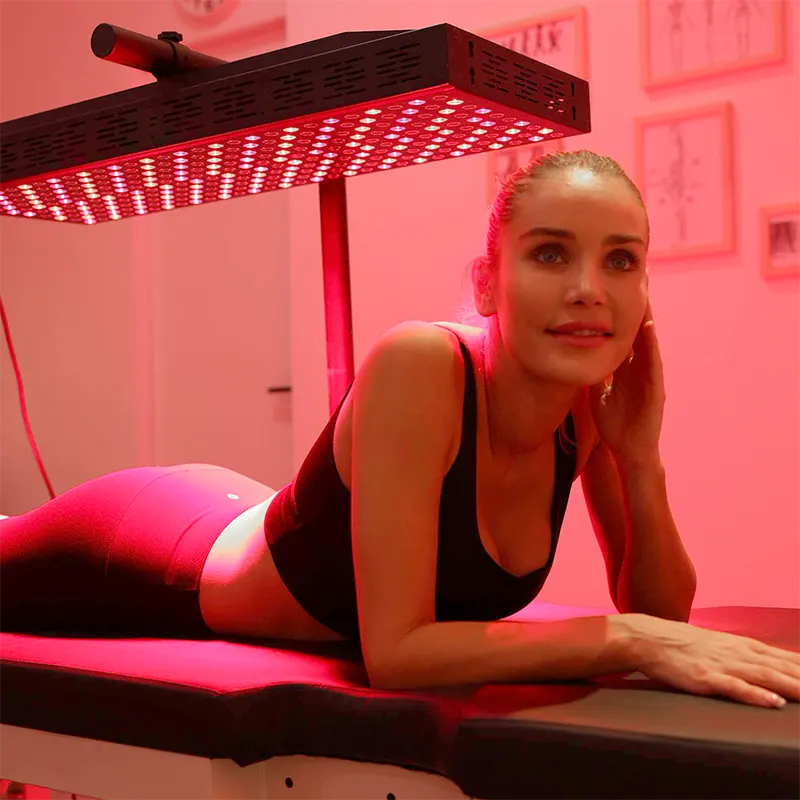
Comprensión de las métricas de irradiancia y los estándares de medición
🔹 Dependencia a distancia
|
Distancia
|
Reducción de irradiancia típica
|
Caso de uso
|
|---|---|---|
|
0 pulgadas (superficie del panel)
|
100% (base)
|
Sólo afirmaciones de marketing
|
|
6 pulgadas (15 centímetro)
|
~40–60% del valor de la superficie
|
Uso doméstico/clínico estándar
|
|
12 pulgadas (30 centímetro)
|
~15–25% del valor de la superficie
|
Aplicaciones de cuerpo entero o a distancia
|
⚠️ Bandera roja: Proveedores que sólo informan irradiancia en 0 Las pulgadas están inflando las afirmaciones sobre el rendimiento.. Fabricantes de renombre como Puroluxtech especificar irradiancia en 6 pulgadas (p.ej., ES300 ≥230mW/cm²).
🔹 Separación espectral
🔹 Mapeo de uniformidad
- Variación mínima (<±15%) entre el centro y los bordes
- No “zonas muertas” o puntos extremos
- Producción consistente en múltiples lotes de producción
Factores clave de ingeniería que impulsan la alta irradiancia
1. Calidad y arquitectura del chip LED
- Fichas Premium: Marcas como Epistar, San'an, o Bridgelux ofrecen una mayor salida de fotones y tolerancias de longitud de onda más estrictas.
- Tecnología de doble núcleo: La serie Esplus de Pureluxtech utiliza chips de doble núcleo que emiten luz de 660 nm y 850 nm simultáneamente desde una sola carcasa., aumentar la densidad de energía sin aumentar proporcionalmente el calor.
- Agrupación precisa: La clasificación de los LED por longitud de onda y voltaje garantiza una salida uniforme y evita fallos prematuros..
2. Diseño de lentes ópticas
- 30° lentes: Luz enfocada para una penetración más profunda: ideal para aliviar el dolor y recuperar los músculos..
- 60° lentes: Difunde la luz más ampliamente para cubrir la superficie: ideal para la salud de la piel..
- Matrices híbridas: Algunos paneles avanzados combinan ángulos de lente para equilibrar la profundidad y la cobertura..
3. Gestión Térmica
- Experiencia LED depreciación lumínica (atenuandose con el tiempo)
- Las longitudes de onda pueden deriva fuera de los rangos terapéuticos
- La vida útil de los componentes se reduce significativamente
✅ Solución Pureluxtech: Los paneles de las series E y Esplus cuentan con carcasas de aluminio de calidad aeronáutica con estructuras de aletas optimizadas para refrigeración pasiva.. Esto mantiene una salida estable durante sesiones prolongadas sin ventiladores ruidosos..
4. Eficiencia y estabilidad del conductor
- Regulación actual constante: Mantiene el brillo a pesar de las fluctuaciones de voltaje.
- **Alta eficiencia **(>90%): Reduce el desperdicio de energía en forma de calor.
- Soporte de modo de pulso: Permite frecuencias terapéuticas. (10Hz, 40Hz) sin distorsión de forma de onda
- Circuitos de protección: Previene daños por sobretensiones, calentamiento excesivo, o cortocircuitos
Cómo evaluar un panel de alta irradiancia: Lista de verificación del comprador
🔹 Verificar documentación técnica
- Informes del espectrómetro que confirman la precisión de la longitud de onda (Tolerancia de ±5 nm)
- Datos de irradiancia medidos en 6 pulgadas, no solo la superficie del panel
- Mapeo de irradiancia que muestra uniformidad en toda el área de tratamiento
- Certificación de terceros (CE, RoHS, FCC, Registro de la FDA)
🔹 Evaluar la calidad de construcción
- Carcasa de aluminio con diseño de disipador de calor pasivo
- Lentes de calidad óptica con revestimiento antirreflectante.
- Conectores de calidad industrial y cables libres de tensión.
- Hardware de montaje robusto para instalación clínica o doméstica.
🔹 Evalúe las funciones de usabilidad
- Control independiente de canales de 660 nm y 850 nm
- Temporizador ajustable y funcionalidad de atenuación.
- Opciones de modo de pulso para protocolos terapéuticos mejorados
- Interfaz intuitiva con indicadores de estado claros
🔹 Revisar soporte y garantía
- Garantía mínima de 3 años (5 años ideal para uso comercial)
- Proceso claro de RMA para unidades defectuosas
- Acceso a soporte técnico para dudas sobre instalación o protocolo.
- Disponibilidad de repuestos (conductores, lentes, controladores)
💡 Ventaja de Pureluxtech: Todos los paneles de las series E y Esplus se someten a 100% Pruebas de envejecimiento y verificación aleatoria con espectrómetro.. La garantía de 5 años refleja la confianza en la estabilidad de la irradiancia a largo plazo..
Pautas de uso para maximizar los beneficios de la alta irradiación
🔹 Distancia de tratamiento óptima
- **4–8 pulgadas **(10–20 centímetros): Punto óptimo para equilibrar la irradiancia y la cobertura
- Más cerca que 4 pulgadas: Aumenta la intensidad pero reduce el área de tratamiento.; puede causar malestar
- Más lejos que 8 pulgadas: Reduce drásticamente la irradiancia debido a la ley del cuadrado inverso
🔹 Duración y frecuencia de la sesión
- Protocolo típico: 5–15 minutos por área, 3–5 veces por semana
- Respuesta a la dosis bifásica: La exposición excesiva puede disminuir los rendimientos o causar enrojecimiento temporal.
- Consistencia sobre intensidad: Las sesiones moderadas regulares producen mejores resultados acumulativos que los tratamientos maratónicos ocasionales.
🔹 Estrategias específicas para objetivos
|
Meta
|
Enfoque recomendado
|
|---|---|
|
rejuvenecimiento facial
|
660enfoque, 6–8 pulgadas de distancia, 5–10 minutos
|
|
Recuperación muscular
|
850nm enfoque o combo, 4–6 pulgadas, 10–15 minutos
|
|
Alivio del dolor en las articulaciones
|
850énfasis, posicionamiento directo, 10–20 minutos
|
|
Bienestar de todo el cuerpo
|
Panel grande (ES900+), 6–12 pulgadas, 15–20 minutos por lado
|
🔹 Precauciones de seguridad
- Protección ocular: Utilice las gafas proporcionadas, especialmente con luz NIR invisible de 850 nm
- Sensibilidad de la piel: Comienza con sesiones de menor intensidad o más cortas si tienes la piel clara o sensible.
- Contraindicaciones: Consulte a un proveedor de atención médica si está embarazada., fotosensible, o usar medicamentos sensibles a la luz
Puroluxtech: Ingeniería de alta irradiancia para resultados reales
Líneas de productos diseñadas para la energía
- Serie E: Proporciona ≥230–300 mW/cm² a 6 pulgadas en todos los modelos desde ES300 (300W.) a ES4500 (4500W.). Ideal para usuarios que priorizan la eficiencia del tratamiento sin comprometer la seguridad..
- Serie Explus: Cuenta con tecnología de doble longitud de onda de doble núcleo y opciones NIR extendidas (hasta 1060 nm), logrando ≥130–220 mW/cm² con densidad de energía mejorada para aplicaciones terapéuticas avanzadas.
Rendimiento verificado, No sólo reclamaciones
Diseñado para la longevidad
La alta irradiancia no significa nada si la producción se degrada después de seis meses. La gestión térmica de Pureluxtech, agrupación de LED premium, y soporte robusto para el diseño del controlador 50,000+ horas de funcionamiento estable. Esta confiabilidad es la razón por la que ofrecen con confianza una garantía de 5 años en series de calidad comercial..
Implementación flexible para cualquier escala
Si necesitas un compacto ES300 para uso doméstico específico o en cadena Paneles ES2400 para una pared clínica completa, Pureluxtech admite una implementación escalable. Sus programas OEM permiten a las marcas personalizar los objetivos de irradiancia., relaciones de longitud de onda, e interfaces de control sin sacrificar el rendimiento central.
Conclusión final: La irradiación es la base de una terapia eficaz
Al evaluar los paneles de terapia de luz roja, La alta irradiancia no es negociable para lograr el tiempo., coherente, y resultados clínicamente relevantes. Pero la irradiancia por sí sola no es suficiente: debe administrarse mediante ingeniería de precisión., verificado mediante pruebas rigurosas, y respaldado por un diseño bien pensado para uso en el mundo real.
Al priorizar las métricas de irradiancia medidas a distancias realistas, verificando la documentacion tecnica, y eligiendo fabricantes comprometidos con la calidad como Pureluxtech, usted se asegura de que su inversión se traduzca en resultados de bienestar tangibles.
Si usted es una persona que busca una recuperación más rápida, un médico que construye una práctica acreditada, o un emprendedor que lanza una marca de bienestar, Comprender y exigir un rendimiento de alta irradiancia es el primer paso hacia el éxito en la fotobiomodulación..