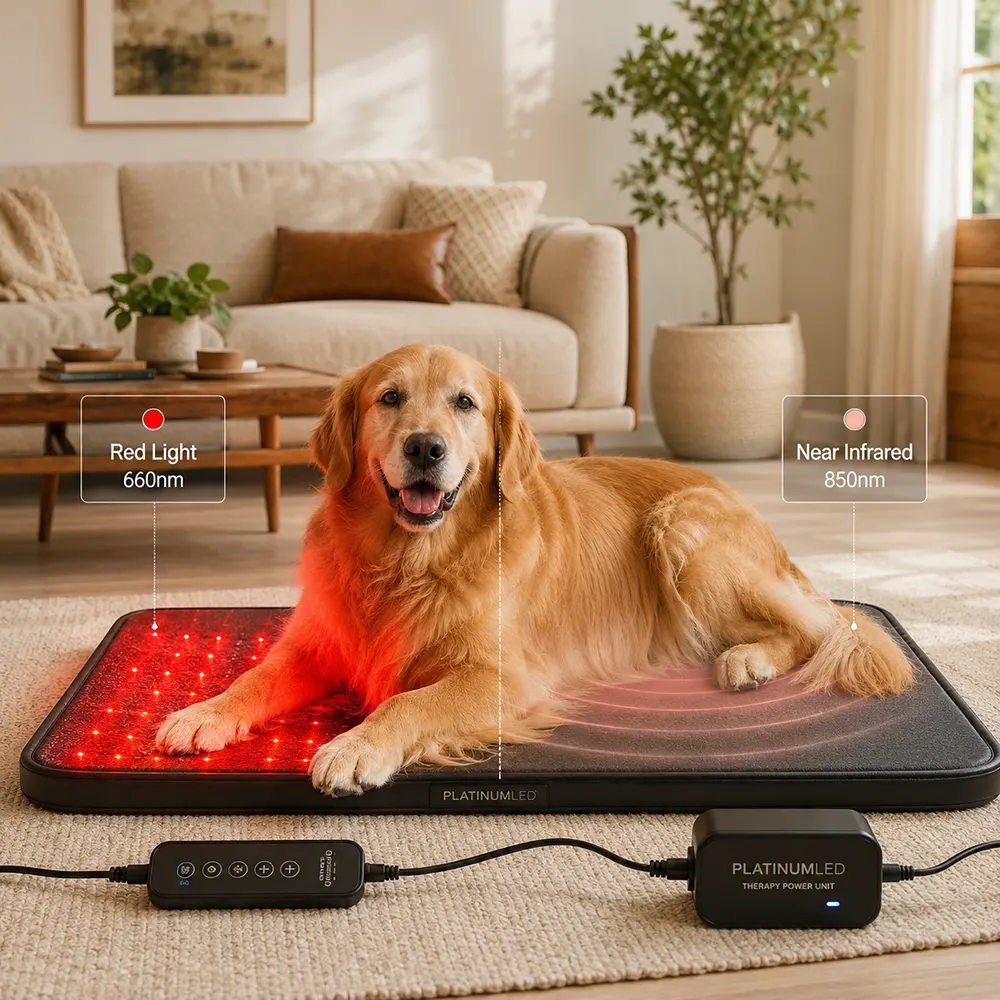
L’efficacité de la thérapie par la lumière rouge ne dépend pas seulement de l’allumage d’un panneau. Pour les appareils combinant **660 nm **(rouge visible) et **850 nm **(proche infrarouge) longueurs d'onde, la performance est déterminée par une interaction complexe d’ingénierie, qualité des composants, et protocoles d'utilisation. Comprendre ces facteurs d'influence est essentiel pour les fabricants qui conçoivent des produits OEM., les distributeurs évaluent les fournisseurs, et les utilisateurs finaux recherchant des résultats thérapeutiques optimaux.
Ce guide détaille les variables critiques qui ont un impact sur les performances réelles des panels de thérapie à double longueur d'onde., avec des informations pratiques tirées des normes de l'industrie et des pratiques de fabrication avancées comme celles employées par Pureluxtech.
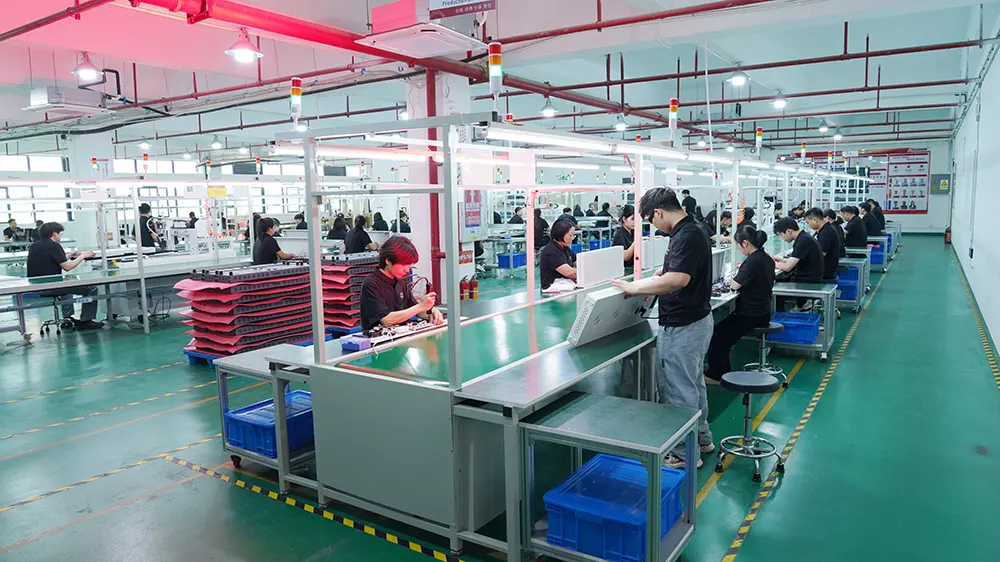
Qualité des puces LED et précision du regroupement
La base de tout panneau de luminothérapie réside dans ses puces LED.. Toutes les LED ne sont pas égales, et les variations de qualité affectent directement la cohérence et la longévité de la production..
🔹 Marque de puces et normes de fabrication
Les panneaux hautes performances utilisent des puces provenant de fabricants de semi-conducteurs réputés (par ex., Épistar, San'an, Bridgelux) qui respectent des tolérances de production strictes. Des alternatives moins coûteuses peuvent utiliser des puces recyclées ou sans marque avec une production de photons incohérente.
🔹 Binning et uniformité
“Regroupement” fait référence au tri des LED par longueur d'onde, tension, et intensité lumineuse. Un mauvais regroupement entraîne:
- Dérive de longueur d'onde: Certaines LED émettent à 655 nm tandis que d'autres atteignent 665 nm, spécificité thérapeutique diluante.
- Points chauds et zones sombres: Une répartition inégale de la lumière réduit l’efficacité du traitement.
- Échec prématuré: Des caractéristiques électriques incompatibles mettent à rude épreuve le circuit pilote.
✅ Norme Pureluxtech: Implémente des tolérances de regroupement strictes (±5 nm pour la longueur d'onde, ±0,1 V pour la tension directe) sur tous les panneaux des séries E et Esplus, garantissant un rendement uniforme et une durée de vie prolongée.
Précision de la longueur d'onde et stabilité spectrale
🔹 Tolérance de longueur d'onde maximale
🔹 Changement de longueur d'onde thermique
🔹 Méthode de vérification
- Mesures de longueur d'onde maximale
- Demi-largeur pleine largeur (FWHM) bande passante
- Stabilité de sortie sur un fonctionnement prolongé
💡 Pour un pourboire: Demandez à votre fournisseur des données de spectromètre spécifiques à un lot (et pas seulement des fiches techniques génériques) pour vérifier les performances réelles..
Irradiance et densité de puissance à distance de traitement
🔹 Comprendre la métrique
- **Puissance d'entrée **(Watts): Consommation électrique totale : n'équivaut pas au rendement thérapeutique.
- **Irradiance **(mW/cm²): Puissance lumineuse par unité de surface à une distance spécifique : le véritable indicateur d'efficacité.
🔹 Dépendance à la distance
🔹 Angle de faisceau et conception de la lentille
- 30° lentille: Faisceau focalisé pour une pénétration plus profonde (idéal pour soulager la douleur).
- 60° lentille: Couverture plus large pour les traitements de surface (idéal pour la santé de la peau).
- Conceptions hybrides: Certains modèles Pureluxtech Esplus utilisent des optiques à angle variable pour équilibrer la profondeur et la couverture.
⚠️ Drapeau rouge: Les fournisseurs qui déclarent l'irradiation uniquement à 0 pouces (surface du panneau) gonflent les allégations de performance.
Gestion thermique et dissipation thermique
- Dépréciation du lumen: Rendement lumineux réduit au fil du temps.
- Dérive de longueur d'onde: Le déplacement thermique réduit la précision thérapeutique.
- Défaillance d'un composant: La surchauffe endommage les pilotes et les LED.
🔹 Dissipation thermique efficace
- Boîtier en aluminium de qualité aéronautique avec une géométrie d'aileron optimisée.
- Conception de refroidissement passif (pas des fans) pour le silence, fonctionnement fiable.
- Matériaux d'interface thermique qui transfèrent efficacement la chaleur des LED au dissipateur thermique.
🔹 Sécurité de la température de surface
Qualité du pilote et stabilité de l'alimentation
- Cohérence des résultats: Sans scintillement, un courant stable assure une émission de lumière uniforme.
- Efficacité: Pilotes à haut rendement (>90%) réduire le gaspillage de chaleur et les coûts énergétiques.
- Longévité: Des condensateurs et des circuits de protection de qualité prolongent la durée de vie du panneau.
🔹 Principales fonctionnalités du pilote à spécifier
- Régulation à courant constant: Maintient la luminosité des LED malgré les fluctuations de tension.
- Capacité du mode impulsion: Permet des fréquences thérapeutiques (par ex., 10Hz, 40Hz) sans distorsion de la forme d'onde.
- Fonctionnalité de gradation: Ajustement fluide de 0 à 100 % sans décalage de couleur.
- Circuits de protection: Surtension, surintensité, court-circuit, et arrêt thermique.
✅ Avantage Pureluxtech: Utilise des pilotes conçus sur mesure avec des composants de qualité médicale, prenant en charge les modes continu et pulsé avec <1% facteur d'ondulation.
Uniformité du panneau et zone de couverture
🔹 Modèles de disposition des LED
- Disposition en grille: Un espacement uniforme minimise les points chauds et les ombres.
- Tableaux décalés: Améliorer le chevauchement pour un rayonnement plus uniforme.
- Optimisation des bords: Des LED supplémentaires aux bordures du panneau empêchent “chute” aux bords du traitement.
🔹 Couverture vs. Compromis d'intensité
- Mise à l'échelle du nombre de LED en fonction de la taille du panneau (par ex., ES300: 60 LED → ES4500: 900 LED).
- Maintenir des seuils d'irradiation cohérents sur toute la gamme de produits.
🔹 Méthode de mesure
Protocoles de traitement et facteurs d'utilisation
🔹 Distance de traitement
- Portée optimale: 4–8 pouces (10–20cm) pour la plupart des applications.
- Trop proche: Réduit la zone de couverture; peut provoquer un inconfort.
- Loin: Réduit considérablement l'irradiation grâce à la loi du carré inverse.
🔹 Durée et fréquence des sessions
- Principe de dosage: L’effet thérapeutique suit une courbe biphasique : plus n’est pas toujours mieux.
- Protocole typique: 10–20 minutes par zone, 3–5 fois par semaine.
- Cohérence: Des séances régulières génèrent des avantages cumulatifs; une utilisation sporadique limite les résultats.
🔹 Facteurs cutanés et tissulaires
- Teint de peau: La mélanine absorbe un peu de lumière rouge; une peau plus foncée peut nécessiter des séances légèrement plus longues.
- Vêtements: La lumière doit atteindre la peau directement : le tissu bloque les longueurs d'onde thérapeutiques.
- Hydratation: Les tissus bien hydratés transmettent la lumière plus efficacement.
Essai, Vérification, et assurance qualité
🔹 Protocoles de contrôle qualité au niveau de l'usine
|
Test
|
But
|
Fréquence
|
|---|---|---|
|
Vérification du spectromètre
|
Confirmer la précision de la longueur d'onde
|
Par lot
|
|
Cartographie de l'irradiance
|
Valider la distribution d'énergie
|
Par unité
|
|
Test de vieillissement (48-heure de rodage)
|
Identifier les premiers échecs
|
100% d'unités
|
|
Imagerie thermique
|
Détecter les points chauds ou les problèmes de refroidissement
|
Échantillonnage aléatoire
|
|
Test de chute/vibration
|
Assurer la durabilité de l’expédition
|
Par cycle de production
|
🔹 Certification tierce
- Précision de la longueur d'onde
- Allégations relatives à l'irradiation
- Conformité à la sécurité électrique
- Performances CEM/EMI
✅ Engagement Pureluxtech: Tous les panneaux des séries E et Esplus sont soumis 100% tests de vieillissement et vérification aléatoire au spectromètre, avec documentation de certification disponible pour les partenaires grossistes.
Qualité de construction et fiabilité à long terme
🔹 Sélection des matériaux
- Logement: Alliage d'aluminium (pas en plastique) pour la dissipation de la chaleur et la durabilité.
- Lentille: PMMA de qualité optique ou verre avec revêtement antireflet.
- Connecteurs: Plaqué or, câbles sans tension pour une alimentation électrique fiable.
🔹 Résilience environnementale
- Résistance à l'humidité: Important pour une utilisation au spa ou dans la salle de bain.
- Protection contre la poussière: Les conceptions scellées empêchent l'accumulation de particules sur les LED.
- Tolérance de tension: Large plage d'entrée (100–240 V CA) prend en charge une utilisation mondiale.
🔹 La garantie comme indicateur de performance
- 1-an de garantie: Norme pour les panneaux économiques.
- 3-an de garantie: Indique une qualité intermédiaire.
- 5-an de garantie: Ingénierie premium des signaux (par ex., Série Pureluxtech E/Esplus).
Liste de contrôle pratique: Évaluation des performances du panel
- Vérification de la longueur d'onde: Rapport du spectromètre montrant une tolérance de ± 5 nm
- Données d'irradiation: Mesuré à 6 pouces, pas seulement la surface du panneau
- Conception thermique: Boîtier en aluminium avec refroidissement passif
- Spécifications du pilote: Courant constant, prise en charge du mode impulsion, circuits de protection
- Cartographie d'uniformité: Répartition de l'irradiation sur la surface du panneau
- Certifications: CE, RoHS, FCC, Enregistrement FDA, le cas échéant
- Conditions de garantie: Minimum 3 années, idéalement 5 années
- Test d'échantillon: Évaluez toujours une unité de pré-production avant de commander en gros
Conclusion: L’excellence en ingénierie stimule les résultats thérapeutiques
Les performances d'un panneau thérapeutique de 660 nm à 850 nm ne sont pas accidentelles : elles sont le résultat de choix techniques délibérés à chaque étape de la conception et de la fabrication.. De la précision du tri des LED à la gestion thermique, de la stabilité du pilote à la validation de l'irradiation dans le monde réel, chaque facteur contribue à la capacité de l’appareil à fournir des performances cohérentes, résultats cliniquement pertinents.
Pour les entreprises développant des produits de marque privée, donner la priorité à ces spécifications garantit que votre marque est synonyme d'efficacité et de fiabilité. Pour les utilisateurs finaux, comprendre ces facteurs permet de prendre des décisions d'achat plus intelligentes et des protocoles de traitement plus efficaces.
Pureluxtech illustre cette approche axée sur la performance à travers:
- Tolérances de longueur d'onde serrées et sortie vérifiée par spectromètre
- Niveaux d'irradiation élevés maintenus sur des tailles de panneaux évolutives
- Conception thermique avancée permettant 50,000+ durée de vie des LED en heures
- Solutions OEM personnalisables qui ne font aucun compromis sur les spécifications de base
- Une garantie de 5 ans soutenue par un contrôle qualité rigoureux en usine
Dans le paysage évolutif de la photobiomodulation, les spécifications sont des promesses. En nous concentrant sur les facteurs qui influencent réellement la performance, vous veillez à ce que ces promesses se traduisent en résultats réels, pour vos clients, votre marque, et votre entreprise.
🔍 Prêt à concevoir des performances? Associez-vous à Pureluxtech pour développer des panneaux de thérapie par lumière rouge OEM qui répondent aux normes techniques les plus élevées. Demander une fiche technique, unité d'échantillonnage, ou proposition personnalisée aujourd'hui.