La transition mondiale vers les soins de santé préventifs et le bien-être personnalisé a catalysé une croissance sans précédent sur le marché des dispositifs médicaux à domicile.. Parmi les segments les plus prometteurs figure Photothérapie UVB—un traitement cliniquement prouvé pour les affections cutanées chroniques comme le psoriasis, vitiligo, eczéma, et lymphome cutané à cellules T. Historiquement confiné aux cliniques de dermatologie, La thérapie UVB s’installe désormais à domicile, motivé par la demande de commodité des patients, confidentialité, et des économies à long terme. Pour les marques cherchant à saisir cette opportunité, en partenariat avec un spécialiste Fabricant OEM d'appareils de luminothérapie UVB pour tout le corps à usage domestique est la clé stratégique pour assurer la sécurité, efficace, et des solutions commercialement viables.
La demande croissante de photothérapie UVB à domicile
Les affections cutanées chroniques affectent plus 125 millions de personnes dans le monde, le psoriasis touchant à lui seul 2 à 3 % de la population mondiale. Les parcours de traitement traditionnels nécessitent souvent 2 à 3 visites hebdomadaires à la clinique sur des mois ou des années, ce qui représente un fardeau important en termes de temps., voyage, et les frais remboursables. Les appareils UVB à domicile surmontent ces obstacles en permettant une, traitement supervisé dans le confort de son propre espace.
Une étude de marché indique que le segment de la photothérapie à domicile connaît une croissance de plus de 18%, alimenté par:
- Intégration de la télésanté: Surveillance à distance par des dermatologues et enregistrement numérique des traitements
- Tendances en matière de remboursement des assurances: Couverture croissante des appareils domestiques prescrits sur les marchés clés
- Adoption des technologies grand public: Confort croissant avec les appareils de santé connectés et la thérapie guidée par application
- Préférences post-pandémiques: Demande soutenue de produits non invasifs, solutions de soins à domicile
Pour les marques, cela représente un créneau de grande valeur avec un fort potentiel de fidélisation de la clientèle, mais seulement si les produits répondent à des critères cliniques rigoureux., sécurité, et normes d'utilisation.
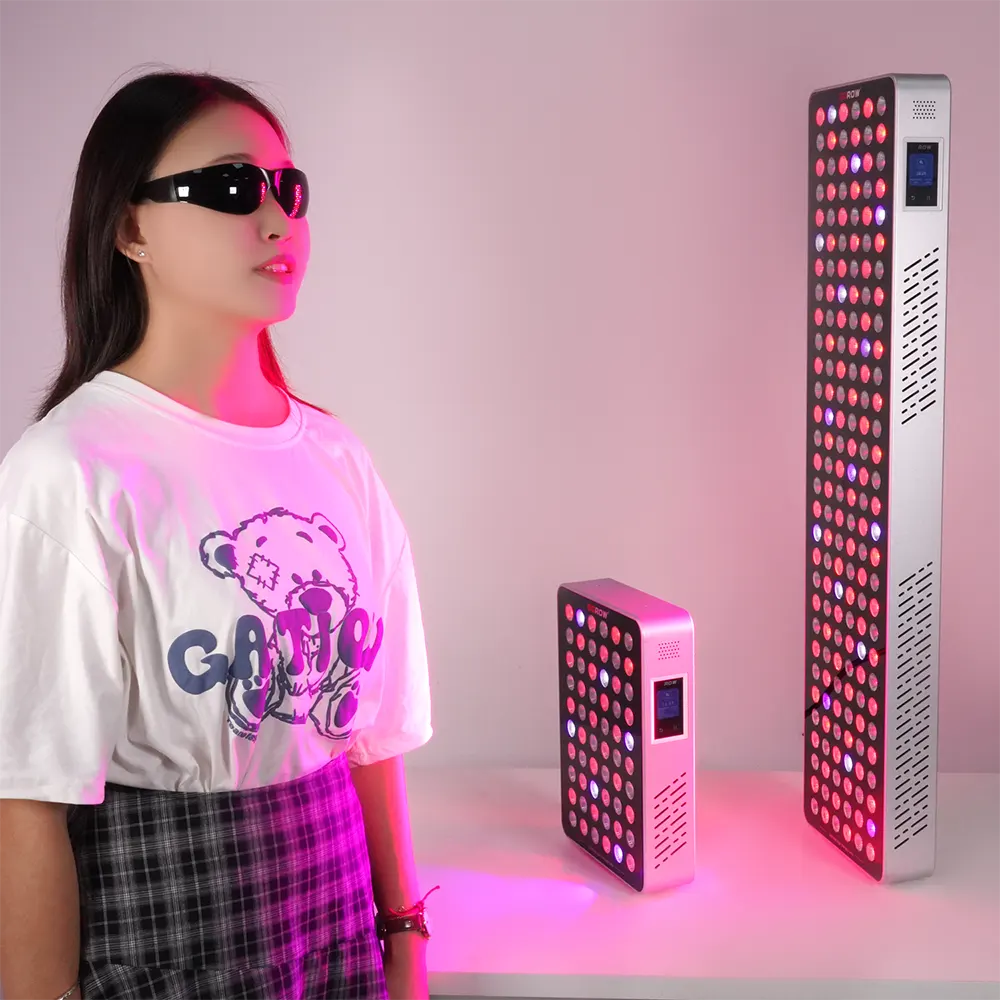
Défis techniques liés aux appareils UVB pour tout le corps à usage domestique
La conception d'un système UVB corporel complet pour les environnements non cliniques introduit des complexités d'ingénierie uniques qui nécessitent une expertise OEM spécialisée.:
🔹 Contrôle précis de la longueur d'onde: L'efficacité thérapeutique pour la plupart des affections cutanées repose sur les UVB à bande étroite (311–313 nm). Contrairement aux sources UV à large spectre, Les LED ou lampes à bande étroite nécessitent un regroupement précis, filtrage optique, et un retour en temps réel pour maintenir la stabilité de la longueur d'onde malgré les variations de température et la durée de vie de l'appareil.
🔹 Distribution uniforme de l'irradiation: Un panel complet du corps doit délivrer une dose UVB constante sur divers contours du corps : épaules, genoux, coudes – sans points chauds (risque d'érythème) ou zones froides (efficacité réduite). Géométrie de réflecteur avancée, ingénierie du diffuseur, et le contrôle de l'intensité multizone sont essentiels.
🔹 Gestion thermique à grande échelle: Les réseaux UVB à haut rendement génèrent une chaleur importante. Les appareils domestiques doivent fonctionner silencieusement et en toute sécurité sans systèmes de refroidissement industriels. Les solutions incluent un dissipateur thermique passif en aluminium de qualité médicale, contrôle intelligent du ventilateur, et protocoles de coupure thermique.
🔹 Verrouillages de sécurité utilisateur: Contrairement aux cliniques dotées d’un personnel formé, les appareils domestiques nécessitent plusieurs couches de protection: détection obligatoire des lunettes, boutons d'arrêt d'urgence, limitation de dose en fonction du type de peau, minuteries de session, et fonctions de sécurité enfants.
🔹 Compact, Conception esthétique: Les utilisateurs à domicile attendent des appareils qui s'intègrent parfaitement dans les espaces de vie. This demands slim profiles, palettes de couleurs neutres, gestion des câbles, et interfaces intuitives, sans compromettre les performances thérapeutiques.
Un partenaire OEM qualifié ne se contente pas d’assembler des composants; ils résolvent ces défis interdisciplinaires grâce à des optiques intégrées, électronique, mécanique, et génie logiciel.
Capacités de base d'un fabricant OEM UVB spécialisé à usage domestique
Lors de l’évaluation des fabricants d’appareils UVB corporels complets à usage domestique, prioriser les partenaires possédant ces compétences éprouvées:
✅ R de qualité médicale&DInfrastructures
Recherchez des fournisseurs disposant de laboratoires de photobiologie internes, spectroradiomètres pour la vérification des longueurs d'onde, et capacités de tests de dosimétrie. Ils doivent démontrer une expérience dans l’adaptation de protocoles cliniques (par ex., Stratification du type de peau selon Fitzpatrick, calculs de la dose minimale pour l'érythème) pour une mise en œuvre sécurisée pour le consommateur.
✅ Philosophie de conception axée sur la réglementation
Les meilleurs constructeurs OEM intègrent la conformité dès la phase de conception, et non après coup.. Cela comprend:
- Sécurité photobiologique selon CEI 62471 (classification du groupe de risque)
- Sécurité électrique selon CEI 60601-1 (pour dispositifs médicaux) ou CEI 60335-1 (pour appareils électroménagers)
- Tests EMC/EMI pour un accès au marché mondial
- Support documentaire pour FDA 510(k), Marquage CE, et MDSAP soumissions
✅ Intelligent, Intégration logicielle centrée sur l'utilisateur
Les appareils de thérapie à domicile modernes prospèrent grâce à la connectivité. Offre OEM leader:
- Applications mobiles complémentaires pour la planification des traitements, suivi des progrès, et partage de dermatologue
- Mises à jour du micrologiciel basées sur le cloud pour les améliorations de fonctionnalités et les correctifs de sécurité
- Recommandations de dose assistées par l'IA basées sur les commentaires des utilisateurs et la réponse cutanée
- Cadres de traitement des données conformes à la HIPAA/GDPR
✅ Évolutif, Production axée sur la qualité
Du prototype à la production de masse, votre OEM devrait maintenir:
- Systèmes de gestion de la qualité certifiés ISO 13485
- Tests de regroupement et de vieillissement des LED entrantes pour garantir la cohérence des longueurs d'onde
- 100% tests fonctionnels finaux avec certificats d'étalonnage d'irradiance
- Systèmes de traçabilité pour la préparation au rappel au niveau des composants
La sécurité dès la conception: Protéger les utilisateurs à domicile sans compromettre l'efficacité
La sécurité est la base non négociable de tout appareil UVB à usage domestique. Un OEM responsable met en œuvre une stratégie de protection à plusieurs niveaux:
🛡️ Protections matérielles
- Écrans en verre de sécurité ou en polycarbonate bloquant les UV pour empêcher les émissions parasites
- Arrêt automatique si le boîtier est ouvert pendant le fonctionnement
- Capteurs de température redondants avec circuits de coupure indépendants
- Lunettes certifiées anti-UV incluses et verrouillées avec l'activation de l'appareil
🛡️ Intelligence logicielle
- Calculateurs de dose personnalisés basés sur le type de peau saisi par l'utilisateur, condition, and treatment history
- Protocoles d’augmentation progressive de la dose pour minimiser le risque de brûlure
- Rappels de séance et suivi de l’observance pour soutenir les résultats cliniques
- Portail des cliniciens à distance pour la gestion des prescriptions et l'examen des progrès
🛡️ Guide utilisateur clair
- Écrans intuitifs sur l'appareil avec indicateurs d'état à code couleur
- Guides de démarrage rapide et didacticiels vidéo multilingues
- Quiz de sécurité dans l'application et workflows de consentement
- 24/7 accès au support client pour les questions urgentes
Ces fonctionnalités transforment une technologie médicale puissante en un outil de bien-être à domicile fiable, essentiel à la réputation de la marque et à la fidélisation des utilisateurs..
Options de personnalisation: Construire la différenciation de votre marque
Un partenariat OEM stratégique permet une personnalisation approfondie pour s'aligner sur la vision de votre marque et votre marché cible.:
✨ Configuration thérapeutique
- Sélectionnez UVB à bande étroite (311 nm) seul ou combiné avec des longueurs d'onde rouge/NIR pour des bienfaits anti-inflammatoires synergiques
- Ajuster les niveaux d'irradiation (par ex., 5–50 mW/cm²) pour équilibrer vitesse de traitement et marges de sécurité
- Configurez la segmentation du panneau pour les cibles ciblées et. modes corps entier
✨ Dessin industriel & Ergonomie
- Choisissez parmi les panneaux debout, modèles pliables, ou options murales
- Personnaliser les finitions, accents lumineux, et dispositions du panneau de commande
- Optimiser l'encombrement pour la vie en appartement ou la portabilité adaptée aux voyages
✨ Image de marque & Conditionnement
- Matériel de marque privée avec votre logo, couleurs, et la langue de l'interface utilisateur
- Emballage prêt à la vente avec des indices de crédibilité clinique (insignes de certification, mentions de dermatologues)
- Expérience de déballage personnalisée avec des kits d'accessoires (des lunettes, minuteries, outils de mesure de la peau)
✨ Intégration de l'écosystème de services
- Application en marque blanche avec votre stratégie de marque et de contenu
- Accès API pour l'intégration de la plateforme DSE/télésanté
- Modèles d'abonnement pour lampes de remplacement, packs de soins de la peau, ou coaching premium
Collaboration rationalisée: Du concept au lancement sur le marché
Le partenariat avec un OEM expérimenté accélère votre chemin vers les revenus grâce à un flux de travail de développement structuré:
- Découverte & Faisabilité: Ateliers conjoints pour définir les allégations cliniques, utilisateurs cibles, voie réglementaire, et objectifs de coûts.
- Conception & Prototypage: Itération rapide de l'optique, électronique, et conceptions industrielles avec unités alpha/bêta fonctionnelles pour les tests utilisateurs.
- Tests de pré-conformité: Photobiologique interne, électrique, et validation EMC pour réduire les risques liés aux soumissions de certification formelles.
- Prise en charge des soumissions réglementaires: Préparation du dossier technique, coordination des rapports d'essais, et liaison avec les organismes notifiés ou les consultants de la FDA.
- Production pilote & Validation: Fabrication en petits lots pour les essais sur le terrain, commentaires du clinicien, et raffinement final de la conception.
- Production de masse & Logistique: Sortie évolutive avec audits de qualité, sérialisation, et coordination mondiale des expéditions.
- Assistance post-lancement: Mises à jour du micrologiciel, fourniture de pièces de rechange, et une amélioration continue basée sur des données réelles.
Communication transparente, gestion de projet basée sur des jalons, et l'atténuation des risques partagés sont les caractéristiques d'un véritable partenaire stratégique, et pas seulement d'un fournisseur..
Stratégie d'entrée sur le marché: Positionner votre marque UVB domestique pour réussir
Au-delà du développement de produits, votre partenaire OEM peut fournir des informations précieuses sur le marché pour éclairer votre stratégie de mise sur le marché:
🎯 Leviers de différenciation
- Études de validation clinique ou données pilotes pour étayer les allégations d'efficacité
- Modèles de soins par abonnement combinant du matériel + télésanté + soins de la peau
- Concentrez-vous sur les niches mal desservies (vitiligo pédiatrique, gestion du psoriasis chez les personnes âgées)
🎯 Prise en charge de la stratégie de canal
- Optimisation du commerce électronique DTC avec du contenu éducatif et des consultations virtuelles
- Partenariats B2B avec des cliniques de dermatologie pour des programmes d'appareils domestiques prescrits
- Conseil en remboursement d'assurance pour améliorer l'accessibilité financière des patients
🎯 Préparation à l’expansion mondiale
- Planification de certification multirégionale (FDA, CE, TGA, PMDA)
- Prise en charge de la localisation pour la langue, tension, et préférences culturelles
- Coordination du centre de service régional pour la garantie et les réparations
Conclusion: Votre partenaire de confiance dans l'innovation en photothérapie à domicile
The convergence of medical science, technologie grand public, et les soins personnalisés ont créé une opportunité historique pour les marques de redéfinir la gestion de la santé de la peau. Mais commercialiser un appareil de thérapie UVB pour tout le corps sur le marché domestique exige plus que des capacités techniques : il faut un partenaire qui comprend l'équilibre délicat entre l'efficacité clinique et l'efficacité clinique., sécurité des utilisateurs, complexité réglementaire, et narration de marque.
Un spécialisé Fabricant OEM d'appareils de luminothérapie UVB pour tout le corps à usage domestique fournit exactement cela: une équipe unifiée d’ingénieurs optiques, experts en réglementation, designers industriels, et des spécialistes de la production engagés à transformer votre vision en un produit de confiance, produit qui améliore la vie. En tirant parti de leur expertise approfondie du domaine, vous atténuez les risques de développement, accélérer la mise sur le marché, et jeter les bases d'un leadership de marque à long terme dans la catégorie de la photothérapie à domicile en pleine expansion.