When you are looking for an affordable mask, you might be tempted to sacrifice specs for price. Don’t. If a mask lacks these three things, it is a waste of money at any price point.
1. Therapeutic Wavelengths
-
What to look for: The mask must specify 630nm-660nm (赤) and ideally 810nm-850nm (近赤外線) .
-
Why: If the numbers aren’t listed, or if they fall outside this range, the light won’t trigger collagen production or reduce inflammation. You are buying a glow stick.
2. Sufficient Irradiance (Power)
-
What to look for: Look for terms like “high irradiance” or “high power density.” While budget masks may have slightly lower power than a $1,000 machine, they still need to be strong enough to deliver a therapeutic dose in a reasonable time (under 20 分).
-
Why: A weak mask requires you to use it for an hour or more, which isn’t sustainable.
3. LED Density and Quality
-
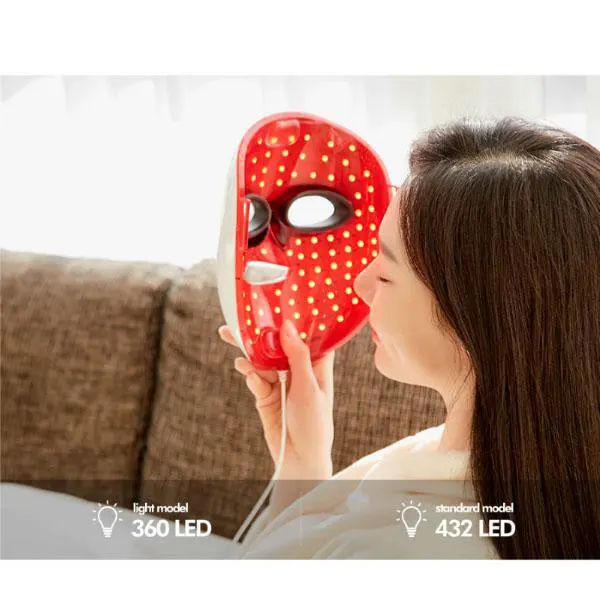
What to look for: Count the LEDs. A mask with sparse, widely spaced lights will create a “spotty” treatment. You want even coverage across your entire face. Also, look for masks that use name-brand LEDs (like Osram or Epistar), which are more reliable.
-
Why: More high-quality LEDs mean more light energy hitting your skin evenly.
What Makes a Red Light Therapy Mask “Affordable” and Effective?
An affordable mask should still include:
✔ 630–660nm Red light (collagen support)
✔ 830–850nm Near-infrared (deep repair)
✔ 30–50 mW/cm² therapeutic output
✔ Safe silicone construction
✔ FDA registration documentation support
Anything below that standard becomes decorative LED lighting — not photobiomodulation technology.
Side-by-Side Comparison
| モデル | 波長 | LED Count | Price Positioning | FDA Documentation | Best For |
|---|---|---|---|---|---|
| G10 | 590 / 630 / 830 / 850nm | 128 dual-chip LEDs | $$ (Mid-range) | FDA registration support | Balanced anti-aging & tone |
| G13 | 630 / 850nm (core red + 近赤外) | 100+ LED | $ (Entry-level) | FDA documentation available | First-time users |
| G17 | 630 / 660 / 830 / 850nm | 150+ LED | $$$ (Professional tier) | FDA-ready documentation | Faster clinical-level results |
Now let’s break this down in a practical way.
1️⃣ G13 – Best Budget Entry Option
Why it’s affordable:
-
Focused dual-wavelength design (630nm + 850nm)
-
Flexible medical-grade silicone
-
Streamlined LED layout
Pros:
✔ Cost-effective
✔ Lightweight & comfortable
✔ Covers core anti-aging wavelengths
✔ Easy for beginners
Considerations:
-
Lower irradiance than professional models
-
Fewer total LEDs than premium versions
Best For:
-
First-time buyers
-
Younger skin (preventative care)
-
Budget-conscious resellers
If affordability is your primary concern, G13 offers solid foundational photobiomodulation without unnecessary cost additions.
2️⃣ G10 – Best Value Balance (Performance vs Price)
This is often considered the sweet spot.
Key Specs:
-
590 / 630 / 830 / 850nm
-
128 dual-chip LEDs
-
3000mAh rechargeable battery
-
7–10 sessions per charge
-
Food-grade silicone
-
FPC foldable circuit board
Pros:
✔ Multi-spectrum support (アンチエイジング + tone + repair)
✔ Balanced 1:1:1:1 wavelength ratio
✔ Strong battery capacity
✔ Reverse charging power bank function
✔ Excellent price-to-performance ratio
Considerations:
-
Slightly higher cost than entry-level
-
Not as high irradiance as G17
Best For:
-
Anti-aging focus
-
Skin tone & elasticity improvement
-
Retail brands seeking strong margin
-
Consumers wanting professional features at mid-level pricing
For most buyers, G10 delivers the best affordable balance of technology, カバレッジ, and durability.
3️⃣ G17 – Best Affordable Professional Upgrade
If you want near-clinic intensity without clinic pricing:
Why it stands out:
-
40–55 mW/cm² irradiance
-
Higher LED density
-
Faster treatment cycles
Pros:
✔ Higher output for visible results sooner
✔ Professional-grade engineering
✔ Ideal for advanced skincare routines
Considerations:
-
Higher upfront cost
-
More suited to serious anti-aging users
Best For:
-
35+ age group
-
Deeper wrinkle support
-
Clinics & aesthetic resellers
-
Buyers wanting faster ROI on results
While not the cheapest, G17 can be “affordable” when considering performance per session compared to spa treatments.
Why Compliance Still Matters (Even for Affordable Devices)
All three models are engineered with:
-
FDA registration documentation support
-
CE compliance
-
Electrical safety testing
-
EMC validation
This protects:
✔ End users
✔ Retail brands
✔ Long-term business credibility
Cheap, uncertified masks may cost less upfront — but carry higher long-term risk.