When pet owners search for red light therapy for dogs, one of the first things they often notice is wavelength. Many dog red light therapy pads, mats, blankets, and handheld devices mention numbers such as 630nm, 660nm, 810nm, 830nm, or 850nm. Among these options, 660nm and 850nm red light therapy for dogs has become one of the most common wavelength combinations in home-use pet wellness products.
But what do these numbers actually mean? And why do they matter when choosing a red light therapy device for dogs?
For pet owners, wavelengths can feel technical at first. For pet wellness brands and B2B buyers, however, wavelength selection is one of the most important parts of product design. The right wavelength combination helps define product positioning, user expectations, and the overall value of a pet light therapy mat or pad.
This guide explains why 660nm and 850nm are commonly used, how they work differently, and what buyers should consider when choosing or developing a red light therapy product for dogs.
What Does “nm” Mean in Red Light Therapy?
The term “nm” stands for nanometer, which is a unit used to measure light wavelength. Different wavelengths interact with the body in different ways. In red light therapy and near-infrared light therapy, the wavelength determines whether the light is visible, how it is positioned, and how deeply it may reach into the body’s tissue layers.
For dog red light therapy products, two wavelength ranges are especially common:
- Red light: usually around 630nm to 660nm
- Near-infrared light: usually around 810nm to 850nm
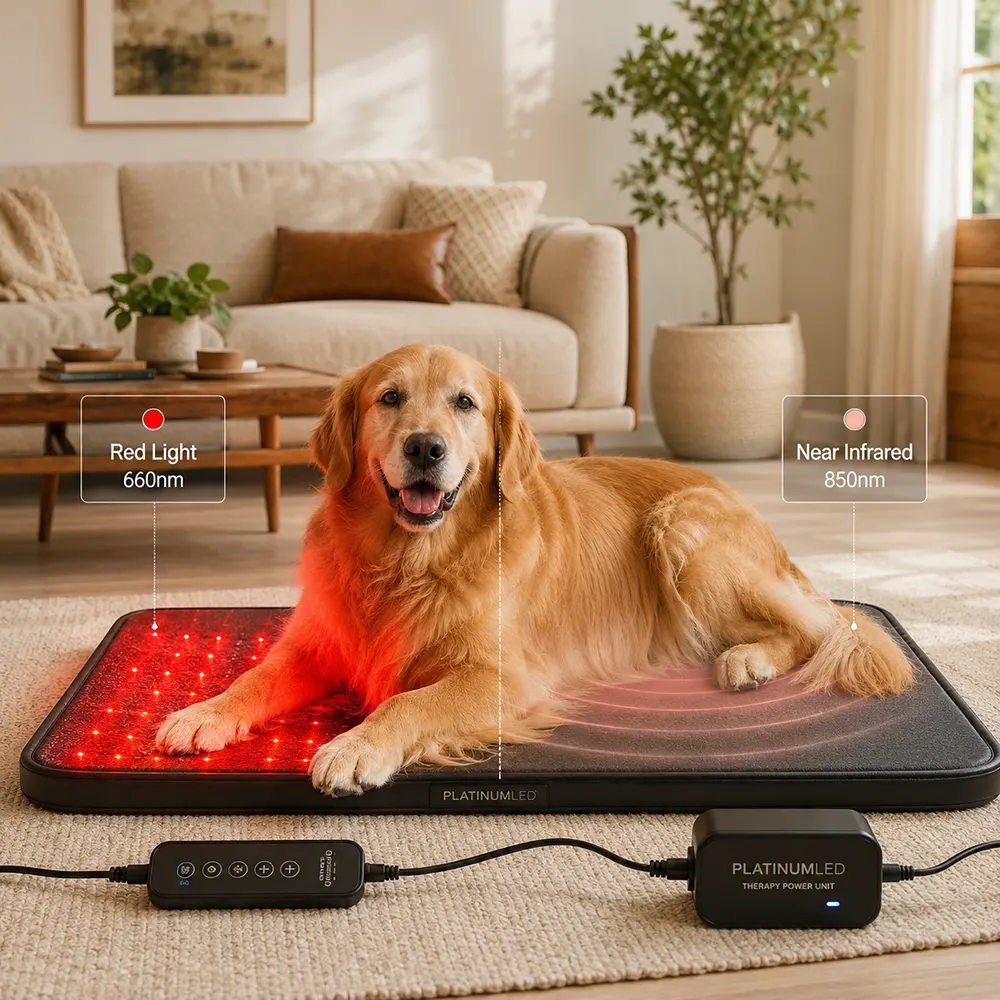
Red light is visible to the human eye. It appears as a red glow. Near-infrared light, often called NIR, is mostly invisible or only slightly visible. Even though it may not look as bright, it plays an important role in many light-based wellness devices.
That is why many pet red light therapy mats combine visible red light with near-infrared light. The red light helps users see that the product is working, while the NIR component supports a more complete wellness positioning.
Why 660nm Red Light Is Commonly Used for Dogs
660nm is one of the most widely used red light wavelengths in wellness devices. In pet products, 660nm red light is often selected for surface-level light therapy applications.
For dogs, this can be useful when a brand wants to position a product around skin, coat, surface comfort, and general pet wellness routines. A red light therapy pad with 660nm LEDs is easy for consumers to understand because the red light is visible and familiar.
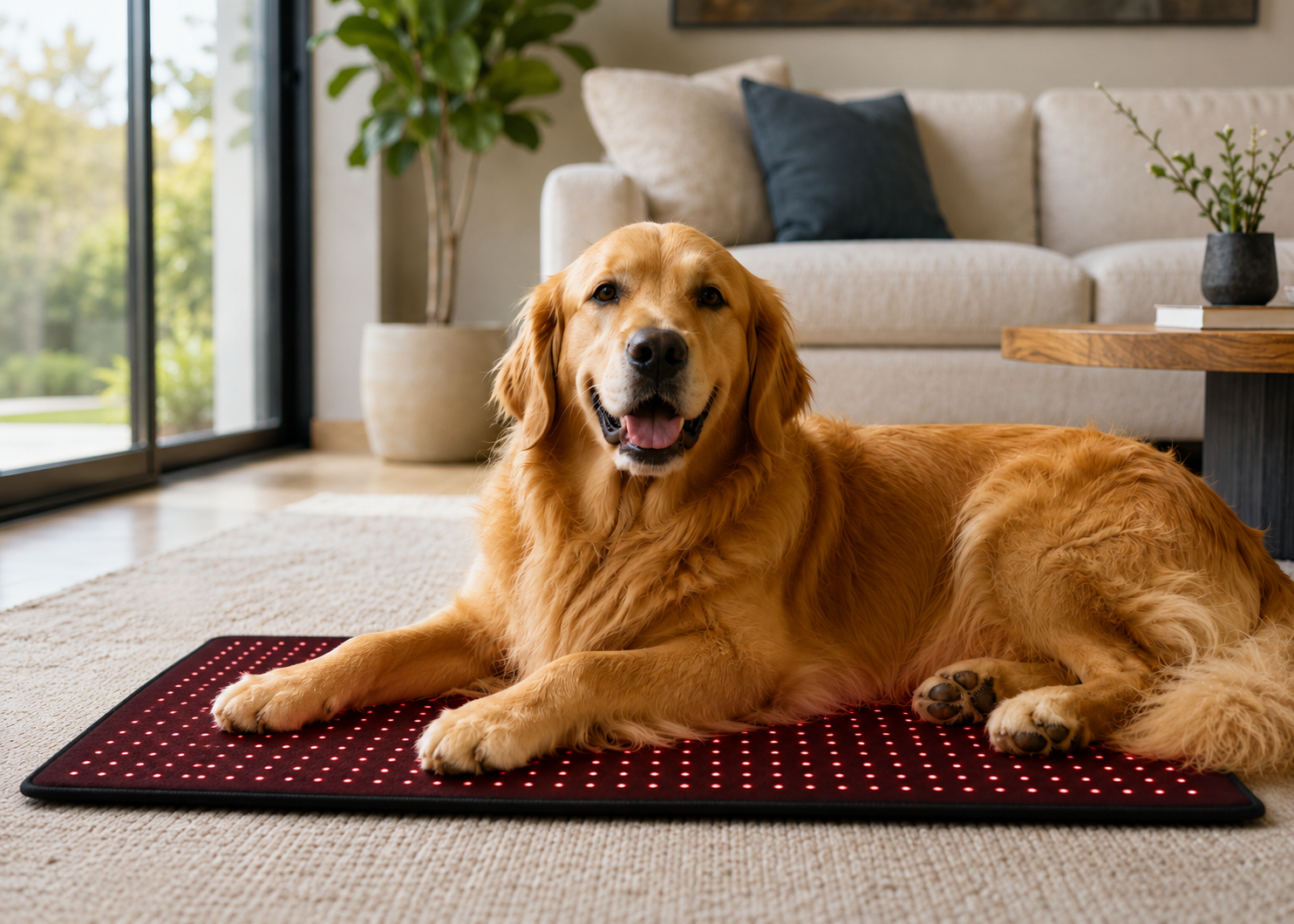
From a product design perspective, 660nm also works well in mats, pads, wraps, and blankets. It can be distributed across a larger surface area, creating an even light field for dogs to rest on or lie near.
Common product positioning for 660nm red light includes:
- Surface-level pet wellness support
- Daily comfort routines
- Skin and coat wellness positioning
- Gentle red light care for dogs
- Home-use pet light therapy devices
For marketing, it is better to avoid overclaiming. Instead of saying a product “treats” or “cures” a condition, responsible brands usually describe 660nm red light as part of a non-invasive wellness routine that supports pet comfort and relaxation.
Why 850nm Near-Infrared Light Matters
850nm is a near-infrared wavelength. Unlike 660nm red light, 850nm light is not strongly visible. Some users may see a very faint glow, but it will not appear as bright red light.
This can sometimes confuse consumers. They may think the 850nm LEDs are not working because they are not as visible. That is why good product education is important. Near-infrared light is valued not because it looks bright, but because it is commonly selected for deeper tissue wellness positioning.
For dogs, 850nm near-infrared light is often used in products designed around:
- Joint and muscle comfort
- Mobility support routines
- Senior dog wellness
- Active dog recovery routines
- Larger body area coverage
This is one reason why 850nm is popular in red light therapy mats for dogs. Dogs have fur, different body sizes, and different care needs. A mat that combines red and near-infrared light can create a broader product story than a red-only device.
Why 660nm + 850nm Is a Popular Combination
The combination of 660nm red light and 850nm near-infrared light is popular because it gives brands and users a balanced light therapy design.
660nm red light provides visible red light and supports surface-level wellness positioning. 850nm near-infrared light adds deeper wellness positioning and is often associated with joint, muscle, and recovery-focused use cases.
Together, they allow a pet red light therapy product to cover a wider range of consumer needs.
For example, a dog owner with a senior dog may be looking for daily comfort support. Another owner may have an active dog that needs a recovery routine after running, hiking, or training. A third buyer may simply want a gentle wellness mat that can become part of the dog’s resting area.
A dual-wavelength product can speak to all of these use cases more clearly than a single-wavelength product.
Why Wavelengths Matter for Product Format
Wavelength is important, but it is not the only factor. The product format also matters.
A handheld red light device may be useful for targeted areas, such as a leg, shoulder, or hip. However, it requires the owner to hold the device during the session. This may be inconvenient for large dogs or dogs that do not stay still.
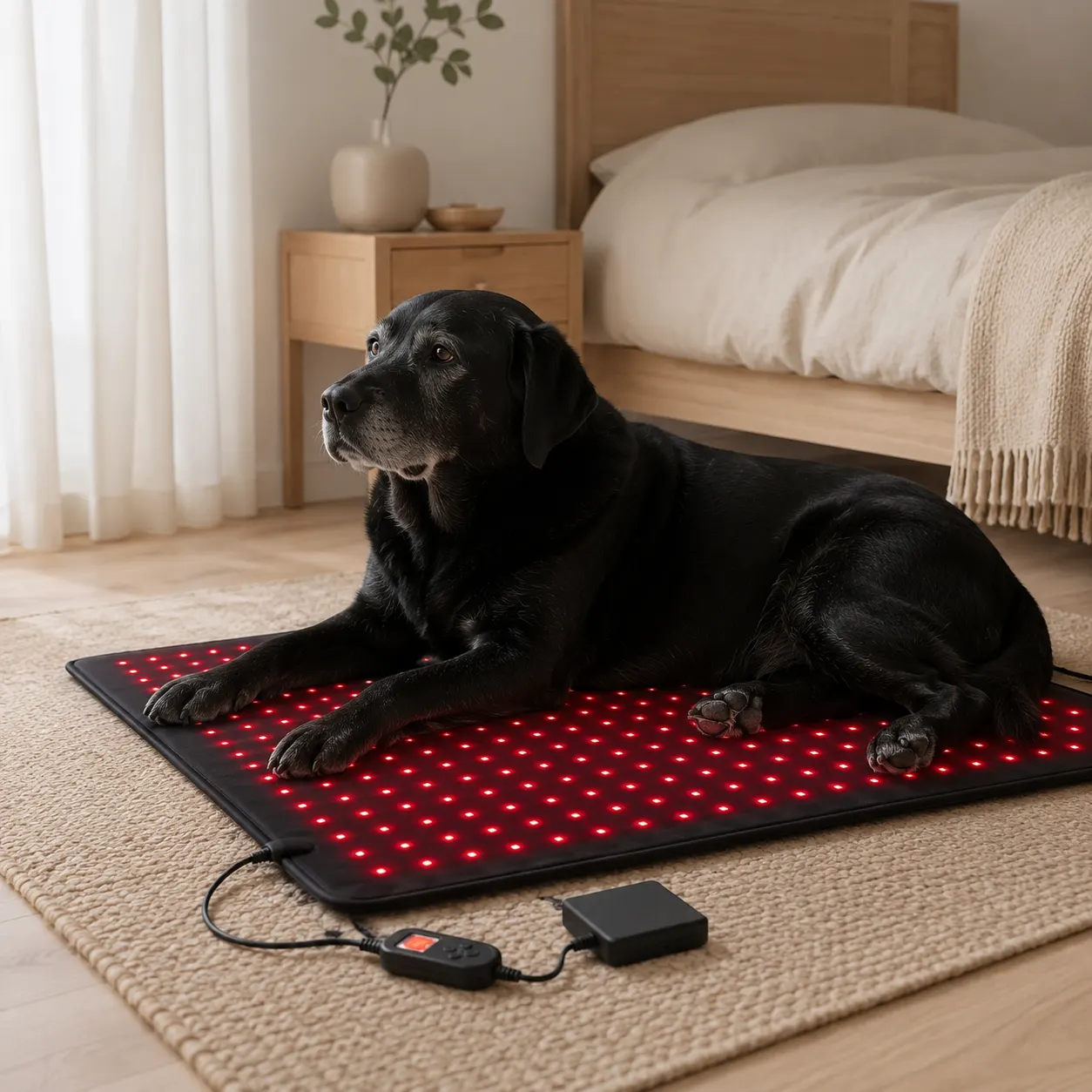
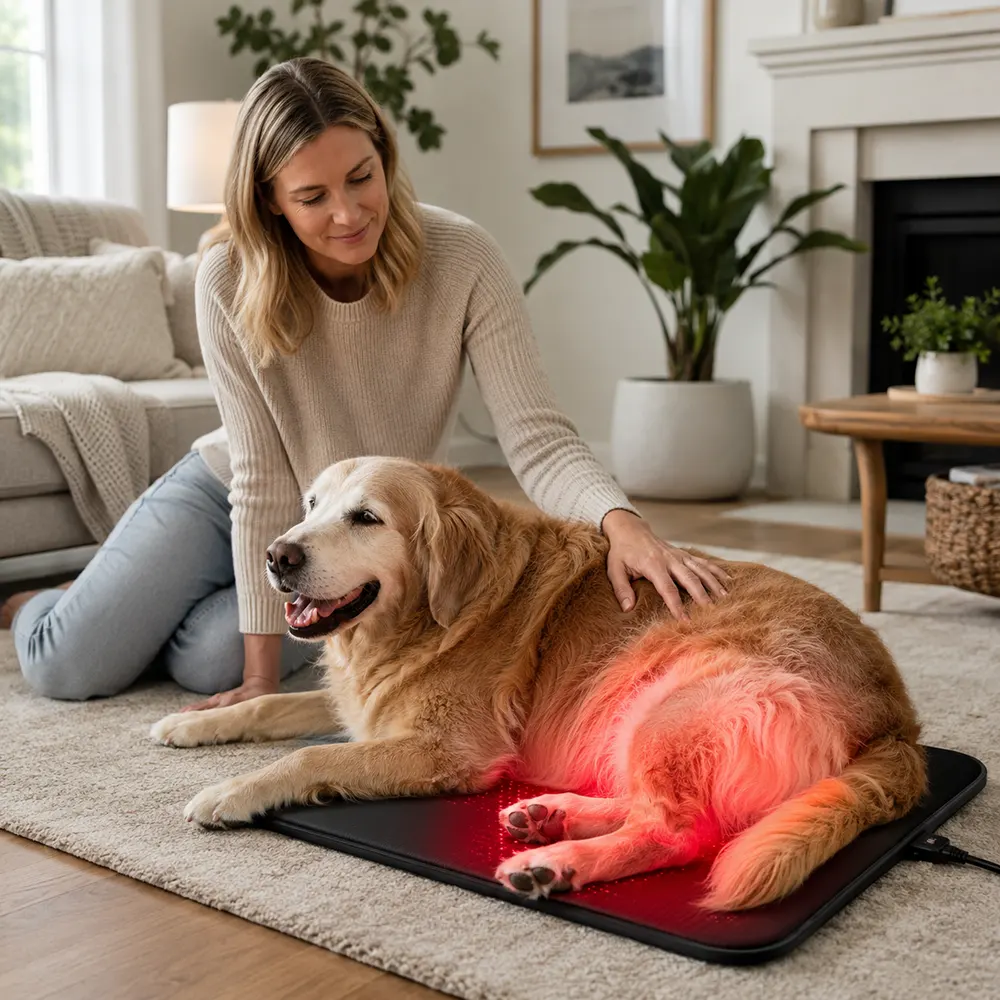
A red light therapy pad or mat is often easier for home use. The dog can lie down naturally while the light covers a larger area. This makes mat-style products especially suitable for senior dogs, large dogs, and home recovery routines.
When using 660nm and 850nm in a mat format, brands should also consider:
- LED quantity
- LED spacing
- Mat size
- Light coverage area
- Heat management
- Timer settings
- Surface material
- Power supply design
- Easy-clean structure
A product with good wavelengths but poor comfort may not be used consistently. For pet products, user compliance depends heavily on whether the dog accepts the device.
What Pet Owners Should Look for
When choosing a 660nm 850nm red light therapy device for dogs, pet owners should look beyond the wavelength numbers. A good home-use device should be comfortable, safe, and easy to use.
Important features include:
- Red and near-infrared wavelength combination
- Low-heat operation
- Soft and pet-friendly material
- Built-in timer
- Simple control system
- Clear user manual
- Suitable size for the dog
- Supervised-use guidance
Pet owners should also consult a veterinarian if their dog has a medical condition, recent surgery, open wounds, unusual symptoms, or special care needs. Red light therapy products for dogs should be used as wellness support, not as a replacement for professional veterinary advice.
What B2B Buyers Should Consider
For pet wellness brands, Amazon sellers, distributors, and private label companies, 660nm and 850nm offer a clear and marketable wavelength combination.
However, choosing the right supplier is just as important as choosing the wavelength. B2B buyers should ask suppliers about LED quality, irradiance, heat control, mat structure, safety testing, customization options, and packaging support.
A reliable manufacturer should be able to support:
- 660nm + 850nm wavelength design
- Custom mat size and shape
- OEM logo and packaging
- Private label user manual
- Timer and mode customization
- Pet-friendly material selection
- Wholesale and bulk order supply
- Product photos and marketing support
For brands building a pet wellness line, the goal is not just to launch one product. The goal is to build a product that pet owners can understand, trust, and use regularly.
Final Thoughts
660nm and 850nm red light therapy for dogs matters because wavelengths shape the product’s function, positioning, and user experience. 660nm red light is commonly used for visible, surface-level wellness applications, while 850nm near-infrared light adds deeper wellness positioning for joint, muscle, mobility, and recovery-focused routines.
Together, they create a strong foundation for dog red light therapy pads, mats, blankets, and wraps.
For pet owners, the best device is one that is gentle, comfortable, and easy to use. For pet product brands, the best product is one that combines suitable wavelengths, thoughtful design, reliable manufacturing, and responsible marketing language.
Pureluxtech supports pet wellness brands with customizable red and near-infrared light therapy products, including dog red light therapy mats, pet light therapy pads, flexible blankets, and OEM/ODM solutions. If you are developing a private label pet wellness product line, Pureluxtech can help create light therapy solutions designed for comfort, usability, and brand differentiation.
In the growing home pet care market, wavelength is more than a technical detail. It is the foundation of a product that pet owners can understand and dogs can comfortably use.