Scroll through skincare TikTok or Instagram, and you’ll see them everywhere: glowing celebrities, influencers, and everyday users wearing sleek, colorful LED face masks. The claims are bold. “Glass skin in 7 days.” “Erase wrinkles like an eraser.” “The dermatologist secret everyone’s hiding.” But alongside the hype, a louder question persists: Do LED face masks really work?
The short answer: Yes, but only under specific conditions. LED therapy is not a marketing illusion, nor is it a miracle. It’s a well-documented branch of photobiomodulation (PBM) that has been used in clinical settings for decades. However, the effectiveness of an at-home mask depends entirely on engineering precision, verified light output, consistent usage, and realistic expectations. This guide cuts through the noise, explains exactly how LED masks work, why some fail to deliver, and what you need to know before investing your time and money.
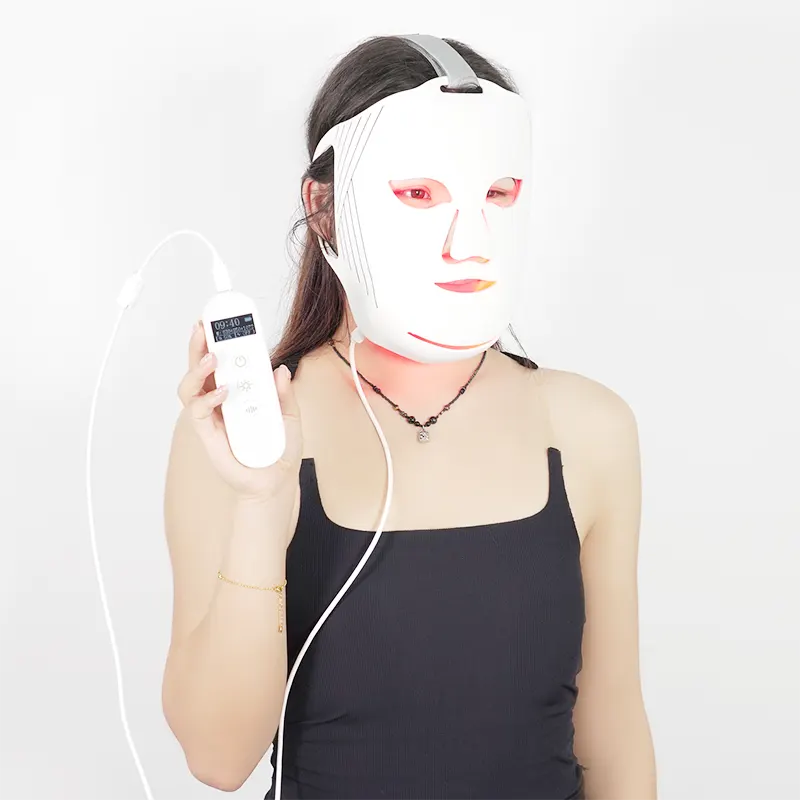
The Science Simplified: How Light Becomes a Skincare Tool
- ATP production increases, giving cells more energy to repair and regenerate.
- Reactive oxygen species normalize, reducing oxidative stress and chronic inflammation.
- Transcription factors activate, signaling fibroblasts to produce new collagen and elastin.
- Microcirculation improves, delivering oxygen and nutrients while removing metabolic waste.
- 630–660nm (Red Light): Penetrates 1–3mm into the dermis. Stimulates collagen synthesis, reduces fine lines, and calms surface redness.
- 810–880nm (Near-Infrared): Reaches 3–5mm deep. Accelerates tissue repair, modulates inflammation, and supports structural firmness.
- 415–460nm (Blue Light): Targets acne-causing bacteria (C. acnes) by activating light-sensitive porphyrins that destroy pathogens from within. Also helps regulate sebum production.
What Clinical Research Actually Shows
- A 2014 study in Photomedicine and Laser Surgery found that participants using 633nm red light for 12 weeks showed significant improvement in skin complexion, collagen density, and wrinkle depth compared to placebo.
- Research published in Journal of Cosmetic and Laser Therapy demonstrated that combined red and blue LED therapy reduced inflammatory acne lesions by up to 46% after 4–6 weeks of consistent use.
- A 2021 review in Dermatologic Surgery concluded that home-use LED devices with verified irradiance and proper dosing protocols produce clinically meaningful improvements in photoaging, skin elasticity, and barrier function.
Why Many Masks “Don’t Work” (The Reality Check)
- Incorrect or unverified wavelengths: Masks labeled “red light” that actually emit broad-spectrum or poorly calibrated LEDs miss biological targets.
- Subtherapeutic irradiance: Many budget masks deliver <10 mW/cm² at the skin surface. Below 20 mW/cm², light may feel pleasant but fails to trigger meaningful mitochondrial activation.
- Poor facial fit: Rigid plastic or flat fabric designs create shadow zones along the jawline, cheeks, and nasolabial folds, leaving critical areas under-treated.
- Lack of dosing controls: Without adjustable brightness, timers, or pulse modulation, users risk under-dosing (no results) or over-dosing (cellular inhibition).
- Misleading claims: “FDA Registered” only means a manufacturing facility is listed with the agency. It does not mean the device has undergone performance or safety review. Only “FDA Cleared” or “FDA Approved” devices have passed clinical evaluation.
4 Non-Negotiable Specs That Determine Real Results
1️⃣ Wavelength Precision (±5nm Tolerance)
2️⃣ Irradiance ≥20 mW/cm² at Skin Surface
3️⃣ 3D/4D Ergonomic Fit & ≥95% Coverage
4️⃣ Regulatory Certifications & Safety Compliance
- FDA 510(k) clearance: Confirms safety and performance for skin treatment claims.
- CE MDR marking: EU medical device compliance with post-market surveillance.
- IEC 62471: Photobiological safety (eye and skin protection).
- IEC 60601-1: Electrical safety for facial-use devices.
- ISO 10993: Biocompatibility testing for skin-contact materials. Certifications aren’t optional luxuries. They’re your assurance that the device won’t deliver erratic output, thermal spikes, or allergic reactions.
Realistic Timeline: What to Expect & When
|
Timeframe
|
What’s Happening Biologically
|
Visible Signs
|
|---|---|---|
|
Weeks 1–2
|
Mitochondrial activation, inflammation modulation
|
Skin feels calmer, less reactive, slightly more radiant
|
|
Weeks 3–4
|
Fibroblast stimulation, accelerated cell turnover
|
Fewer new breakouts, faster healing, smoother texture
|
|
Weeks 5–8
|
Collagen & elastin synthesis, microcirculation boost
|
Fine lines soften, pores appear refined, firmness improves
|
|
Weeks 9–12+
|
Extracellular matrix remodeling, structural support
|
Wrinkle depth visibly reduced, jawline/cheek definition enhances, long-term resilience
|
How to Actually Get Results: Protocol & Best Practices
- Frequency: 3–5 sessions per week. Daily use won’t accelerate results and may cause temporary dryness or cellular fatigue.
- Session Length: 10 minutes is the clinical sweet spot. Auto-timers prevent overexposure.
- Prep: Cleanse thoroughly. Remove makeup, sunscreen, and heavy serums. Light must reach bare skin.
- Position: Secure the mask so LEDs align with high-concern zones. Ensure no gaps or excessive pressure.
- Post-Care: Within 10 minutes, apply a peptide complex, ceramide moisturizer, or hyaluronic acid. Enhanced mitochondrial activity increases nutrient absorption for up to 60 minutes.
- Avoid: Retinoids, AHAs/BHAs, or high-strength vitamin C immediately before or after sessions. Space them 2+ hours apart to prevent barrier disruption.
- Hygiene: Wipe the inner surface with 70% isopropyl alcohol or medical-grade sanitizing wipes after each use. Air-dry completely.
Myths vs. Facts
|
Myth
|
Fact
|
|---|---|
|
“Results appear in 3–7 days.”
|
Collagen remodeling and bacterial clearance require 4–8 weeks. Fast claims indicate marketing, not science.
|
|
“More colors = better results.”
|
Only red, near-infrared, and blue have robust clinical validation for home dermatological use. Extra colors dilute irradiance and lack biological targeting.
|
|
“You don’t need eye protection.”
|
Prolonged direct exposure to bright LEDs isn’t recommended. Always use opaque eye shields or keep eyes gently closed.
|
|
“LED masks replace dermatologist treatments.”
|
They’re excellent for maintenance and early intervention, but severe acne, deep wrinkles, or medical conditions require professional care.
|
|
“Any USB-powered mask works.”
|
Low-voltage consumer electronics often lack stable drivers, resulting in inconsistent output and rapid battery degradation. Medical-grade circuits maintain therapeutic dose.
|