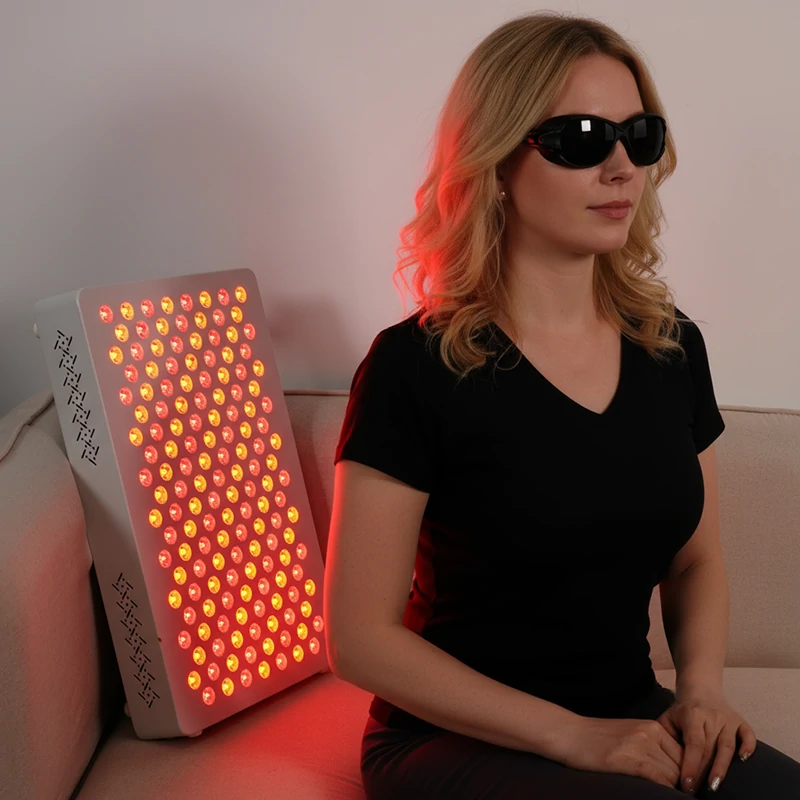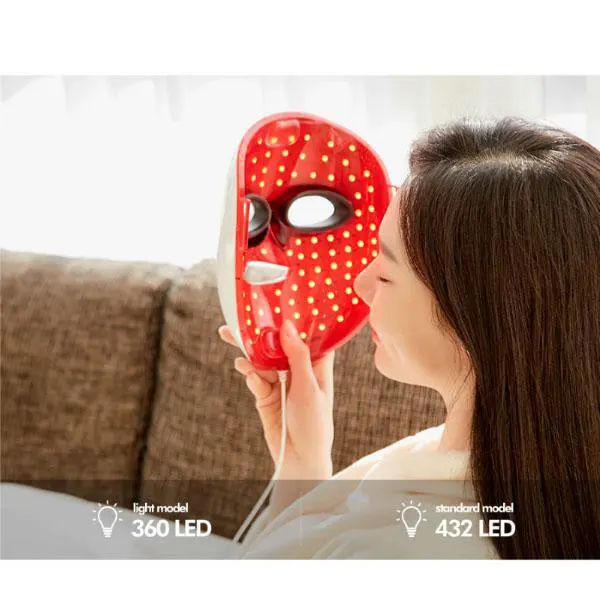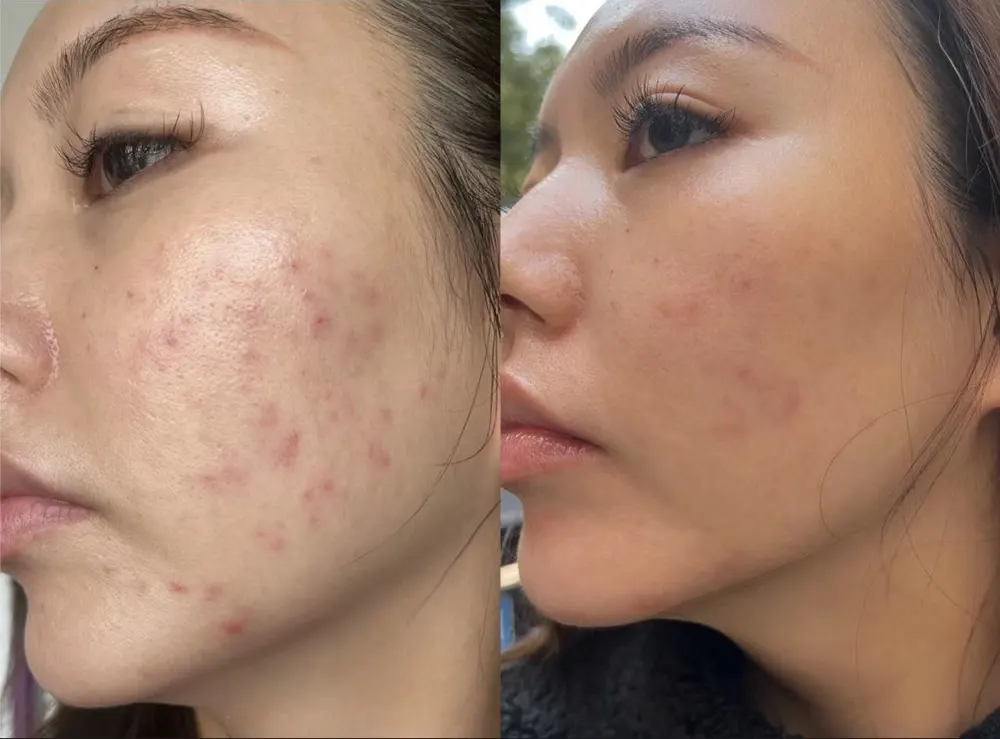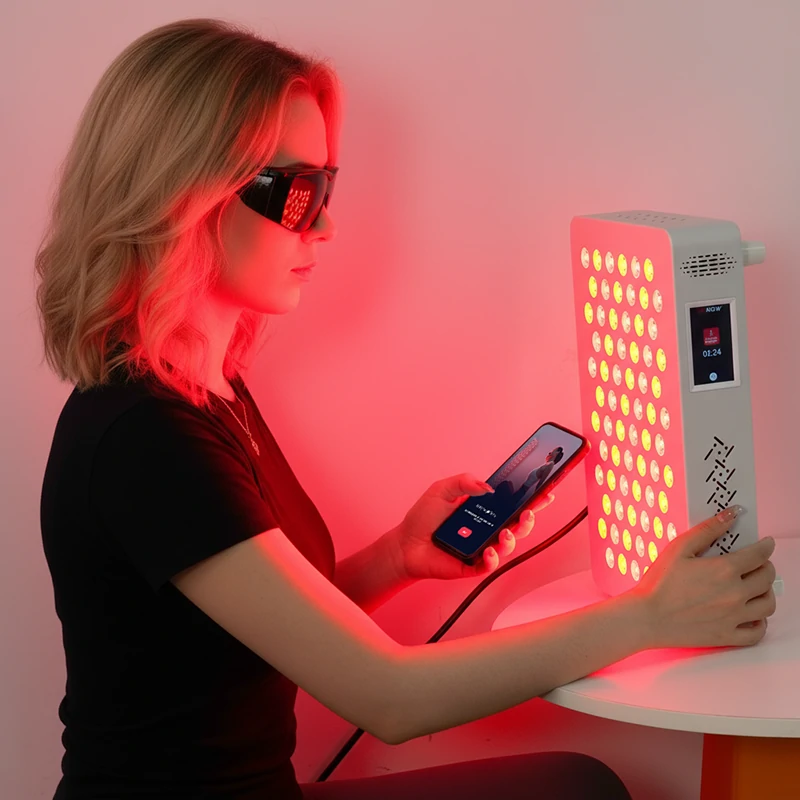
In the pursuit of flawless skin, Red Light Therapy shines as one of the most celebrated innovations. From skincare enthusiasts on social media to dermatologists at Harvard, everyone is talking about this technology that promises to rejuvenate your youth. If you’ve already invested in a high-quality LED mask, or are considering adding this tech to your daily routine, the burning question is: To maximize results, how often should I actually do red light therapy on my face?
For a straightforward answer, most dermatologists and device manufacturers recommend a frequency of 5-7 times per week (meaning almost daily), with sessions lasting 10-20 minutes each to achieve significant clinical results.
But what’s the science behind this? Why is frequency so crucial? Do different skin types and concerns require adjustments? Today, let’s demystify the optimal frequency for red light therapy, drawing on insights from Harvard Health Publishing and recent clinical studies.
Why Frequency Matters
Red light therapy works through photobiomodulation, a process that stimulates cellular activity and collagen production.
However, this process is cumulative, not instant.
That means:
-
too little use → minimal results
-
too much use → unnecessary exposure without added benefit
-
consistent use → optimal skin improvement
Finding the right balance is key.
The Principle of Cellular “Charging”: Why Inconsistency Won’t Work
To understand the required frequency, we first need to understand how red light therapy works. It doesn’t repair skin by burning tissue with heat (like fractional lasers). Instead, it operates through a biological process known as Photobiomodulation.
In simple terms, specific wavelengths of red light (typically 630-660nm) and near-infrared light (810-850nm) penetrate the skin layers to reach our mitochondria—the “power plants” of our cells. Once absorbed by the cells, this light energy significantly boosts the production of Adenosine Triphosphate (ATP). More ATP means more energy for the cells to perform their functions: fibroblast activity increases, synthesis of collagen and elastin accelerates, microcirculation improves, and inflammation is reduced.
However, this is not an instantaneous “magic” trick. As Harvard Health Publishing clearly points out, the effects of red light therapy are slow and steady. It’s more like a gradual optimization of cellular function rather than a quick fix. Therefore, only through consistent, regular light stimulation can cells be maintained in this highly efficient state. If the frequency is too low (e.g., once a week), cells quickly return to their baseline level, failing to accumulate the visible anti-wrinkle, firming, and brightening effects.
The Gold Standard from Clinical Data: From Twice a Week to Daily
There are varying opinions on frequency in the market. Some studies, aiming to verify a device’s basic effectiveness, use a frequency of twice a week. For instance, one clinical study on anti-aging with 630nm red light showed that subjects treated twice a week saw a 38.3% reduction in crow’s feet depth and a 24.8% increase in skin firmness after 3 months. This indicates that even with lower frequency, long-term consistency can yield results.
However, most clinical protocols for home-use devices lean towards higher frequencies. The consensus is that daily use, or 5-6 times a week, is the “gold standard” for at-home treatment.
Why is daily use recommended for home settings?
-
Difference in Energy Intensity: Professional, in-clinic devices usually have higher power output, potentially achieving in one session what home devices achieve in multiple. Home masks prioritize high safety (avoiding burns or phototoxicity) and therefore have lower output. Consequently, a higher frequency is needed to accumulate the total energy dose required to achieve effects comparable to professional treatments.
-
Sustained Biostimulation: Daily sessions keep skin cells in a constant state of heightened repair activity. Many brands’ official protocols include a “30-day progressive plan” . The first four weeks focus on daily, consistent use to help the skin transition through adaptation, stabilization, and into the intensive treatment phase.
Tailoring Your Light Schedule: Different Goals, Different Frequencies
While “daily” is a general principle, you can fine-tune based on your specific skin concerns. Drawing from clinical protocol guides, you can personalize your light schedule according to this table:
| Clinical Goal | Recommended Wavelength/Mode | Suggested Duration | Recommended Frequency |
|---|---|---|---|
| Overall Anti-Aging / Complexion Brightening | Red + Near-Infrared | 10 minutes | Daily, or ≥ 5-6 times per week |
| Reducing Fine Lines / Wrinkles | Red Light | 10-15 minutes | Daily |
| Mild to Moderate Acne | Blue Light | 10 minutes | Daily (until clinical improvement, then reduce to 3 times/week) |
| Hyperpigmentation / Dullness | Combined Light (e.g., Pink) | 10-15 minutes | Daily or Every Other Day |
| Sensitivity / Rosacea-like Redness | Near-Infrared / Combined Light | 10 minutes | Daily |
Note: Blue light primarily targets Cutibacterium acnes. During active breakouts, high-frequency intensive sessions are needed to control bacterial population.
How to Maximize Every Session?
Knowing the frequency is key; following the correct process ensures your 10 minutes are well spent.
1. Clean Skin is Crucial
Never apply light therapy over sunscreen, makeup, or heavy creams. These products create a physical barrier that blocks or scatters light, preventing effective penetration to the dermis. Always cleanse your face thoroughly with a gentle cleanser and pat completely dry. Water droplets can also refract light, affecting penetration depth.
2. The Perfect Pair: Post-Light Nutrition
After your session, blood circulation is boosted and skin temperature is slightly elevated, with pores more open—making it the ideal time to absorb nutrients. Light first, skincare second is the golden rule. Immediately after using your mask, applying serums and moisturizers containing peptides, hyaluronic acid, or Vitamin C can significantly enhance absorption.
3. Don’t Overdo It: Avoiding “Biol inhibition”
While high frequency is desired, more is not always better. Never extend a single session beyond the recommended 20 minutes (unless your device specifically allows it), and avoid using it multiple times a day to “make up” for missed sessions. Photobiomodulation follows a biphasic dose-response curve: too low a dose is ineffective, while too high a dose can lead to “bioinhibition,” where cells stop responding. Always strictly follow your specific device’s instructions.
Safety and Patience: The Path to a Luminous Complexion
Dr. Rachel Reynolds, a dermatologist referenced by Harvard Health Publishing, reminds consumers that while red light therapy is FDA-cleared and considered safe, it is not a quick fix. You need to commit to consistent use for 4 to 6 consecutive months to truly witness the transformation.
If you are taking photosensitizing medications (like certain antibiotics) or have photosensitive conditions such as lupus, be sure to consult your doctor before starting. For individuals with deeper skin tones, it’s advisable to start with a lower intensity or slightly shorter session time to observe skin reactions before gradually increasing.
Citations:
[1] Wunsch, A., & Matuschka, K. (2014). A Controlled Trial to Determine the Efficacy of Red and Near-Infrared Light Treatment in Patient Satisfaction, Reduction of Fine Lines, Wrinkles, Skin Roughness, and Intradermal Collagen Density Increase. Photomedicine and Laser Surgery, 32(2), 93–100.
[2] Kwon, H. H., et al. (2013). The clinical and histological effect of home-use, combination blue-red LED phototherapy for mild-to-moderate acne vulgaris in Korean patients: a double-blind, randomized controlled trial. British Journal of Dermatology, 168(5), 1088–1094.
[3] Avci, P., et al. (2013). Low-level laser (light) therapy (LLLT) in skin: stimulating, healing, restoring. Seminars in Cutaneous Medicine and Surgery, 32(1), 41–52.
[4] Lee, S. Y., et al. (2013). Clinical evaluation of a self-applied home-use low-level light therapy device for wrinkle reduction. Dermatologic Surgery, 39(11), 1657–1664.
[5] Sadick, N. S., et al. (2015). A Study to Determine the Efficacy of a Novel Handheld Light-Emitting Diode Device in the Treatment of Photoaged Skin. Lasers in Surgery and Medicine, 47(6), 496–502.
[6] Gold, M. H., et al. (2018). Clinical efficacy of home-use blue-light therapy for mild-to moderate acne. Journal of Clinical and Aesthetic Dermatology, 11(5), 23–28.
[7] Ablon, G. (2019). Combination 830-nm and 633-nm light-emitting diode phototherapy shows promise in the treatment of recalcitrant psoriasis: preliminary findings. Journal of Drugs in Dermatology, 18(2), 172–176.
[8] Barolet, D., et al. (2020). Regulation of skin collagen metabolism in vitro using a pulsed 660 nm LED light source. Journal of Cosmetic Dermatology, 19(6), 1351–1359.