Scroll door huidverzorging TikTok of Instagram, en je ziet ze overal: stralende beroemdheden, beïnvloeders, en gewone gebruikers die strak dragen, kleurrijke LED-gezichtsmaskers. De beweringen zijn gewaagd. “Glazen huid erin 7 dagen.” “Wis rimpels als een gum.” “Het dermatolooggeheim dat iedereen verbergt.” Maar naast de hype, een luidere vraag blijft bestaan: Werken LED-gezichtsmaskers echt??
Het korte antwoord: Ja, maar alleen onder specifieke omstandigheden. LED-therapie is geen marketingillusie, het is ook geen wonder. Het is een goed gedocumenteerde tak van fotobiomodulatie (PBM) dat al tientallen jaren in klinische omgevingen wordt gebruikt. Echter, de effectiviteit van een thuismasker hangt volledig af van de technische precisie, geverifieerde lichtopbrengst, consistent gebruik, en realistische verwachtingen. Deze gids snijdt door het lawaai, legt precies uit hoe LED-maskers werken, waarom sommigen niet leveren, en wat u moet weten voordat u uw tijd en geld investeert.
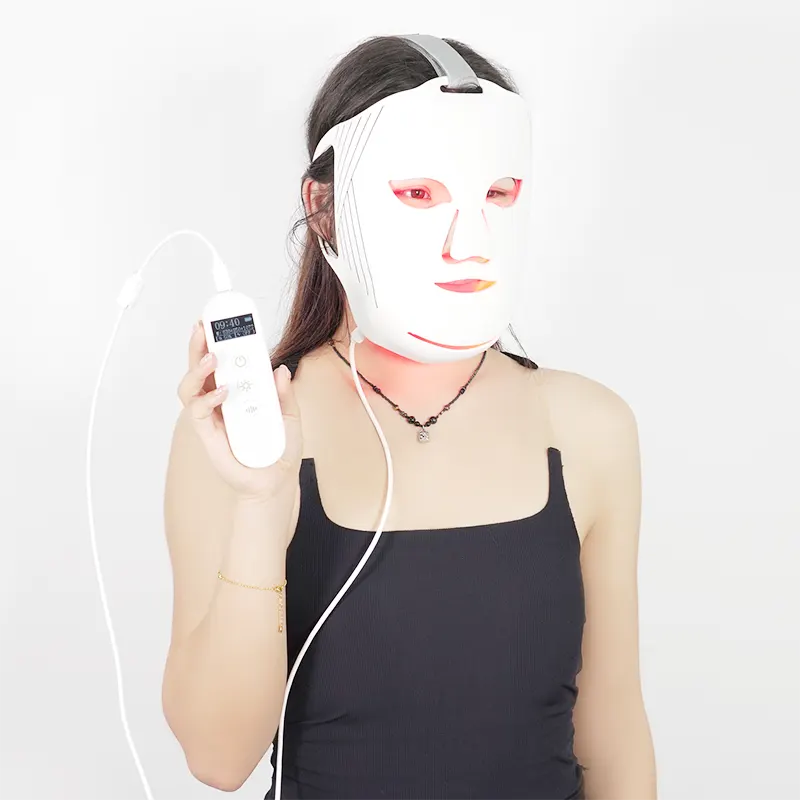
De wetenschap vereenvoudigd: Hoe licht een huidverzorgingshulpmiddel wordt
- De ATP-productie neemt toe, waardoor cellen meer energie krijgen om te herstellen en te regenereren.
- Reactieve zuurstofsoorten normaliseren, het verminderen van oxidatieve stress en chronische ontstekingen.
- Transcriptiefactoren worden geactiveerd, signaleert fibroblasten om nieuw collageen en elastine te produceren.
- De microcirculatie verbetert, het leveren van zuurstof en voedingsstoffen terwijl het metabolische afval wordt verwijderd.
- 630–660 nm (Rood licht): Dringt 1-3 mm door in de dermis. Stimuleert de collageensynthese, vermindert fijne lijntjes, en kalmeert oppervlakkige roodheid.
- 810–880 nm (Nabij-infrarood): Bereikt een diepte van 3-5 mm. Versnelt weefselherstel, moduleert ontstekingen, en ondersteunt structurele stevigheid.
- 415–460 nm (Blauw licht): Gaat acne-veroorzakende bacteriën tegen (C. acne) door lichtgevoelige porfyrines te activeren die ziekteverwekkers van binnenuit vernietigen. Helpt ook de talgproductie te reguleren.
Wat klinisch onderzoek feitelijk aantoont
- A 2014 studeren in Fotogeneeskunde en laserchirurgie ontdekte dat deelnemers 633 nm rood licht gebruikten 12 weken lieten een significante verbetering van de huidteint zien, collageen dichtheid, en rimpeldiepte vergeleken met placebo.
- Onderzoek gepubliceerd in Tijdschrift voor cosmetische en lasertherapie toonde aan dat de gecombineerde rode en blauwe LED-therapie de inflammatoire acne-laesies met maximaal 46% na 4-6 weken consistent gebruik.
- A 2021 recensie in Dermatologische chirurgie concludeerde dat LED-apparaten voor thuisgebruik met geverifieerde bestralingssterkte en juiste doseringsprotocollen klinisch betekenisvolle verbeteringen op het gebied van fotoveroudering opleveren, elasticiteit van de huid, en barrièrefunctie.
Waarom veel maskers “niet werken” (De realitycheck)
- Onjuiste of niet-geverifieerde golflengten: Maskers met het label ‘rood licht’ die feitelijk breedspectrum- of slecht gekalibreerde LED’s uitstralen, missen biologische doelen.
- Subtherapeutische bestraling: Veel budgetmaskers leveren <10 mW/cm² op het huidoppervlak. Onderstaand 20 mW/cm², licht kan prettig aanvoelen, maar slaagt er niet in om betekenisvolle mitochondriale activering teweeg te brengen.
- Slechte pasvorm van het gezicht: Ontwerpen van stevig plastic of platte stof creëren schaduwzones langs de kaaklijn, wangen, en nasolabiale plooien, waardoor kritieke gebieden onderbehandeld blijven.
- Gebrek aan doseringscontroles: Zonder instelbare helderheid, timers, of pulsmodulatie, gebruikers riskeren onderdosering (geen resultaten) of overdosering (cellulaire remming).
- Misleidende beweringen: “FDA-geregistreerd” betekent alleen dat een productiefaciliteit bij het agentschap is vermeld. Dat doet het niet betekent dat het apparaat een prestatie- of veiligheidsbeoordeling heeft ondergaan. Alleen 'FDA Cleared'- of 'FDA Approved'-apparaten hebben de klinische evaluatie doorstaan.
4 Niet-onderhandelbare specificaties die echte resultaten bepalen
1️⃣ Golflengteprecisie (±5 nm tolerantie)
2️⃣ Bestralingssterkte ≥20 mW/cm² op het huidoppervlak
3️⃣ 3D/4D ergonomische pasvorm & ≥95% dekking
4️⃣ Regelgevende certificeringen & Veiligheidsnaleving
- FDA 510(k) klaring: Bevestigt de veiligheid en prestaties voor claims op het gebied van huidbehandeling.
- CE MDR-markering: Naleving van medische hulpmiddelen in de EU met toezicht na het in de handel brengen.
- IEC 62471: Fotobiologische veiligheid (oog- en huidbescherming).
- IEC 60601-1: Elektrische veiligheid voor apparaten voor gezichtsgebruik.
- ISO 10993: Biocompatibiliteitstesten voor materialen die in contact komen met de huid. Certificeringen zijn geen optionele luxe. Ze zijn uw garantie dat het apparaat geen onregelmatige uitvoer zal leveren, thermische pieken, of allergische reacties.
Realistische tijdlijn: Wat te verwachten & Wanneer
|
Tijdsbestek
|
Wat gebeurt er biologisch
|
Zichtbare tekenen
|
|---|---|---|
|
Weken 1–2
|
Mitochondriale activering, ontstekingsmodulatie
|
De huid voelt rustiger aan, minder reactief, iets stralender
|
|
Weken 3–4
|
Fibroblast-stimulatie, versnelde celvernieuwing
|
Minder nieuwe puistjes, snellere genezing, gladdere textuur
|
|
Weken 5–8
|
Collageen & elastine synthese, verbetering van de microcirculatie
|
Fijne lijntjes worden zachter, poriën zien er verfijnd uit, stevigheid verbetert
|
|
Weken 9–12+
|
Remodellering van extracellulaire matrix, structurele ondersteuning
|
Rimpeldiepte zichtbaar verminderd, De definitie van de kaaklijn/wang wordt verbeterd, veerkracht op lange termijn
|
Hoe u daadwerkelijk resultaten kunt behalen: Protocol & Beste praktijken
- Frequentie: 3–5 sessies per week. Dagelijks gebruik zal de resultaten niet versnellen en kan tijdelijke droogheid of cellulaire vermoeidheid veroorzaken.
- Sessieduur: 10 minuten is de klinische ‘sweet spot’. Automatische timers voorkomen overbelichting.
- Voorbereiding: Grondig reinigen. Verwijder make-up, zonnebrandcrème, en zware serums. Licht moet de blote huid bereiken.
- Positie: Zet het masker vast zodat de LED's uitgelijnd zijn met zones met hoge zorg. Zorg ervoor dat er geen openingen of overmatige druk zijn.
- Nazorg: Binnenin 10 notulen, breng een peptidecomplex aan, ceramide vochtinbrengende crème, of hyaluronzuur. Verbeterde mitochondriale activiteit verhoogt de opname van voedingsstoffen gedurende maximaal 60 notulen.
- Voorkomen: Retinoïden, AHA's/BHA's, of krachtige vitamine C direct voor of na de sessies. Ruimte ze 2+ uur uit elkaar om verstoring van de barrière te voorkomen.
- Hygiëne: Veeg het binnenoppervlak af met 70% isopropylalcohol of ontsmettingsdoekjes van medische kwaliteit na elk gebruik. Volledig aan de lucht laten drogen.
Mythen versus. Feiten
|
Mythe
|
Feit
|
|---|---|
|
“De resultaten verschijnen binnen 3 tot 7 dagen.”
|
De remodellering van collageen en de bacteriële klaring vereisen 4 tot 8 weken. Snelle claims duiden op marketing, geen wetenschap.
|
|
“Meer kleuren = betere resultaten.”
|
Alleen rood, nabij-infrarood, en blauw hebben een robuuste klinische validatie voor dermatologisch gebruik thuis. Extra kleuren verdunnen de straling en missen biologische targeting.
|
|
“Je hebt geen oogbescherming nodig.”
|
Langdurige directe blootstelling aan heldere LED's wordt niet aanbevolen. Gebruik altijd ondoorzichtige oogbeschermers of houd de ogen voorzichtig gesloten.
|
|
“LED-maskers vervangen dermatologische behandelingen.”
|
Ze zijn uitstekend geschikt voor onderhoud en vroegtijdige interventie, maar ernstige acne, diepe rimpels, of medische aandoeningen vereisen professionele zorg.
|
|
“Elk USB-gevoed masker werkt.”
|
Laagspanningsconsumentenelektronica mist vaak stabiele drivers, wat resulteert in een inconsistente uitvoer en een snelle verslechtering van de batterij. Circuits van medische kwaliteit handhaven de therapeutische dosis.
|