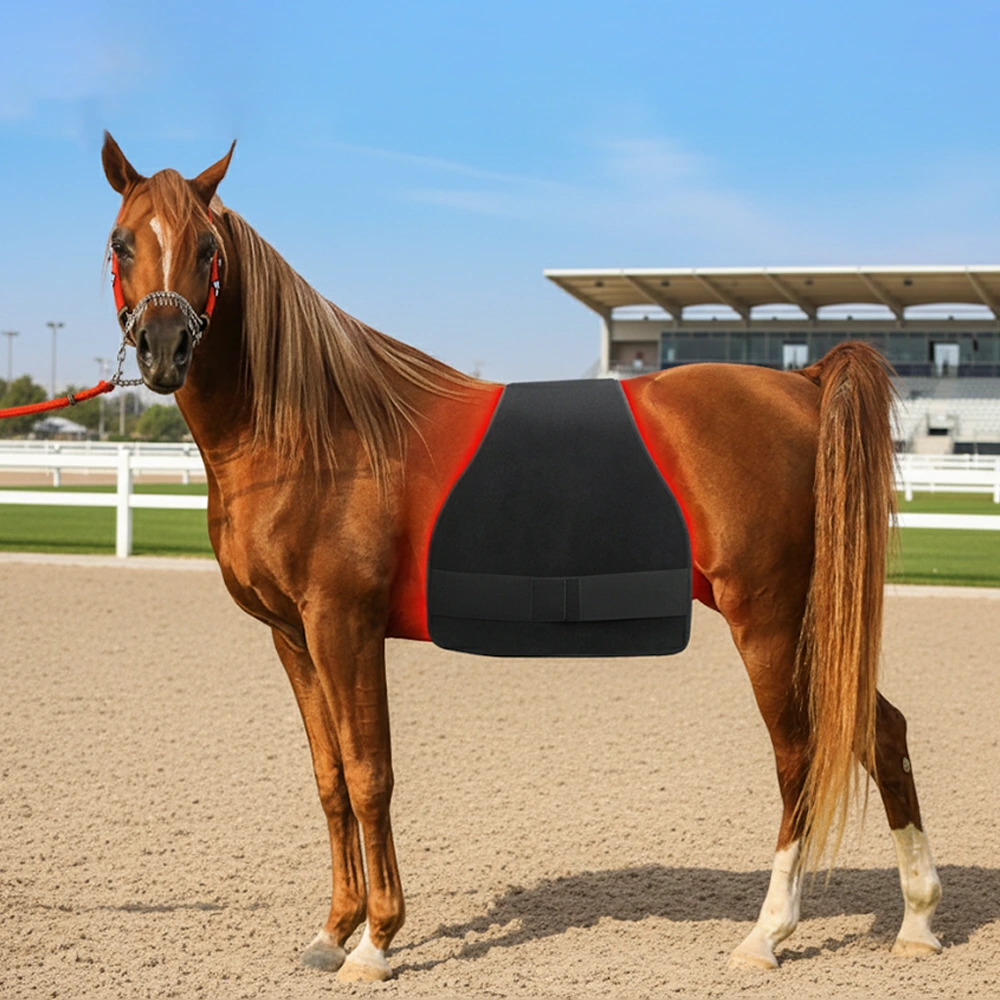
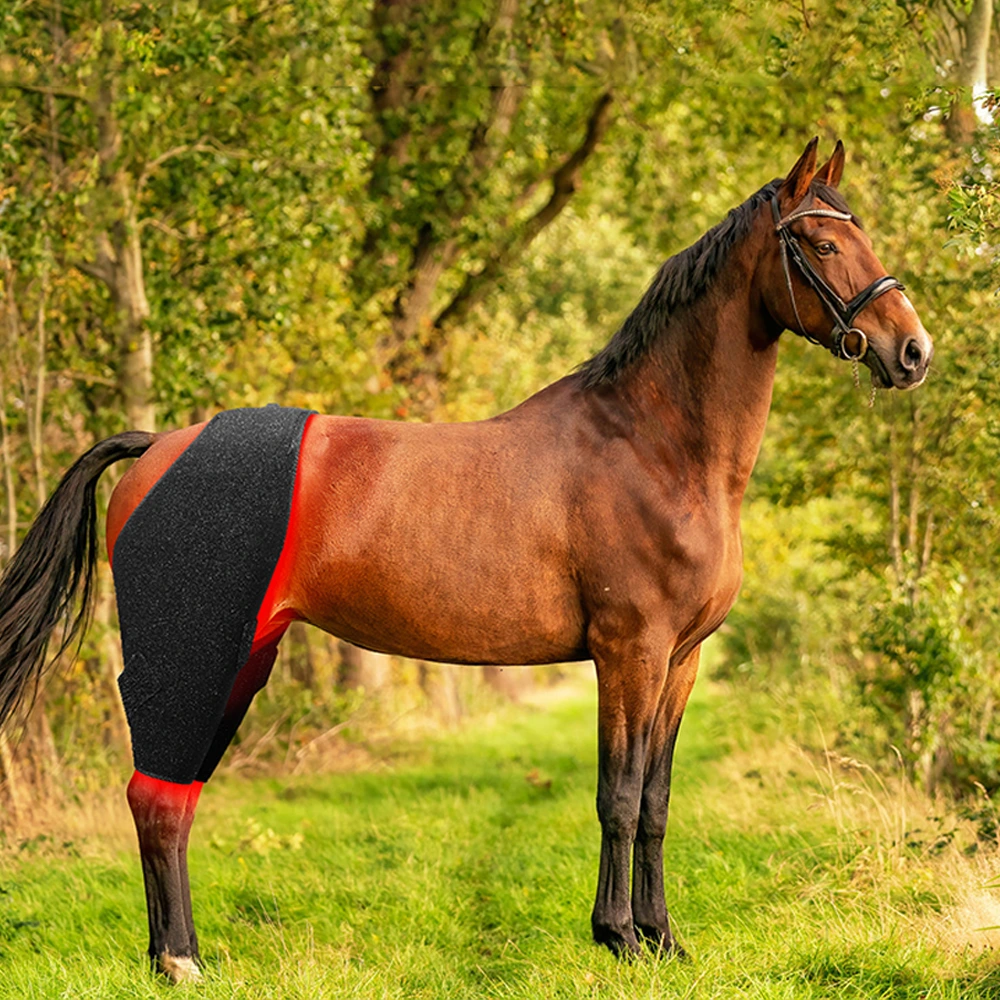
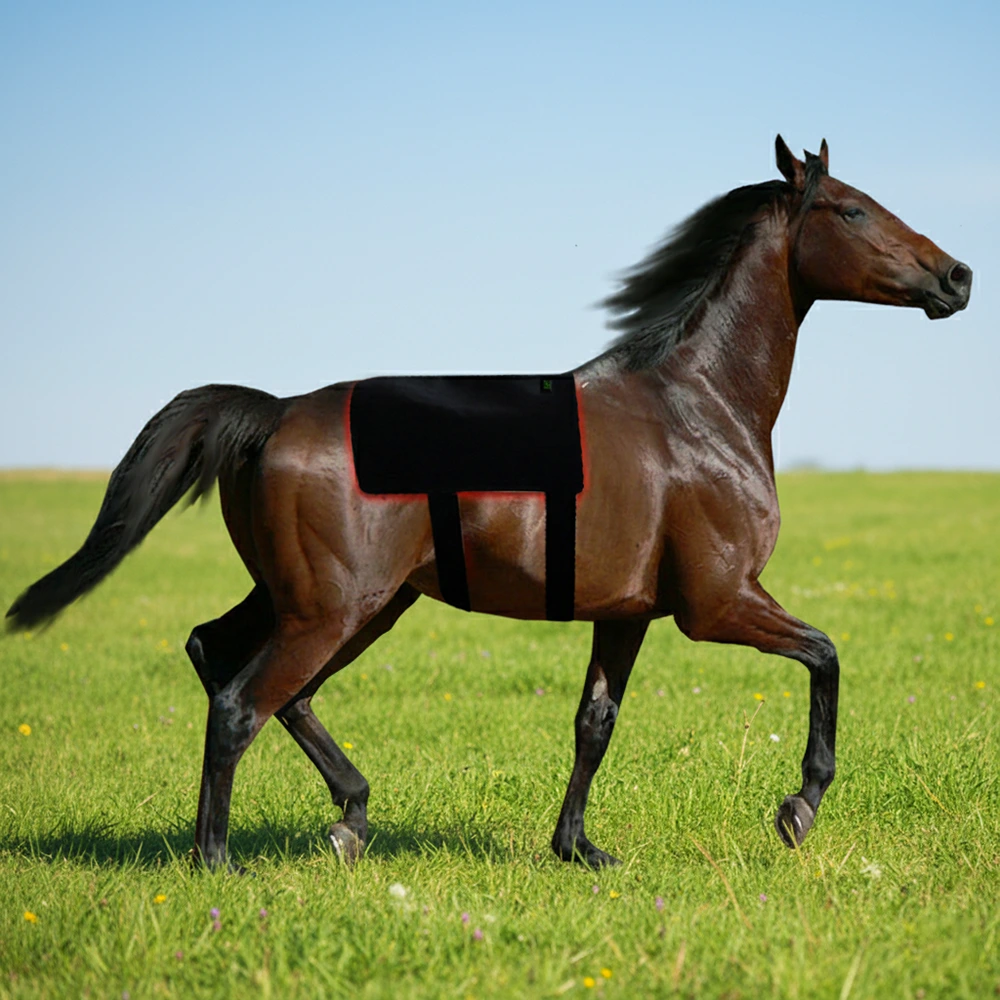
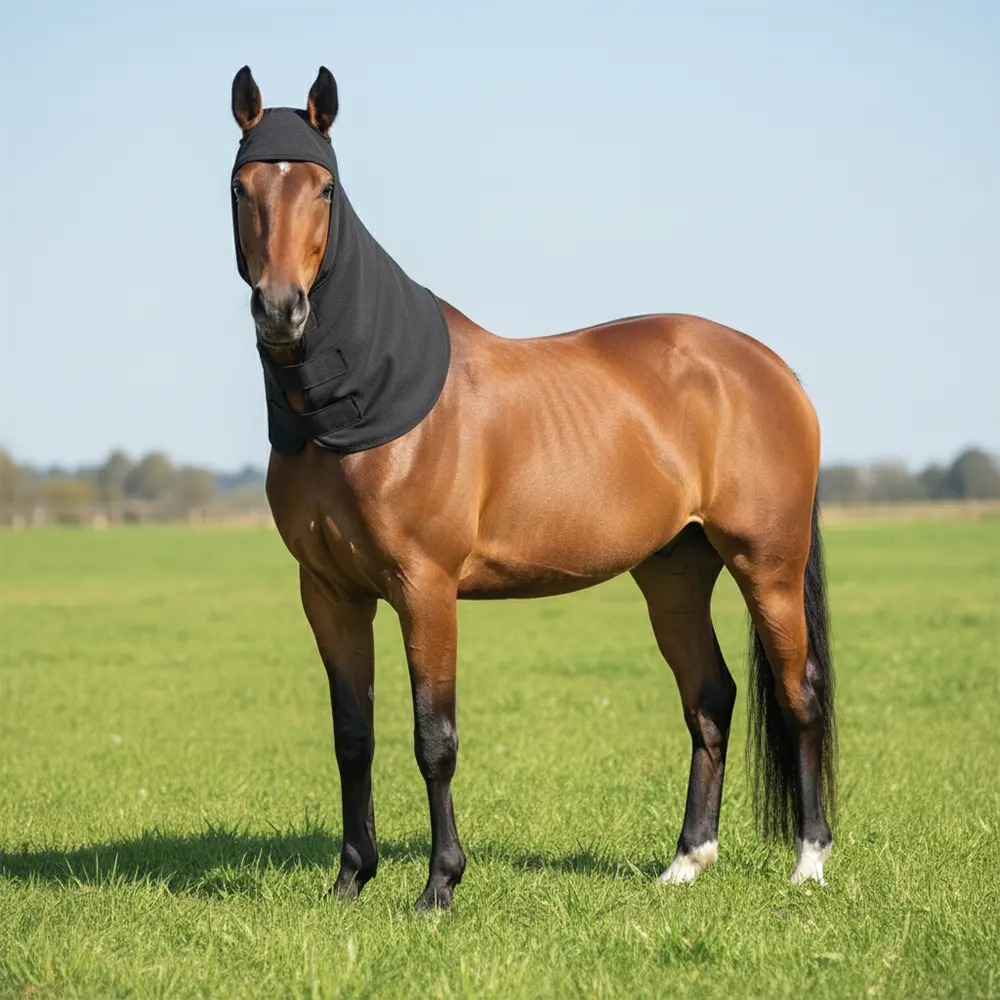
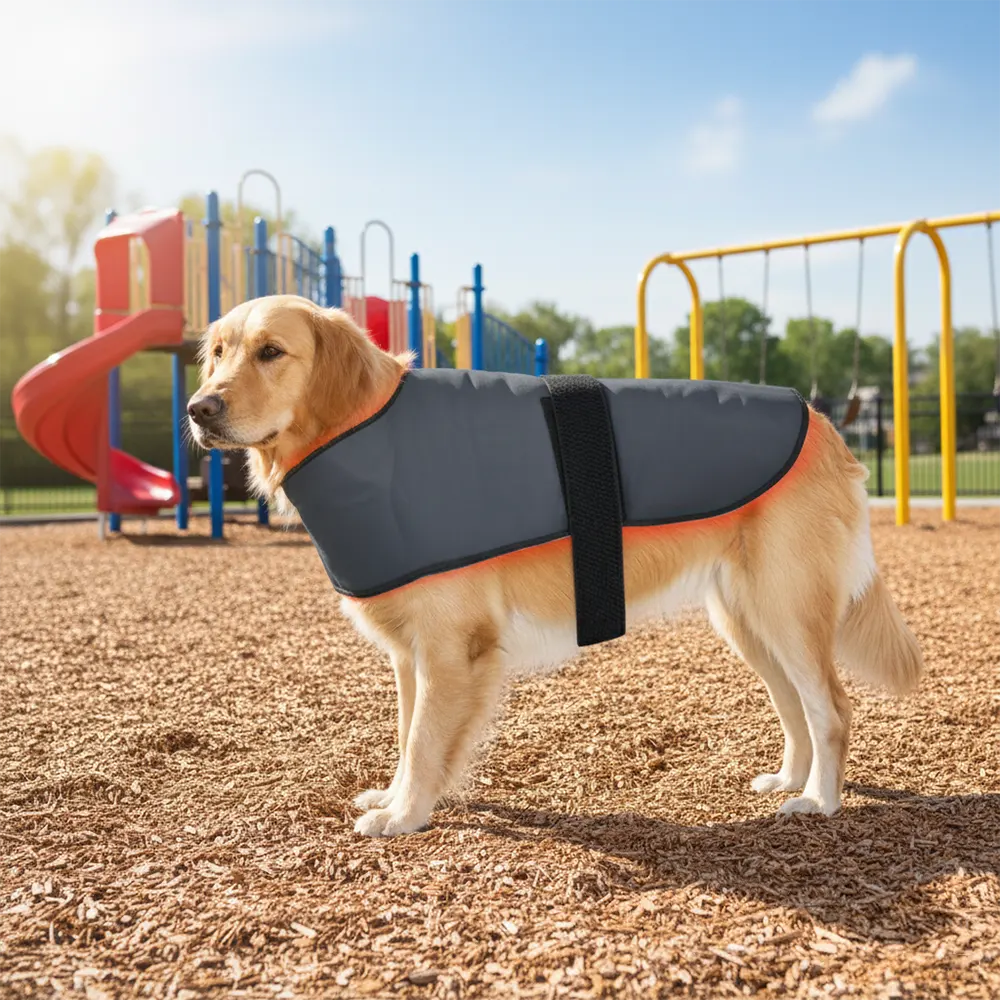
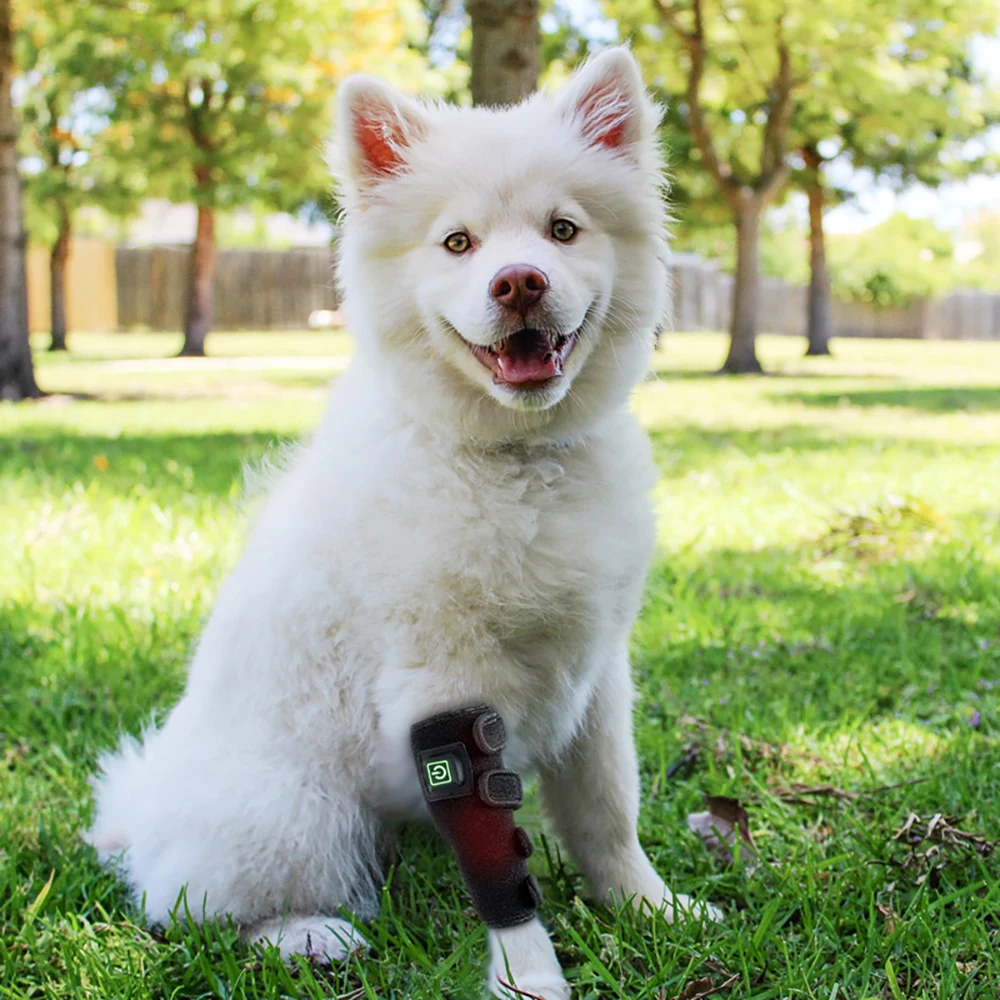
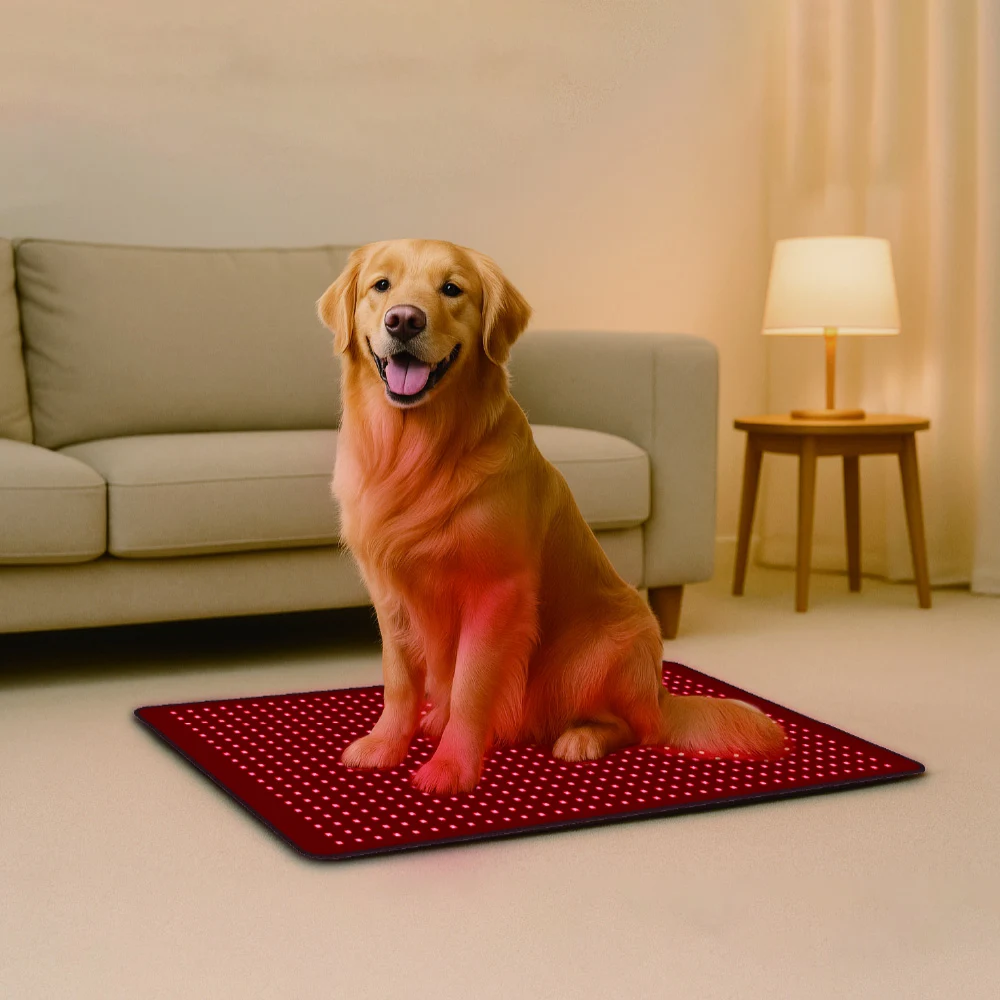
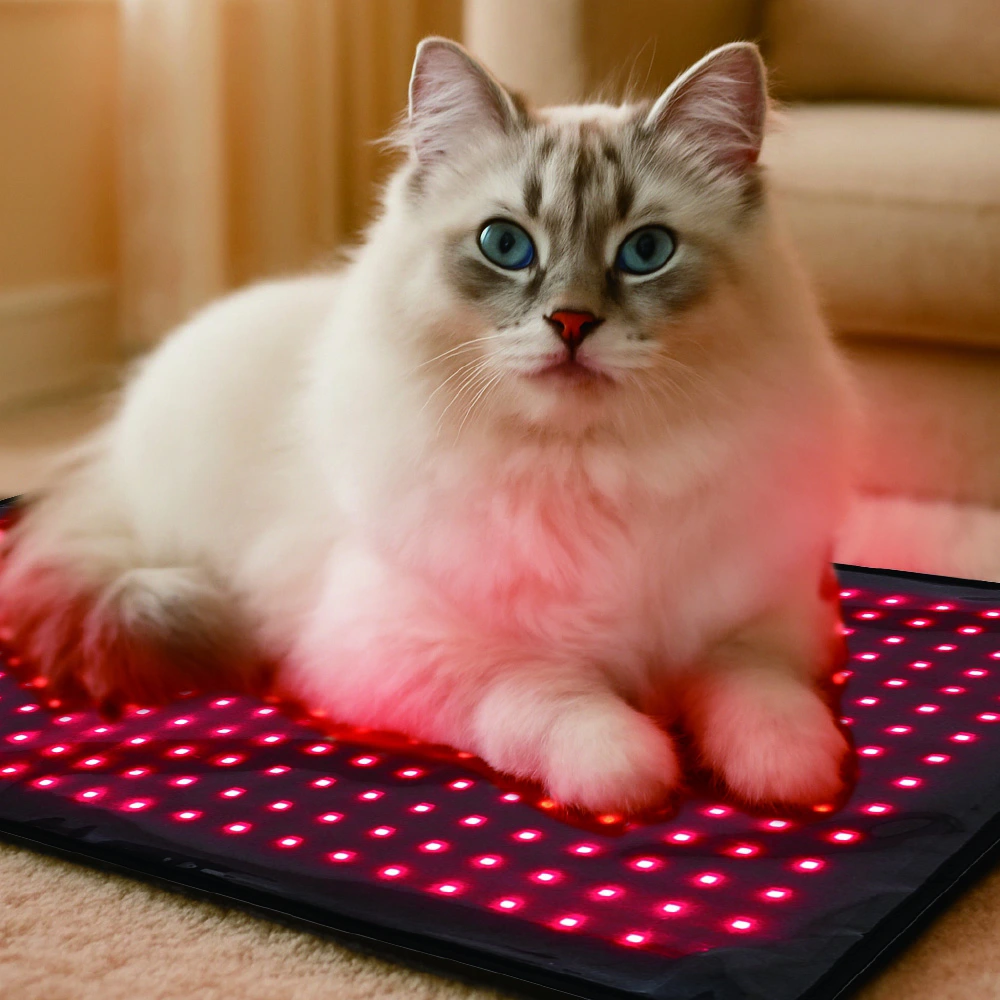
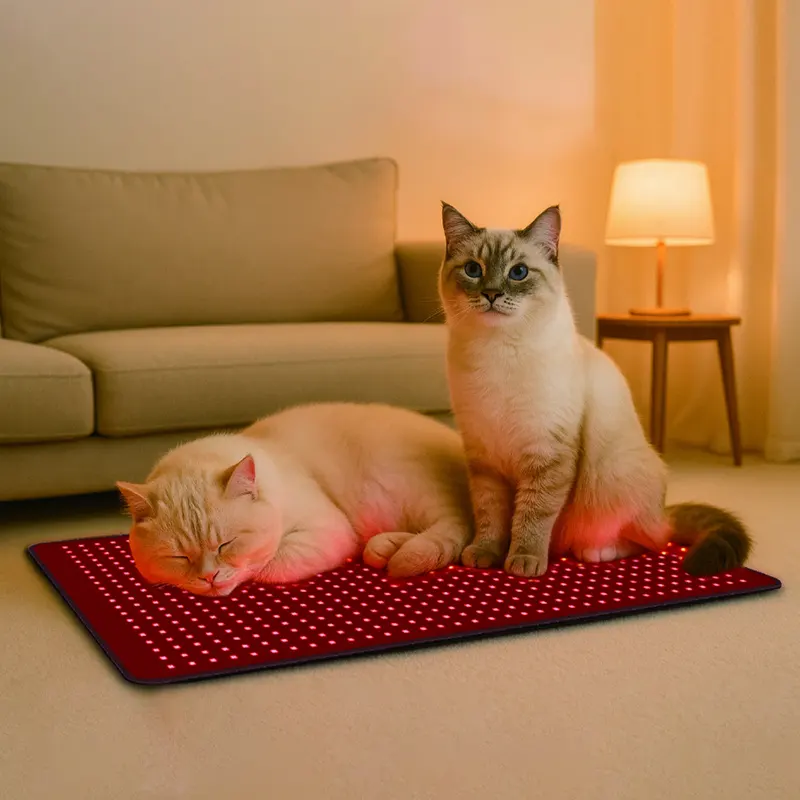
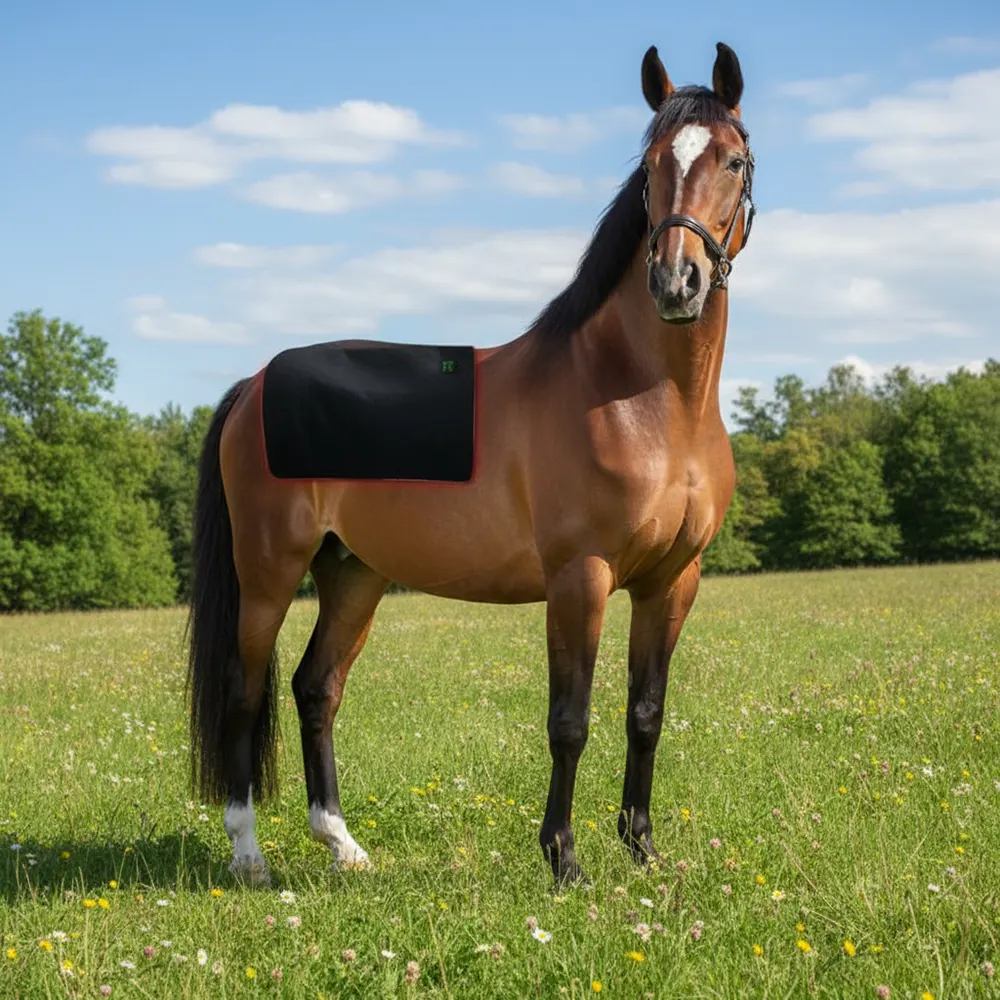
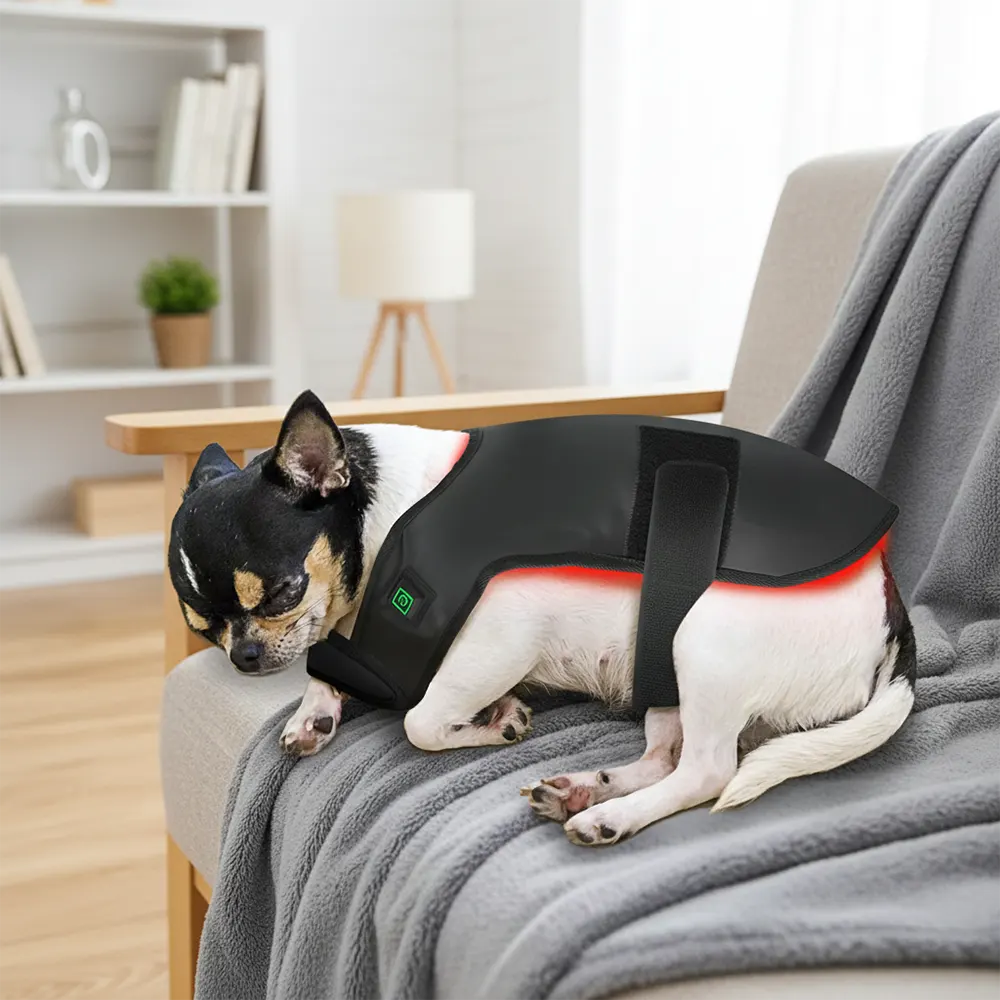
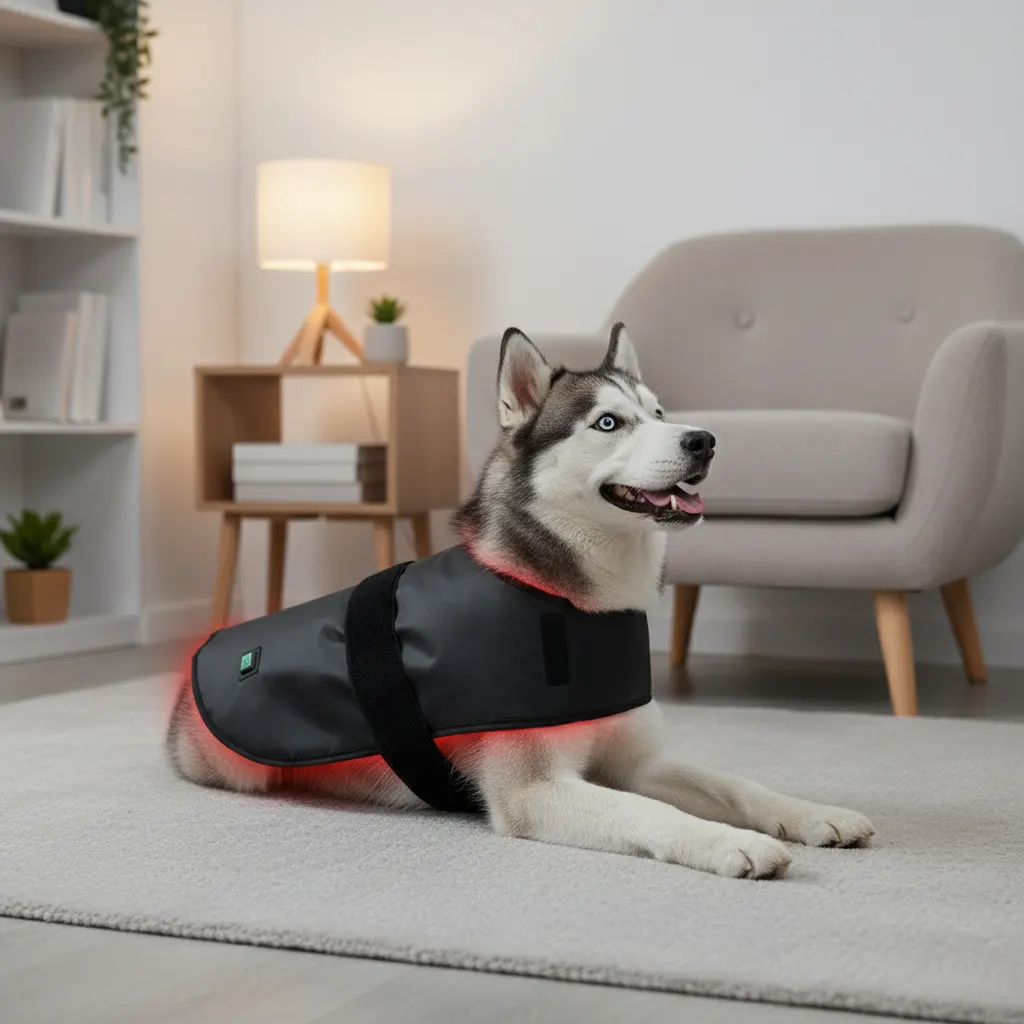
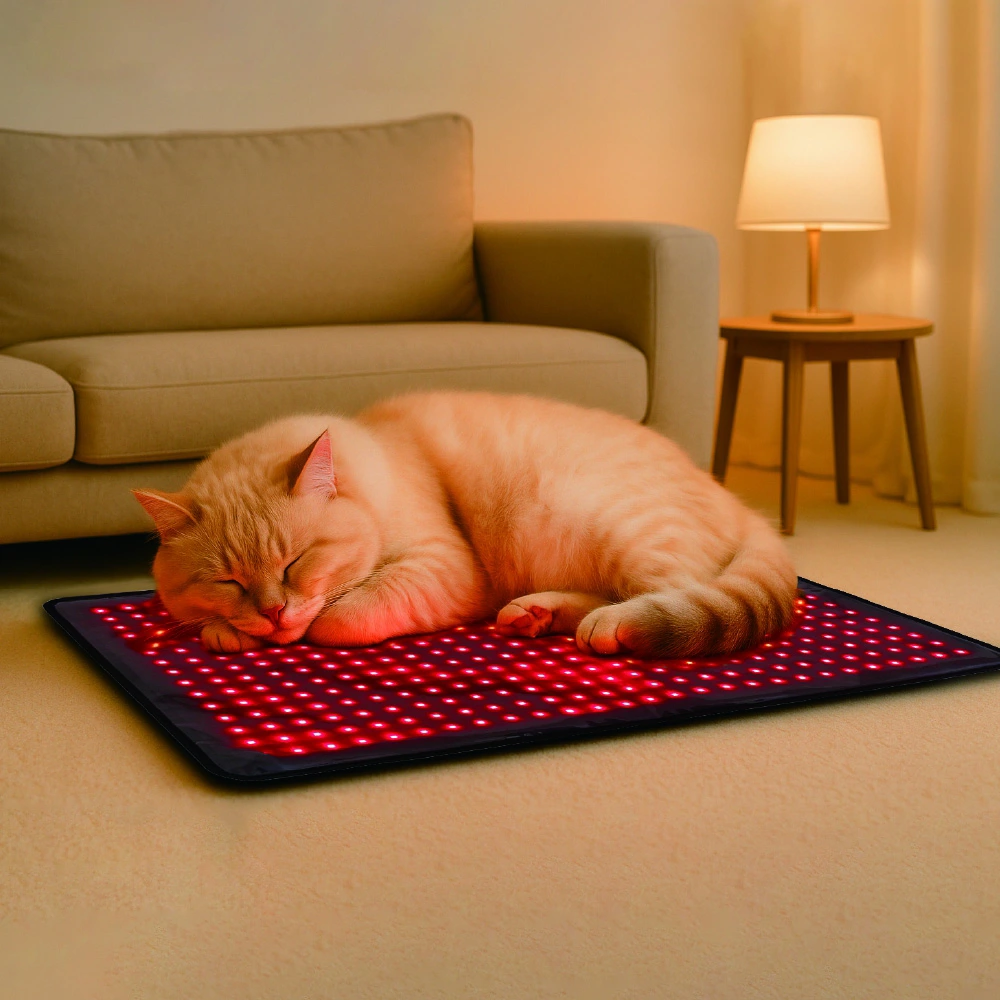
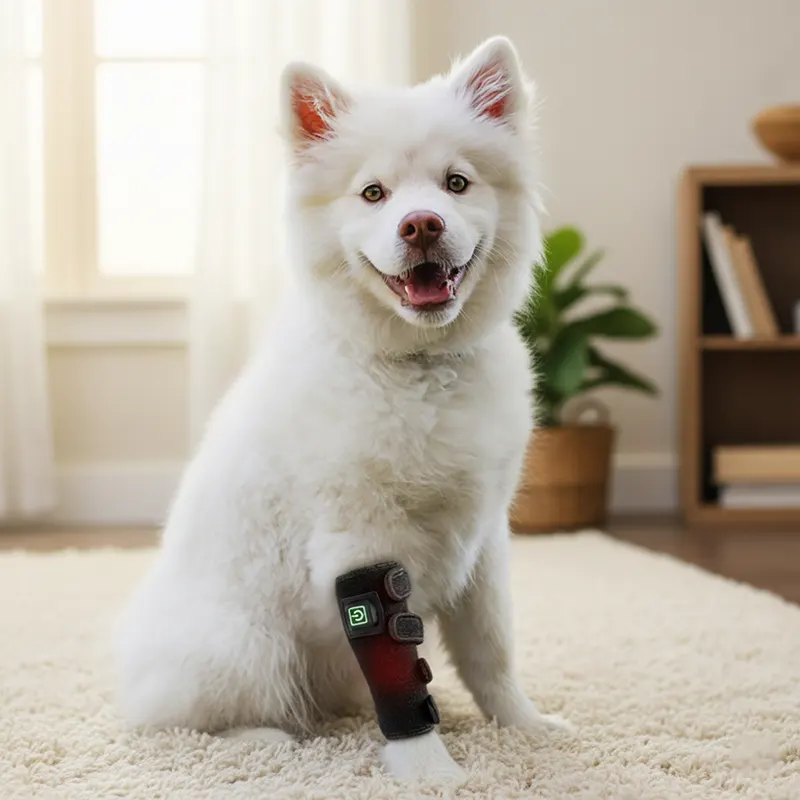
Red light therapy for pets uses specific wavelengths of red and near-infrared light to stimulate cellular energy and tissue repair. This non-invasive treatment is commonly used by veterinarians to help dogs and cats recover from injuries, reduce inflammation, and relieve chronic pain.
By improving circulation and supporting mitochondrial function, red light therapy can accelerate healing and improve overall mobility for pets.
Red and infrared light therapy harnesses specific light wavelengths to support your pet’s natural healing processes. By using red (633nm) and infrared (830nm) licht, this therapy penetrates different tissue depths, aiding in tissue repair, reducing pain, and creating an anti-inflammatory response. It’s a method backed by extensive clinical research, now widely used in veterinary practices and for home care.
These specific wavelengths interact with cells to enhance healing and pain relief. They stimulate the cells responsible for repair and recovery, speeding up the healing process and reducing discomfort more effectively.