Arthritis is one of the most common mobility challenges in dogs, especially senior dogs and large breeds. Many pet owners first notice small changes: their dog becomes slower on walks, hesitates before climbing stairs, struggles to get up after resting, or avoids jumping onto the sofa or into the car. Over time, these signs may affect not only movement but also mood, sleep, and overall quality of life.
As pet owners look for gentle and non-invasive ways to support daily comfort, red light therapy for dogs with arthritis has become a growing topic in home pet wellness. Red light therapy, also known as photobiomodulation, uses specific wavelengths of red and near-infrared light to support tissue comfort, circulation, and recovery routines.
This guide explains the potential benefits, safety considerations, and practical home-use tips for dog owners interested in red light therapy. It also introduces Pureluxtech pet red light therapy pad options that can support both home care and professional pet wellness applications.
What Is Dog Arthritis?
Dog arthritis, often referred to as osteoarthritis, is a chronic joint condition that may develop due to age, genetics, injury, weight pressure, joint structure, or long-term wear and tear. It can affect the hips, knees, elbows, shoulders, spine, and paws.
Common signs may include stiffness, limping, reduced activity, difficulty standing up, reluctance to climb stairs, slower walking, muscle loss, or behavioral changes. Some dogs may become less playful, sleep more, or show discomfort when touched around certain joints.
Because these symptoms can overlap with other health issues, pet owners should always consult a veterinarian before starting any new therapy or wellness routine. Red light therapy should be used as a supportive care option, not as a replacement for professional diagnosis, medication, weight management, or rehabilitation guidance.
How Red Light Therapy Works for Dogs
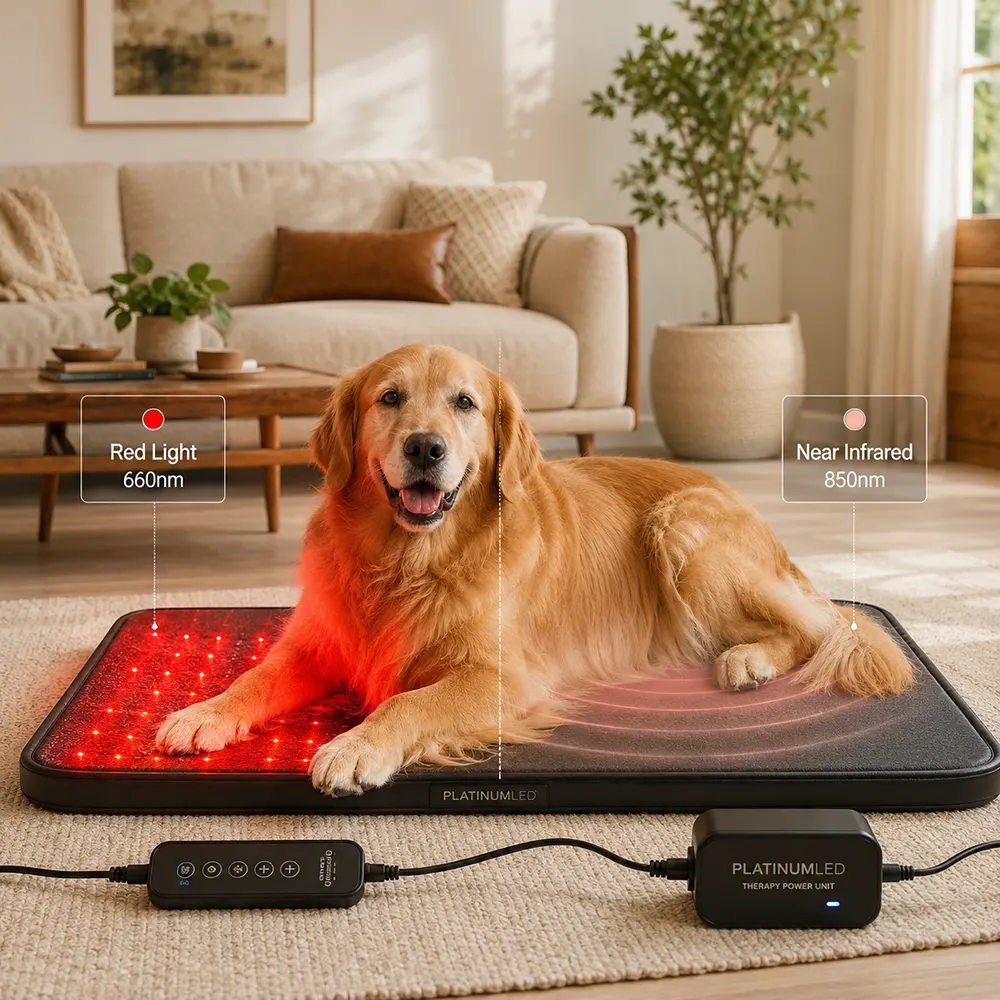
Red light therapy uses light energy from specific wavelengths to interact with the body. In pet red light therapy devices, two common wavelengths are 660nm red light and 850nm near-infrared light.
660nm red light is often used for surface-level tissue and skin wellness applications. 850nm near-infrared light is commonly selected for deeper tissue support, making it useful for mobility and joint comfort routines. When combined in one mat-style device, these wavelengths can provide a broader pet wellness application for dogs, cats, and veterinary care environments.
For dogs with arthritis, the goal is not to “cure” the condition. Arthritis is usually long-term and requires ongoing management. Instead, red light therapy may be used as part of a daily or weekly wellness routine to support comfort, relaxation, and mobility care.
Potential Benefits for Dogs with Arthritis
Red light therapy may offer several practical benefits for dogs with arthritis-related stiffness or mobility challenges.
1. Supports Joint Comfort
Dogs with arthritis often experience stiffness after rest or after long periods of low activity. A red light therapy session may help create a calm and comfortable care routine focused on areas such as the hips, legs, back, or shoulders.
2. Encourages Relaxation
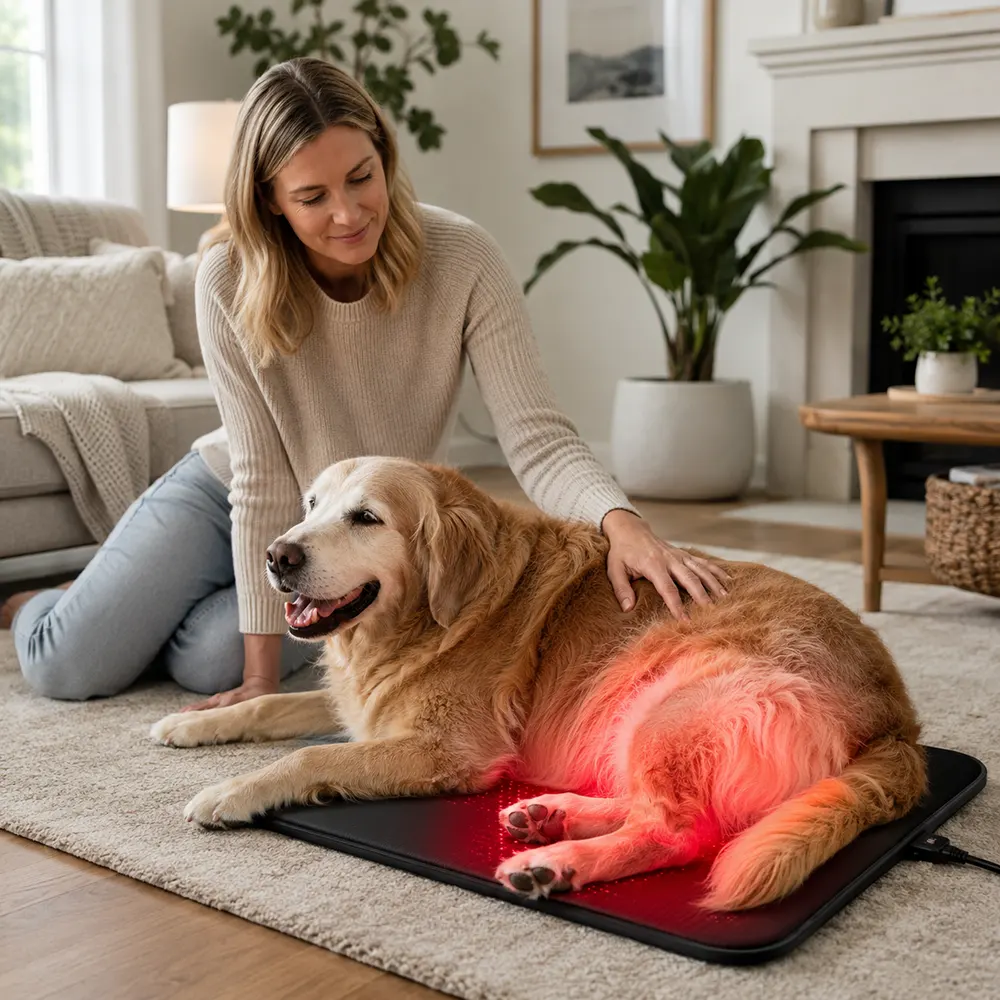
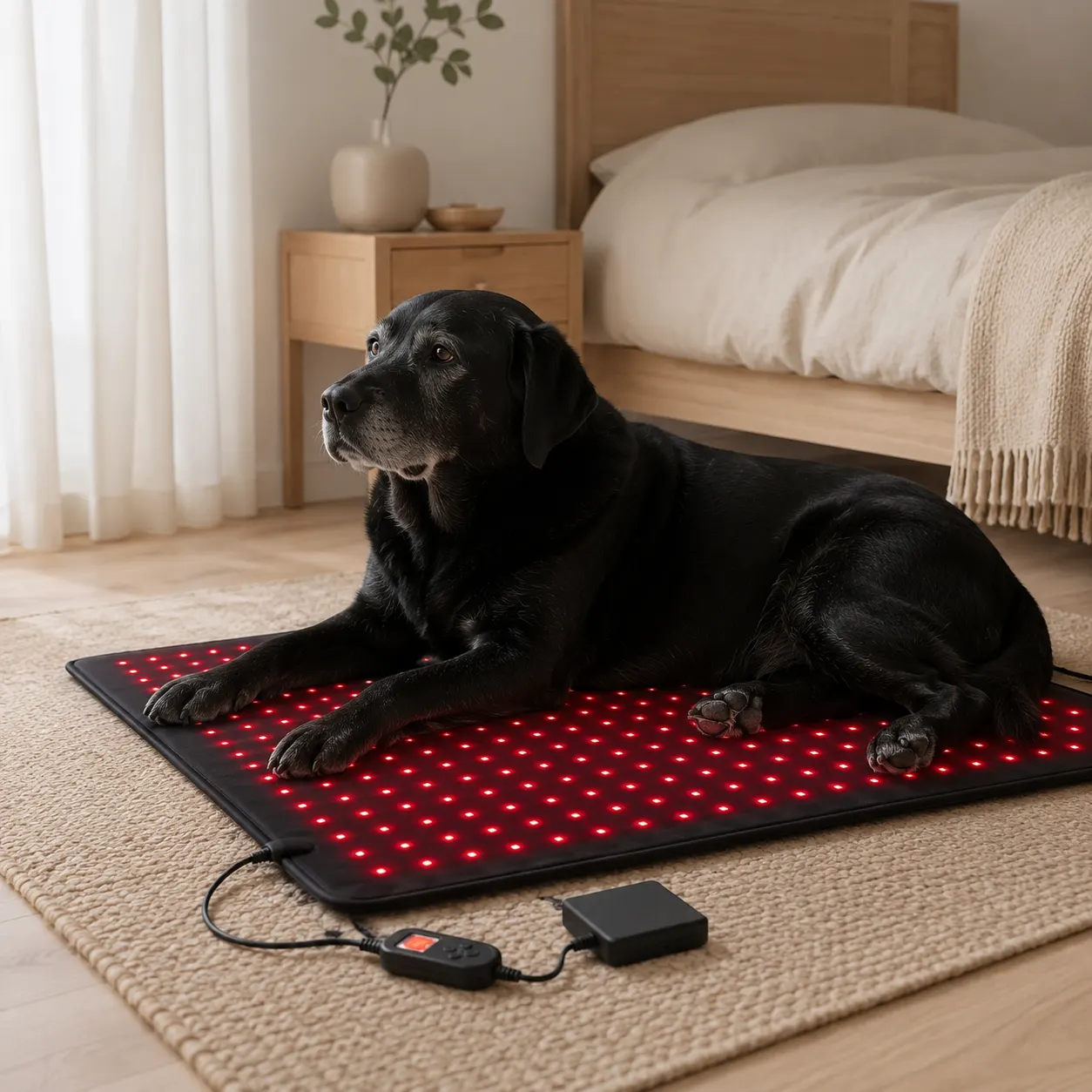
Many dogs enjoy lying on a warm, quiet surface during a care session. A mat-style red light therapy pad allows the dog to rest naturally instead of requiring the owner to hold a handheld device in place. This can be especially helpful for senior dogs or dogs that become anxious during treatment.
3. Helps Support Mobility Routines
For dogs with arthritis, regular movement is important, but the routine must be gentle and appropriate. Red light therapy can be paired with veterinarian-approved low-impact activity, soft bedding, non-slip flooring, and weight management to support a more complete mobility care plan.
4. Covers Larger Body Areas
Handheld red light devices may work for small target areas, but they can be less convenient for large dogs or multi-joint discomfort. A mat-style device allows broader coverage, making it easier for the dog to rest on the pad while light reaches the hips, back, legs, or shoulders.
Why Mat-Style Red Light Therapy Is Good for Home Use
Home pet care should be simple. If a product is difficult to use, most pet owners will stop using it consistently. This is why a red light therapy mat can be more practical than a handheld lamp for many dog owners.
A dog can lie down naturally on the mat during the session. The owner does not need to move a device around manually. This hands-free experience makes the routine easier, more comfortable, and more likely to become part of daily pet care.
For older dogs, large breeds, and dogs with arthritis-related stiffness, a larger mat can be especially helpful because it provides more surface area. It also allows the dog to choose a relaxed position instead of being forced into a fixed posture.
BE700: Large Red Light Therapy Pad for Dogs and Cats
For medium and large dogs, the BE700 red light therapy pad for dogs and cats is the main Pureluxtech option. It is designed with 700 LEDs, 30W power output, and a large 920 × 520 × 6mm treatment area.
The BE700 uses 660nm red light and 850nm near-infrared light, with three modes: red light, near-infrared light, and combined red + near-infrared mode. Its larger format makes it suitable for dogs that need broader coverage across the hips, back, legs, or shoulder area.
With ≥90mW/cm² irradiance, USB Type-C charging, and a 15000mAh power bank, the BE700 is suitable for home pet care, veterinary clinics, pet rehabilitation centers, distributors, and OEM/ODM pet wellness brands.
For pet owners looking for a practical red light therapy mat for dogs with arthritis-related stiffness or mobility needs, the BE700 provides a large and professional-format solution.
BE400: Compact Pad for Cats and Small Pets
For smaller pets, compact home care, or families with cats and small dogs, Pureluxtech also offers the BE400 red light therapy pad for cats and small pets.
The BE400 features 400 high-intensity 5050 LED chips, 26W power output, and a 700 × 420 × 6mm pad size. Like the BE700, it uses a dual-wavelength design with 660nm red light and 850nm near-infrared light, offering red, NIR, and combined working modes.
The BE400 is a better fit for cats, small dogs, and compact pet wellness routines. For pet wellness brands or distributors, it can also serve as an entry-level animal red light therapy product within a broader product line.
Safety Tips for Home Use
Red light therapy is generally considered a non-invasive wellness method, but responsible use is still important.
Before starting, speak with your veterinarian, especially if your dog has severe pain, sudden lameness, swelling, recent surgery, tumors, pregnancy, eye disease, skin conditions, or any unclear medical symptoms.
During use, keep the session calm and supervised. Let your dog lie down naturally. Do not force your dog to stay on the mat if it appears nervous or uncomfortable. Avoid directing strong light toward the eyes. Follow the product manual for session time, mode selection, and charging instructions.
It is also important to understand that more is not always better. Longer or more frequent sessions do not automatically mean better results. A consistent, moderate routine is usually more practical than excessive use.
How to Build a Home Care Routine
A good home routine should be simple and repeatable.
First, choose a quiet location where your dog already feels safe, such as near its bed, on a soft rug, or in a calm corner of the living room. Place the red light therapy mat flat on the floor and allow your dog to explore it before turning it on.
Second, start slowly. Let your dog rest on the mat for a short session and observe its response. If your dog relaxes, you can gradually build a more consistent routine according to the product instructions and your veterinarian’s guidance.
Third, combine red light therapy with other arthritis-friendly habits. These may include weight control, gentle leash walks, soft bedding, non-slip mats, joint-friendly nutrition, and regular veterinary checkups.
Fourth, track changes over time. Pet owners can keep notes on walking speed, stair use, getting up after rest, mood, sleep, and activity level. This can help you discuss progress more clearly with your veterinarian.
What to Look for in a Dog Red Light Therapy Pad
When choosing a red light therapy pad for dogs, pet owners should consider several factors.
Look for dual wavelengths such as 660nm and 850nm. Check the pad size to make sure it fits your dog’s body. Review LED quantity, irradiance, charging method, controller design, and ease of cleaning. For large dogs, a bigger mat like BE700 may provide more practical coverage. For cats or small pets, a compact option like BE400 may be easier to use.
For pet wellness brands, veterinary suppliers, and distributors, supplier reliability is also important. OEM/ODM capability, packaging customization, quality control, and long-term production support can make a major difference when building a professional pet red light therapy product line.
Final Thoughts
Red light therapy for dogs with arthritis should be understood as a supportive wellness routine, not a cure. When used responsibly and combined with veterinary care, weight management, gentle movement, and a comfortable home environment, it may help support joint comfort, relaxation, and daily mobility care.
For larger dogs and professional pet wellness applications, the BE700 offers broad coverage and strong B2B positioning. For cats, small dogs, and compact home routines, the BE400 provides a smaller and flexible option.
Whether you are a pet owner, veterinary clinic, distributor, or pet wellness brand, Pureluxtech can support animal red light therapy solutions for home use, professional care, and OEM/ODM projects.
Contact Pureluxtech to learn more about BE700, BE400, and customized pet red light therapy pad solutions for your market.