Red light therapy pads for dogs are becoming increasingly popular among pet owners, veterinary clinics, rehabilitation centers, and pet wellness brands. As more people look for gentle, non-invasive ways to support their dogs’ comfort, mobility, and daily wellness routines, mat-style red light therapy devices have become an attractive option for home and professional use.
However, not every pet red light therapy pad is the same. Some products are designed for small pets, while others are better suited for medium or large dogs. Some offer only red light, while others combine red and near-infrared wavelengths. Some are built for casual home use, while others are better suited for veterinary or B2B pet wellness applications.
So, how do you choose the best red light therapy pad for dogs?
This guide explains what pet owners, distributors, veterinary suppliers, and pet wellness brands should look for before buying a dog red light therapy pad.
1. Choose the Right Size for Your Dog
Size is one of the first factors to consider. A red light therapy pad should be large enough for the dog to rest comfortably on it. If the pad is too small, only part of the body may receive light exposure. This can be inconvenient for dogs with stiffness around the hips, back legs, shoulders, or spine.
For medium and large dogs, a larger mat is usually more practical. It allows the dog to lie down naturally and gives broader body coverage. This is especially useful for senior dogs, large breeds, and dogs that need regular mobility support.
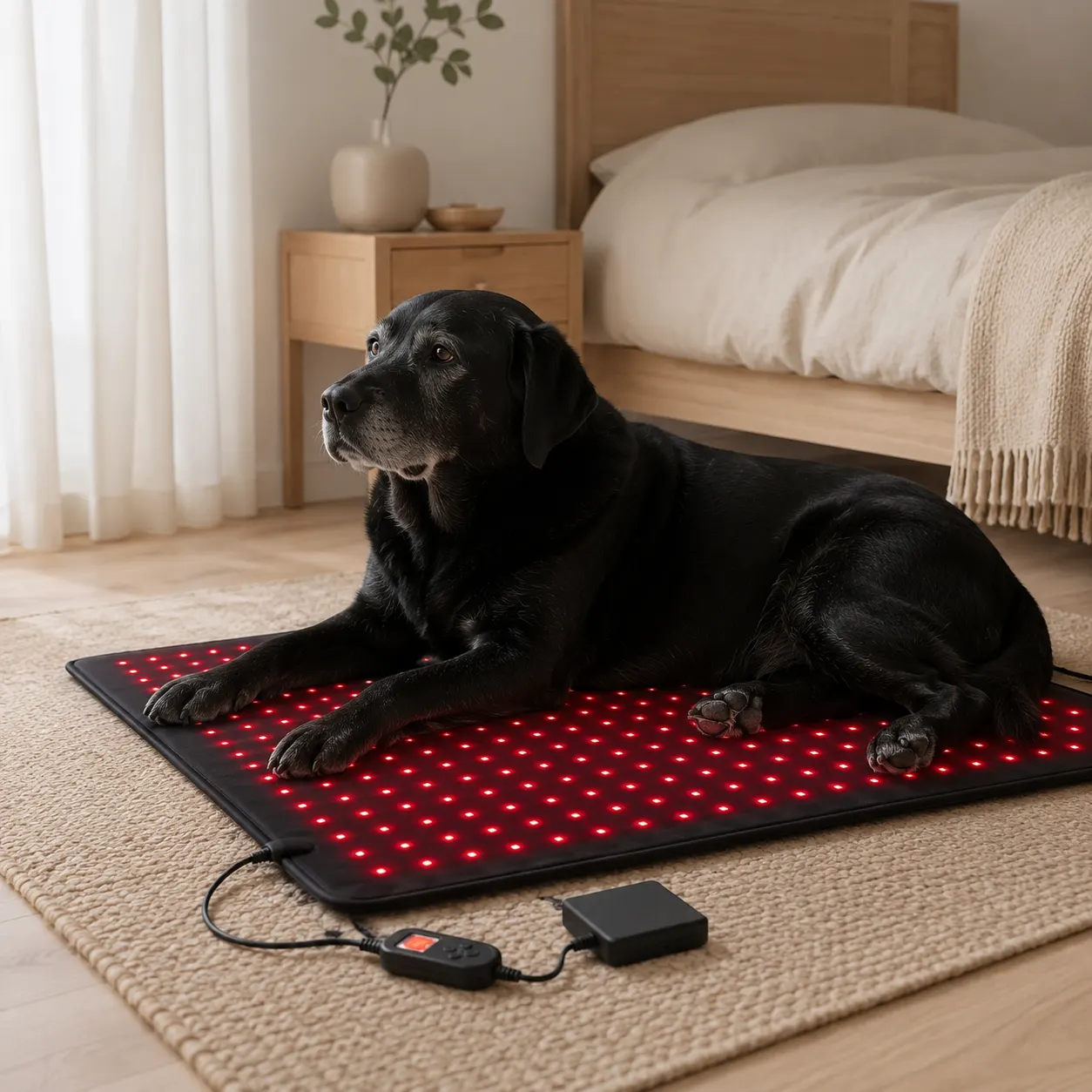
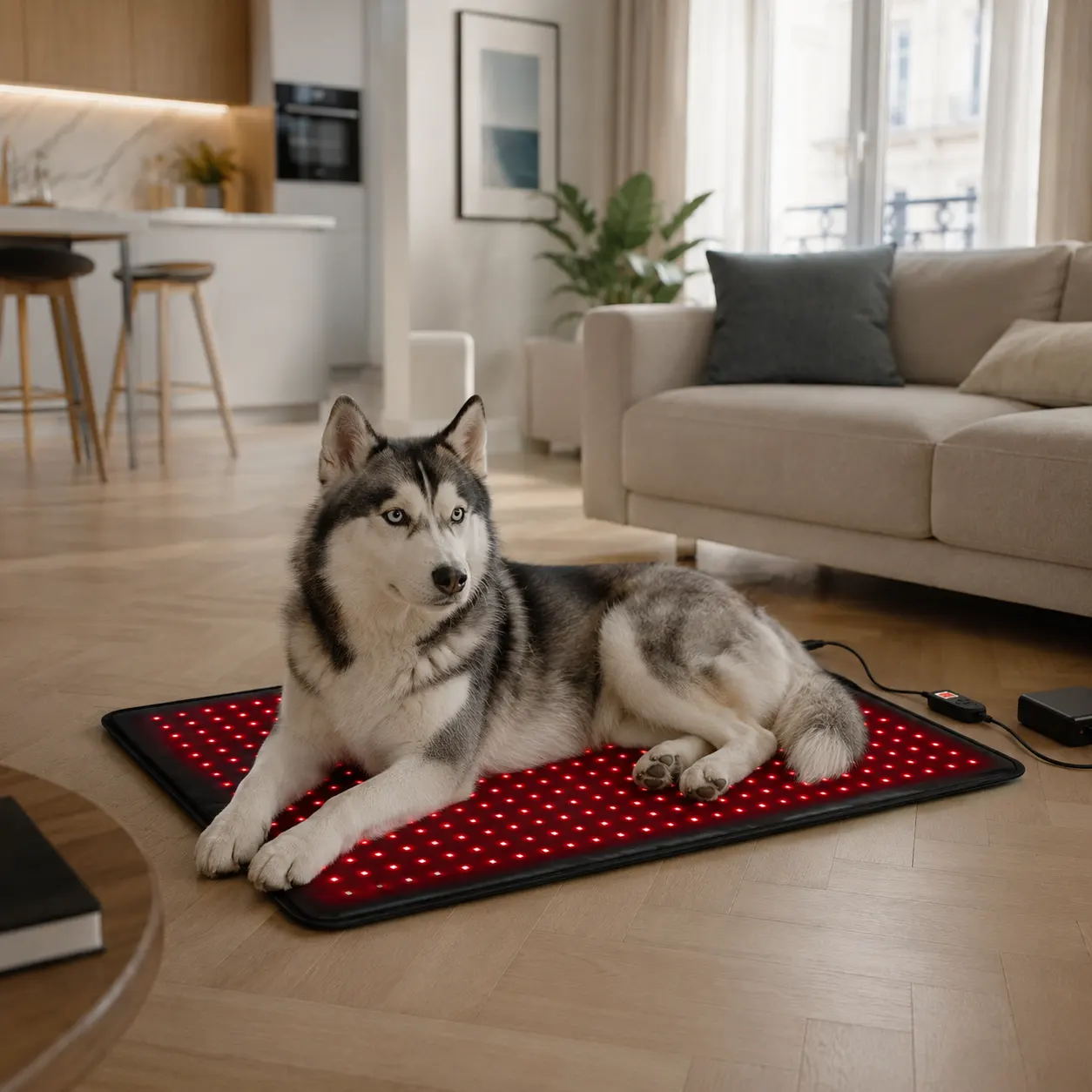
For example, the BE700 red light therapy pad for dogs and cats features a large 920 × 520 × 6mm treatment area. This makes it suitable for dogs that need wider coverage during at-home wellness sessions or professional pet care use.
For smaller dogs, cats, or compact pet care routines, the BE400 red light therapy pad for cats and small pets offers a smaller 700 × 420 × 6mm size, making it easier to use in apartments, small rooms, and multi-pet households.
2. Look for Dual Wavelengths: 660nm + 850nm
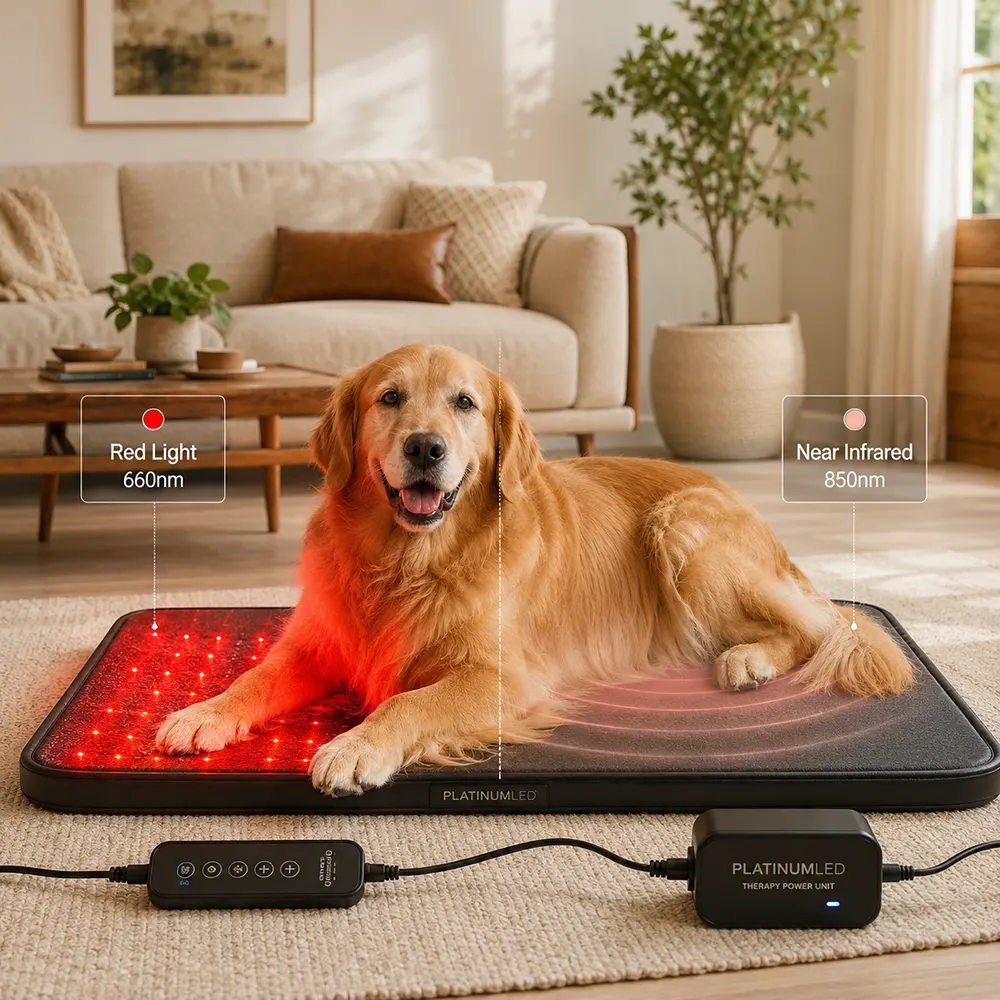
Wavelength is one of the most important technical specifications in a red light therapy pad. For pet wellness products, two commonly used wavelengths are 660nm red light and 850nm near-infrared light.
660nm red light is often used for surface-level tissue and skin wellness applications. 850nm near-infrared light is commonly selected for deeper comfort and mobility care routines. Together, these two wavelengths can support broader pet wellness applications.
When choosing a red light therapy pad for dogs, it is better to choose a dual-wavelength product instead of a basic single-light design. A product with both red and near-infrared light gives pet owners more flexibility for different care routines.
Both Pureluxtech BE700 and BE400 use 660nm red light and 850nm near-infrared light, with three working modes: red light, near-infrared light, and combined red + near-infrared mode. This gives users a more complete light therapy option for dogs, cats, and pet wellness use.
3. Check the LED Quantity and Distribution
LED quantity matters because it affects coverage and light distribution. A pad with more LEDs can provide broader illumination across the treatment surface. However, quantity alone is not enough. The LEDs should also be evenly distributed across the mat.
A dog red light therapy pad should not have large dark zones or uneven light areas. A dense and balanced LED layout helps create a more consistent user experience.
The BE700 is designed with 700 LEDs, making it suitable for larger dogs and wider treatment areas. The BE400 uses 400 high-intensity 5050 LED chips, making it a compact but capable option for cats, small dogs, and smaller pet wellness routines.
For pet owners, this means the product should provide enough light coverage for the dog’s body size. For B2B buyers, LED quantity and layout also become important selling points when building product pages, brochures, and pet wellness marketing content.
4. Review Irradiance, But Avoid Chasing Numbers Only
Irradiance refers to light output intensity. It is an important specification, but buyers should not judge a product only by the highest number. A good red light therapy pad should balance irradiance, comfort, heat control, session time, and safe usability.
The BE700 offers ≥90mW/cm² irradiance, while the BE400 offers ≥80mW/cm² irradiance. These specifications support professional positioning for pet wellness routines.
However, it is important to remember that stronger does not always mean better. Pet products need to be comfortable and practical for regular use. Dogs should be able to lie down calmly without feeling stressed or overheated. A good product should deliver stable light output while remaining easy and comfortable to use.
5. Consider Power, Battery, and Charging Design
Home-use pet products should be convenient. If the setup is too complicated, pet owners may not use the device consistently. That is why charging method and power design matter.
A good dog red light therapy pad should have a simple power connection, clear controller, and reliable battery support. This allows pet owners to use the product in different rooms, near the dog’s bed, or in a calm living room corner.
Both BE700 and BE400 are designed with USB Type-C charging and a 15000mAh power bank. The charging time is around 4.5–5 hours, making them practical for repeated home or professional use.
For distributors and private label brands, a clear and modern charging system is also easier to explain to customers. Type-C charging feels familiar, current, and user-friendly.
6. Look for Simple Mode Control
Pet owners do not want complicated technology. They want a product that is easy to understand and easy to use.
A good red light therapy pad should offer simple mode control. The user should be able to select red light, near-infrared light, or combined mode without confusion.
The BE700 and BE400 both offer three modes:
Mode 1: Red light, 660nm
Mode 2: Near-infrared light, 850nm
Mode 3: Red + near-infrared, 660nm + 850nm
This simple structure makes the product easier for pet owners, veterinary staff, and distributors to understand. It also makes the product more suitable for user manuals, product pages, and training materials.
7. Choose a Comfortable Mat-Style Design
Dogs need a calm and natural experience. A handheld device may be useful for spot use, but it requires the owner to hold the device in position. Many dogs do not enjoy this, especially if they are older, anxious, or uncomfortable.
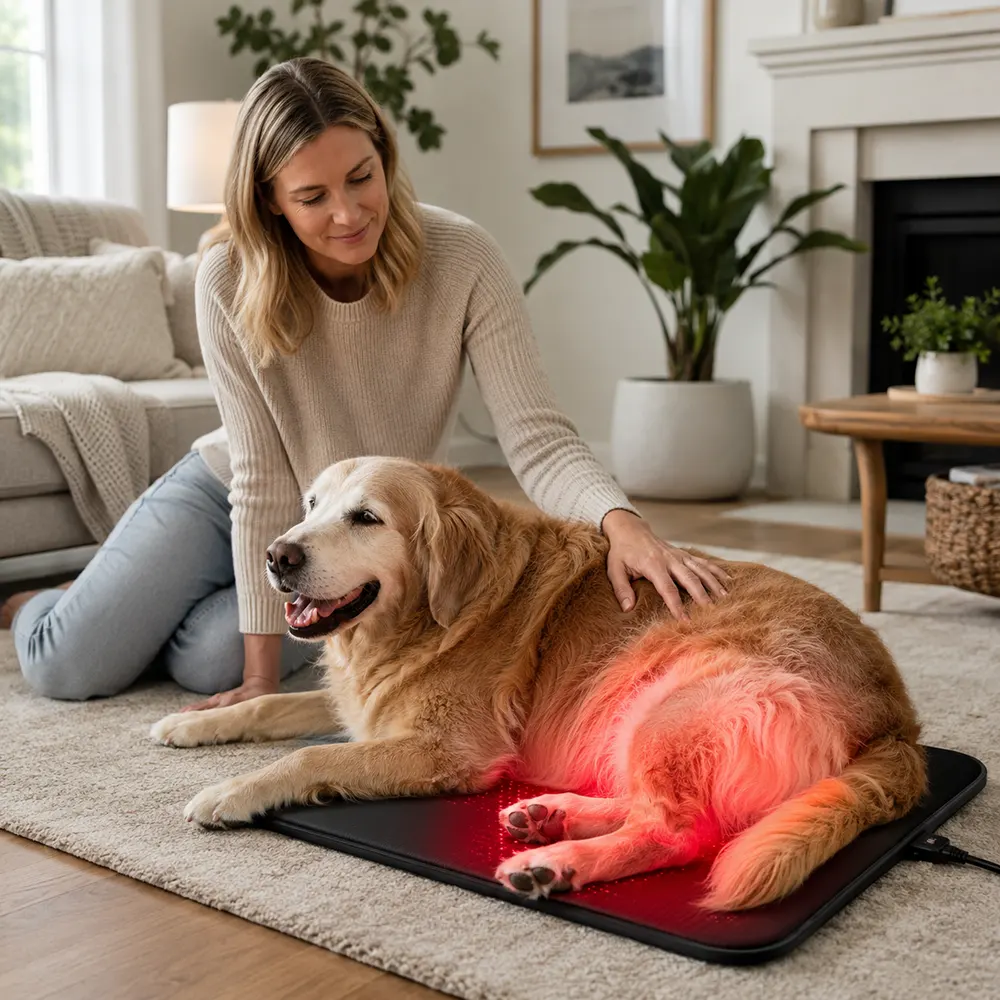
A mat-style device allows the dog to lie down naturally. This makes the routine feel more like rest than treatment. For dogs with joint stiffness or mobility challenges, a mat can be especially useful because the dog can choose a comfortable position.
Look for a slim, flexible, easy-to-place mat. It should fit naturally into home environments, veterinary clinics, or pet rehabilitation rooms.
8. Think About Your Use Scenario
The best red light therapy pad depends on how it will be used.
For home pet owners with medium or large dogs, the BE700 is the stronger option because of its larger treatment area and higher LED count. It is suitable for dogs that need broader body coverage.
For cats, small dogs, and smaller pets, the BE400 may be more practical. It is easier to place in smaller rooms and can serve as a compact animal red light therapy solution.
For veterinary clinics, rehabilitation centers, and pet wellness brands, offering both sizes can create a stronger product matrix. BE700 can serve as the large dog or professional-use option, while BE400 can serve as the compact small-pet option.
9. Check Supplier Reliability
For B2B buyers, choosing the right product is only one part of the decision. Choosing the right supplier is just as important.
Pet red light therapy pads involve LEDs, wiring, controllers, battery systems, materials, packaging, and quality control. A reliable supplier should be able to support product specifications, OEM/ODM customization, private label packaging, user manuals, and stable production.
Pureluxtech provides animal red light therapy pad solutions for global pet wellness brands, veterinary suppliers, distributors, and OEM/ODM customers. With BE700 and BE400, buyers can build a product line that covers different pet sizes, use scenarios, and market channels.
10. Use Responsible Marketing Language
If you are a pet wellness brand or distributor, marketing language matters. Avoid exaggerated claims such as “cures arthritis” or “guarantees pain relief.” These claims can create compliance risk and reduce customer trust.
Better phrases include:
Supports pet wellness routines
Designed for joint comfort and mobility care
Red and near-infrared light for pet care applications
Suitable for dogs, cats, veterinary clinics, and home use
A gentle at-home wellness option for pets
This type of language is safer, more credible, and better suited for international markets.
Final Thoughts
The best red light therapy pad for dogs should be practical, comfortable, and technically well designed. Before buying, pet owners and B2B buyers should review size, wavelength, LED quantity, irradiance, charging method, mode control, usability, and supplier reliability.
For medium and large dogs, the BE700 offers a larger format with 700 LEDs, 660nm + 850nm wavelengths, ≥90mW/cm² irradiance, and a wide 920 × 520mm treatment area. For cats, small dogs, and compact pet wellness routines, the BE400 provides a smaller option with 400 LEDs, dual wavelengths, and a 700 × 420mm pad size.
Whether you are buying for home use, veterinary care, distribution, or private label development, Pureluxtech can support pet red light therapy pad solutions for your market.
Contact Pureluxtech to learn more about BE700, BE400, and OEM/ODM animal red light therapy pad solutions.