Red light therapy devices have attracted growing interest because they provide a non-invasive, at-home option that can fit into a regular hair and scalp care routine. However, not every product marketed as “FDA approved,” “FDA certified,” or “medical grade” has completed the same regulatory process.
Whether you are a consumer, clinic, distributor, or private-label brand, choosing the right device starts with understanding FDA terminology, technical specifications, treatment coverage, safety information, and the differences between combs, caps, and full-coverage helmets.
What Does FDA-Cleared Actually Mean?
“FDA approved red light therapy for hair growth” is a common search phrase, but FDA-cleared is usually the more accurate term for many at-home hair growth devices sold in the United States.
Many moderate-risk medical devices enter the U.S. market through the FDA’s 510(k) premarket notification pathway. Under this process, a manufacturer generally demonstrates that its device is substantially equivalent to a legally marketed predicate device with a similar intended use and comparable technological characteristics.
FDA approval is more commonly associated with the premarket approval process used for certain higher-risk Class III medical devices. Therefore, hair growth combs, caps, and helmets that have completed a 510(k) pathway should normally be described as FDA-cleared, not automatically as FDA-approved.
FDA clearance also applies to a specific device, applicant, model range, intended use, and technical configuration. A product that looks similar to a cleared device is not necessarily covered by the same clearance.
Do Not Rely on an FDA Logo Alone
Some product pages display an FDA logo or use phrases such as “FDA registered,” “FDA listed,” “FDA certified,” or “manufactured in an FDA-registered facility.” These statements do not automatically prove that the exact product has received FDA 510(k) clearance.
Before purchasing, distributing, or private-labeling a device, request:
- The official 510(k) number
- The device name listed in the FDA database
- The models covered by the clearance
- The applicant or clearance holder
- The FDA decision letter or 510(k) summary
- Confirmation that the supplied device matches the cleared configuration
The product model, light source, wavelength, diode count, operating program, intended use, labeling, and treatment schedule should be consistent with the regulatory documentation.
This is particularly important for private-label projects. Changing a logo, packaging design, or exterior color is different from changing the optical output, wavelength, software, treatment time, diode layout, or intended use. Technical modifications may require an additional regulatory assessment.
Start With the Type and Cause of Hair Thinning
A red light therapy device should not be selected only because it has a high diode count or a premium-looking design.
Hair thinning may be associated with hereditary pattern hair loss, hormonal changes, stress, nutritional deficiencies, medications, scalp conditions, autoimmune disorders, or other health factors. Sudden, severe, patchy, or unexplained hair loss should be evaluated by a qualified healthcare professional before beginning an at-home light therapy routine.
FDA-cleared devices also have defined indications and intended-user populations. A clearance may apply to specific classifications or patterns of androgenetic alopecia and may not cover every type of hair loss.
Consumers should review the instructions for use carefully. Brands and distributors should also ensure that advertising claims remain within the intended use supported by the relevant regulatory documents.
Compare Laser, LED, and Combined-Light Devices
“Red light therapy” is often used as a broad marketing term, but hair growth devices may use low-level lasers, LEDs, or a combination of both.
Low-Level Laser Devices
Laser diodes produce relatively focused, coherent light. Many cleared hair growth combs, caps, and helmets use low-level laser technology at visible red wavelengths.
When evaluating a laser hair growth device, review:
- The exact laser wavelength and wavelength tolerance
- Output power per laser diode
- The number and placement of laser diodes
- Continuous or pulsed operating modes
- Laser safety classification
- Optical distribution across the scalp
- Treatment duration and frequency
- Eye-safety instructions and warnings
LED Hair Growth Devices
LEDs generally produce non-coherent light with a wider beam pattern. They can be used to create broader optical coverage and may support lightweight or flexible product designs.
However, an LED device should not be assumed to be technically or legally equivalent to an FDA-cleared laser device simply because both emit red light. The light source, energy delivery, testing requirements, labeling, and regulatory status may differ.
Combined Laser and LED Systems
Some devices combine laser diodes and LEDs to balance focused light delivery with broader scalp coverage. Buyers should request a clear breakdown of the optical configuration instead of relying on one total diode number.
For example, “200 light sources” could mean 200 lasers, 200 LEDs, or a combination of the two. These configurations are not automatically interchangeable.
Evaluate Wavelength, Output, and Scalp Coverage Together
Wavelength is one of the most visible specifications in hair growth device marketing, but it should never be evaluated in isolation.
Many low-level light therapy hair growth devices use visible red wavelengths in the mid-600-nanometer range. A specification such as 650 nm ±5 nm provides more useful information than a general claim such as “medical red light.”
The wavelength shown on the product page, packaging, product label, user manual, technical report, and regulatory file should be consistent.
Buyers should also evaluate:
- Output power per light source
- Total optical output
- Irradiance measured at the treatment surface
- Distance between the device and the scalp
- Optical angle and light distribution
- Treatment area and scalp coverage
- Session duration
- Total energy delivered during one session
A high diode count does not automatically guarantee better performance. A carefully designed optical array may provide more consistent coverage than a larger number of poorly positioned light sources.
Hair can also block light from reaching the scalp. Device fit, diode spacing, positioning, and distance from the scalp are therefore important parts of the product design.
Choose the Right Hair Growth Device Format
The best device is not necessarily the model with the greatest number of features. The right choice depends on the target area, user lifestyle, treatment routine, comfort expectations, and market positioning.
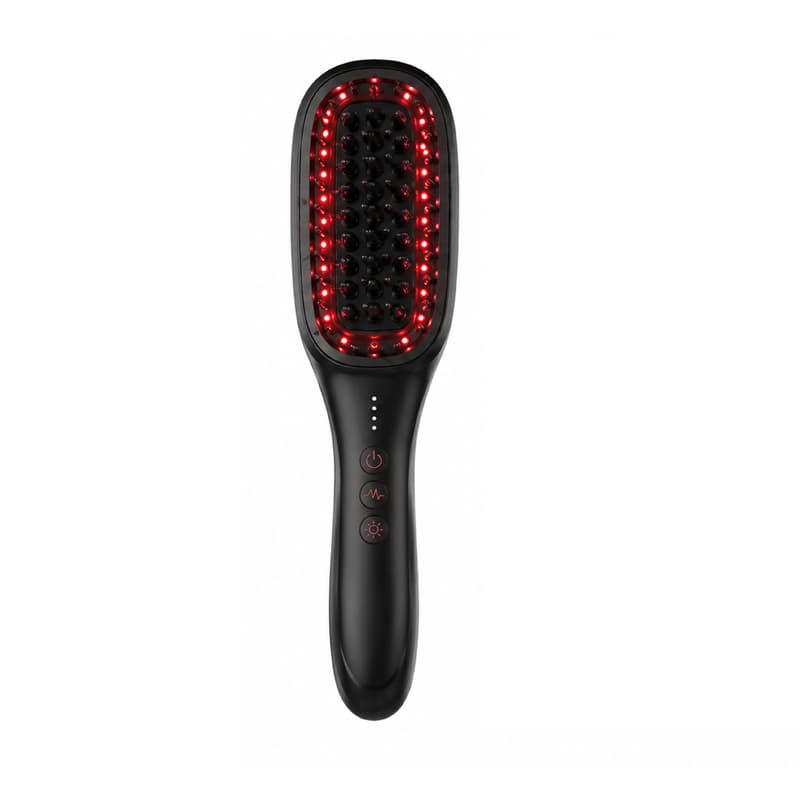
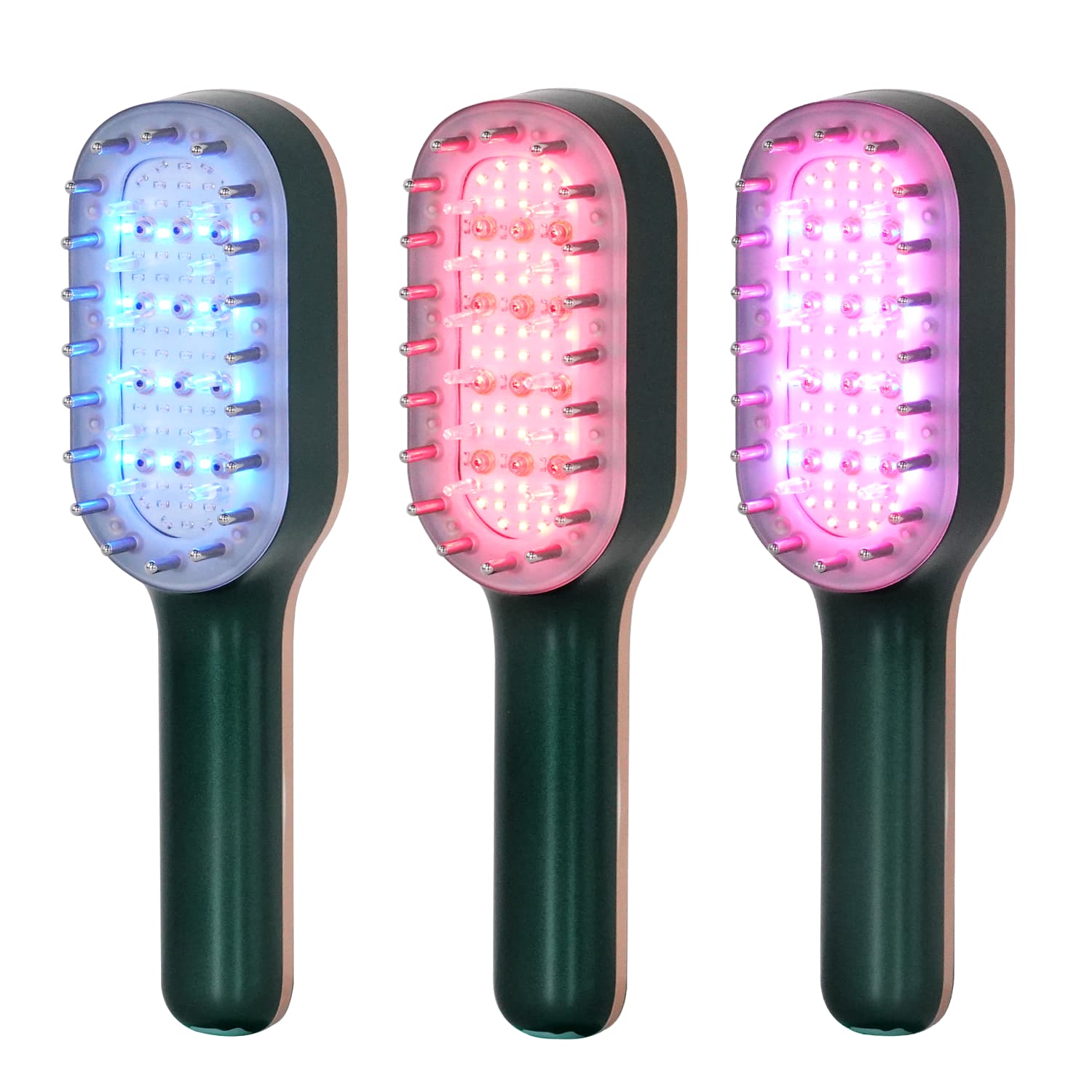
Handheld Laser Hair Growth Combs
A handheld comb may be suitable for users who want to focus on areas such as the hairline, temples, crown, or localized thinning zones.
The HG04 handheld laser hair growth comb demonstrates the compact, portable format. It measures 207 × 56 × 49 mm, weighs approximately 160 grams, has a rated power of 4.5 W, and uses a 400 mAh rechargeable battery.
This type of design is easier to store, transport, and position over selected areas. The trade-off is that the user must move the device correctly and consistently to cover the intended treatment zone.
When comparing handheld combs, ask:
- Does the device use lasers, LEDs, or both?
- What is the exact wavelength?
- How many light sources are included?
- Does the device have an automatic timer?
- Is there a contact or movement sensor?
- Are massage, vibration, or RF functions included?
- Is the exact model supported by valid regulatory documentation?
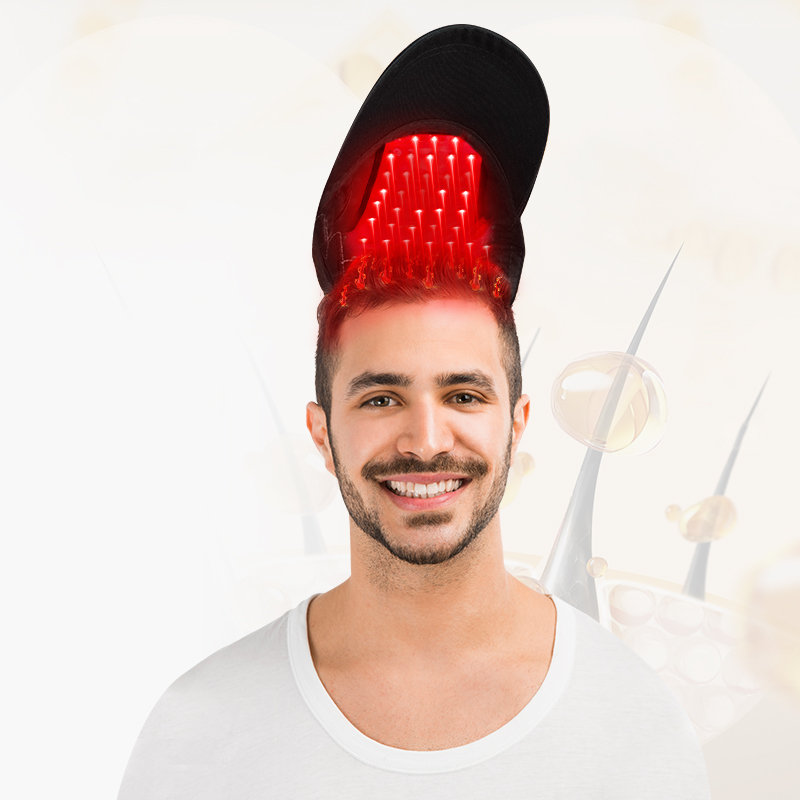
Wearable Red Light Hair Growth Caps
A wearable cap can provide a more discreet and lifestyle-oriented experience. It may appeal to users who want to complete a session while reading, working, or relaxing at home.
Pureluxtech’s wearable red light hair growth cap uses a cordless design and a listed red-light wavelength of approximately 650 nm. The product page lists dimensions of 270 × 190 × 140 mm and a net weight of approximately 1 kilogram.
For cap-style products, consider whether the design maintains stable positioning across different head sizes. A textile shell can improve appearance, but it should not compromise ventilation, optical alignment, hygiene, or repeatable treatment.
Full-Coverage Laser Hair Growth Helmets
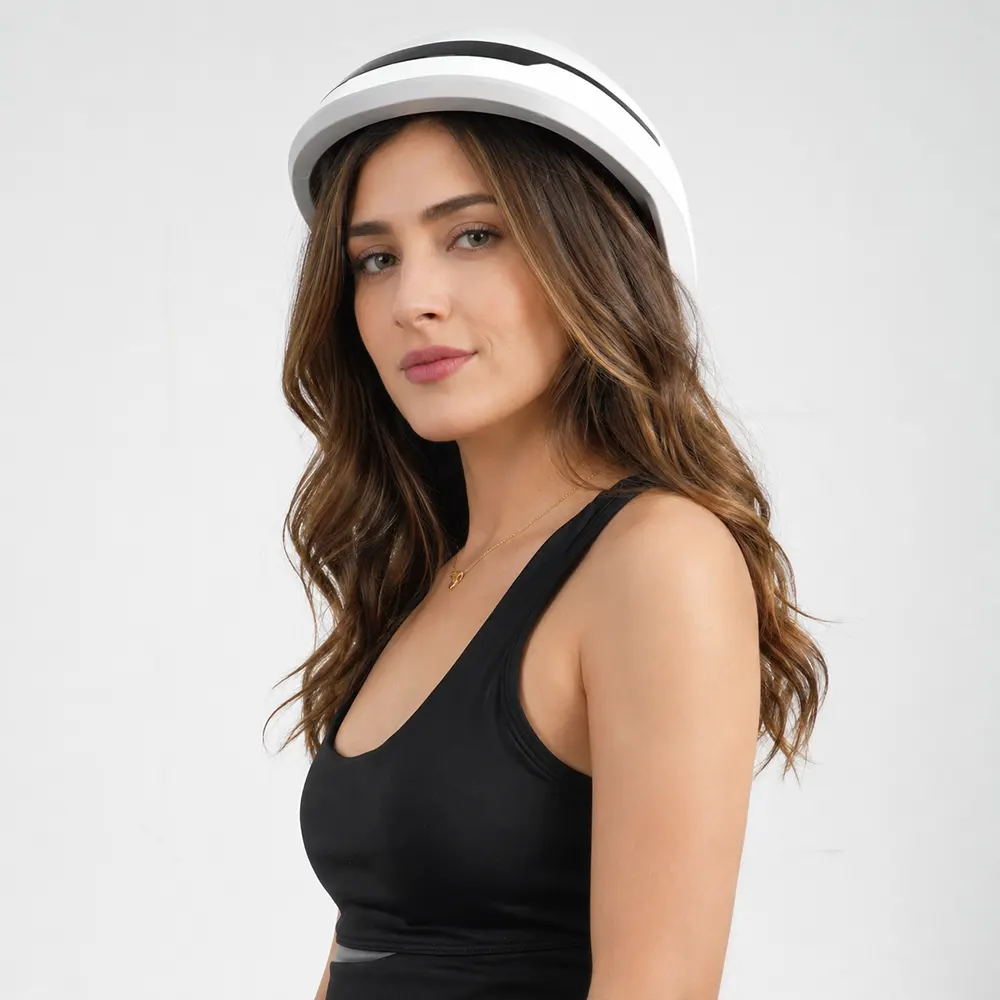
Helmet-style devices are generally designed to reduce manual movement and provide more repeatable coverage across a larger area of the scalp.
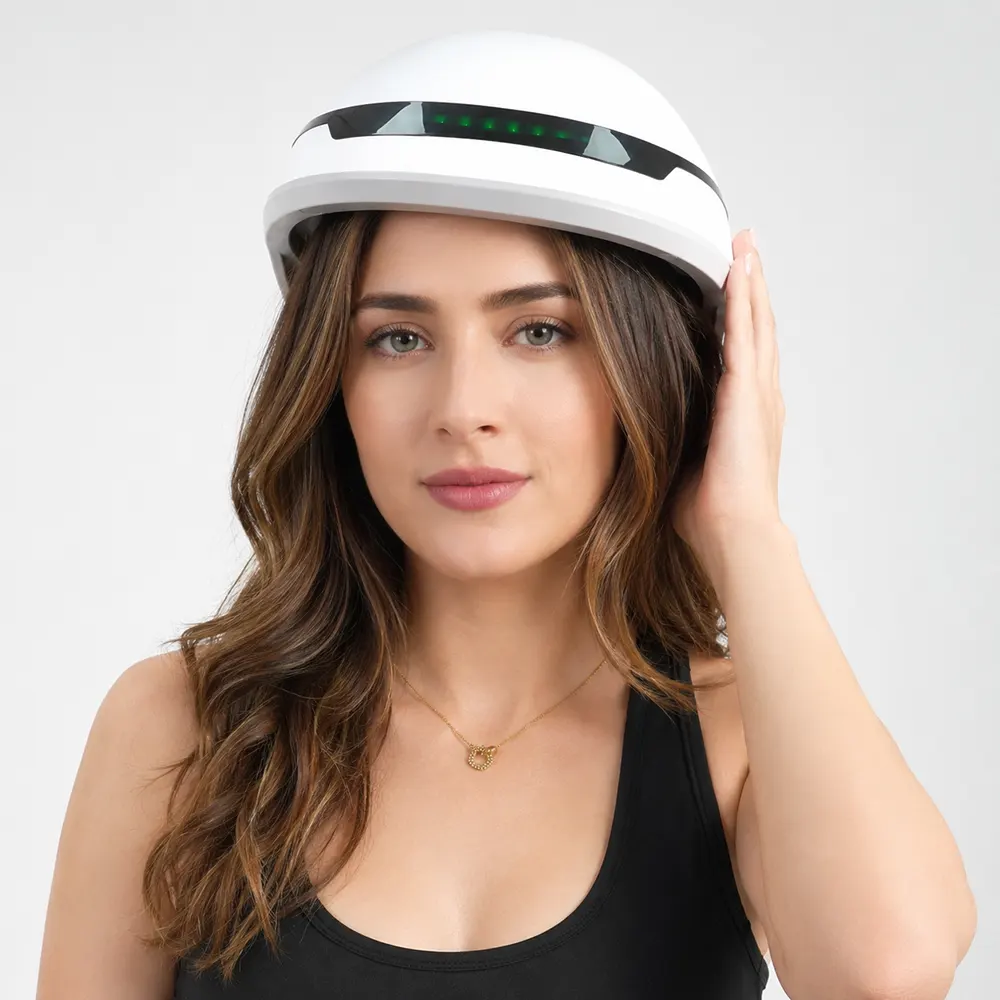
The T02 200-diode laser hair growth helmet is an example of a full-head format. It features a listed 200-laser-diode array, a wavelength of 650 nm ±5 nm, continuous output, and nominal output of 5 mW per diode.
The T02 measures 267 × 201 × 147 mm, weighs approximately 640 grams, and includes a 5000 mAh rechargeable battery. It also features voice reminders, low-battery notifications, and a listed 10-minute operating session.
These specifications are useful when comparing full-coverage designs. However, the regulatory status of an exact model and configuration should always be verified before it is marketed as FDA-cleared.
Consider Comfort and Routine Compliance
At-home hair growth support usually requires repeated use over time. A device that is uncomfortable, complicated, heavy, or difficult to charge may not fit easily into a user’s routine.
Practical features to compare include:
- Product weight and balance
- Head-size adjustment
- Pressure points around the forehead or temples
- Ventilation and heat management
- Cordless operation
- Battery capacity and charging time
- Automatic shutoff
- Voice, sound, or screen reminders
- Cleaning and hygiene requirements
- Storage and travel options
A shorter session may be convenient, but treatment time should be based on the validated optical output and instructions of the exact device. It should not be shortened only to create a stronger marketing message.
A longer session is not automatically more effective either. Light-based devices depend on a defined relationship between wavelength, output, coverage, distance, and exposure time.
Review Safety Information and Contraindications
A responsible manufacturer should provide clear safety information rather than relying on vague claims such as “completely safe” or “zero risk.”
The user manual should address:
- Eye-exposure precautions
- Photosensitivity warnings
- Medication-related precautions
- Scalp and skin conditions
- Age restrictions
- Use during pregnancy
- Electronic implants or medical-device precautions
- Cleaning and maintenance
- Battery and charging safety
- Maximum operating temperature
- Storage conditions
- Instructions for damaged products
People with photosensitive conditions or those taking medication that increases light sensitivity should seek professional guidance before using a light-based device.
How Brands and Distributors Should Evaluate a Manufacturer
For a brand, clinic, importer, or distributor, selecting a hair growth device is also a manufacturing and supply-chain decision.
A qualified OEM/ODM partner should be able to support:
- Product and component traceability
- Incoming-material inspection
- Optical performance testing
- Battery and electrical safety testing
- Laser safety documentation
- Quality-management procedures
- Packaging and labeling compliance
- Production and inspection records
- Reliability and aging tests
- Complaint handling and corrective actions
- Spare parts and warranty support
- Controlled product customization
Pureluxtech develops handheld, cap-style, and helmet-style solutions for wholesale, private-label, and OEM/ODM projects. The Pureluxtech Hair Growth Series provides several product-positioning options, from portable targeted-care devices to wearable full-scalp systems.
Customization should begin with the target market, intended use, and regulatory pathway—not simply with a new logo or exterior color. Technology, product claims, labeling, packaging, software, and technical configuration should be aligned before mass production begins.
A Practical FDA-Cleared Hair Growth Device Checklist
Before selecting a device, confirm that:
- The 510(k) number can be found in the official FDA database.
- The device name and model match the product being offered.
- The clearance holder or applicant is clearly identified.
- The intended use matches the marketing claims.
- The laser and LED configuration is accurately described.
- The wavelength and output are supported by technical documents.
- The diode layout provides appropriate scalp coverage.
- The treatment schedule is clear and realistic.
- The user manual includes appropriate warnings and precautions.
- The device is comfortable enough for repeated use.
- Warranty and after-sales responsibilities are defined.
- Private-label modifications have been reviewed for regulatory impact.
Final Thoughts
Choosing an FDA-cleared red light therapy device for hair growth requires more than comparing prices, diode counts, or before-and-after photographs.
Begin by verifying the exact device in the FDA database. Then evaluate the intended use, light source, wavelength, output, scalp coverage, treatment schedule, comfort, safety information, and manufacturing support.
A handheld comb may be appropriate for targeted areas. A wearable cap may provide a more discreet routine. A full-coverage helmet may offer more repeatable optical positioning across the scalp. Each format has advantages, and the right solution depends on the user, target market, and product strategy.
For brands and distributors, regulatory planning should be built into the product development process from the beginning.
Explore the Pureluxtech hair growth device collection to compare handheld, cap-style, and helmet-style product formats for wholesale, private-label, and OEM/ODM projects.
Frequently Asked Questions
Is red light therapy for hair growth FDA-approved?
Many hair growth light therapy devices are more accurately described as FDA-cleared rather than FDA-approved. Devices that complete the FDA 510(k) pathway are generally cleared based on substantial equivalence to a legally marketed predicate device.
How can I check whether a hair growth device is FDA-cleared?
Ask the manufacturer for the device’s 510(k) number, official device name, covered model numbers, and clearance holder. Compare this information with the official FDA database and confirm that the supplied product matches the cleared configuration.
Does FDA registration mean that a device is FDA-cleared?
No. Establishment registration and device listing do not automatically mean that a product has received 510(k) clearance. Registration, listing, clearance, and approval are different regulatory concepts.
Is a laser comb or laser helmet better for hair growth?
A laser comb offers targeted control and portability but requires the user to move it across the treatment area. A helmet can provide more repeatable, hands-free coverage across a larger portion of the scalp. The better option depends on the target area, comfort, routine, and verified device specifications.
Does a higher diode count mean better performance?
Not necessarily. Diode type, wavelength, optical output, placement, scalp distance, coverage, and treatment time all affect energy delivery. A well-designed optical array can be more important than the diode count alone.
Can an FDA-cleared device be customized for private-label sales?
Branding and packaging changes may be possible, but changes to wavelength, optical output, diode layout, software, treatment time, intended use, or claims may require additional regulatory review. Private-label buyers should confirm the permitted scope of customization before production.