Faites défiler les soins de la peau TikTok ou Instagram, et tu les verras partout: célébrités éclatantes, influenceurs, et les utilisateurs quotidiens portant des vêtements élégants, masques LED colorés. Les affirmations sont audacieuses. "Peau de verre dans 7 jours." "Effacez les rides comme une gomme." "Le secret du dermatologue que tout le monde cache." Mais à côté du battage médiatique, une question plus forte persiste: Les masques LED fonctionnent-ils vraiment ??
The short answer: Oui, mais seulement dans des conditions spécifiques. La thérapie LED n'est pas une illusion marketing, ce n'est pas non plus un miracle. C’est une branche bien documentée de la photobiomodulation (PBM) qui est utilisé en milieu clinique depuis des décennies. Cependant, l'efficacité d'un masque à domicile dépend entièrement de la précision technique, rendement lumineux vérifié, utilisation cohérente, et des attentes réalistes. Ce guide coupe le bruit, explique exactement comment fonctionnent les masques LED, pourquoi certains ne parviennent pas à livrer, et ce que vous devez savoir avant d'investir votre temps et votre argent.
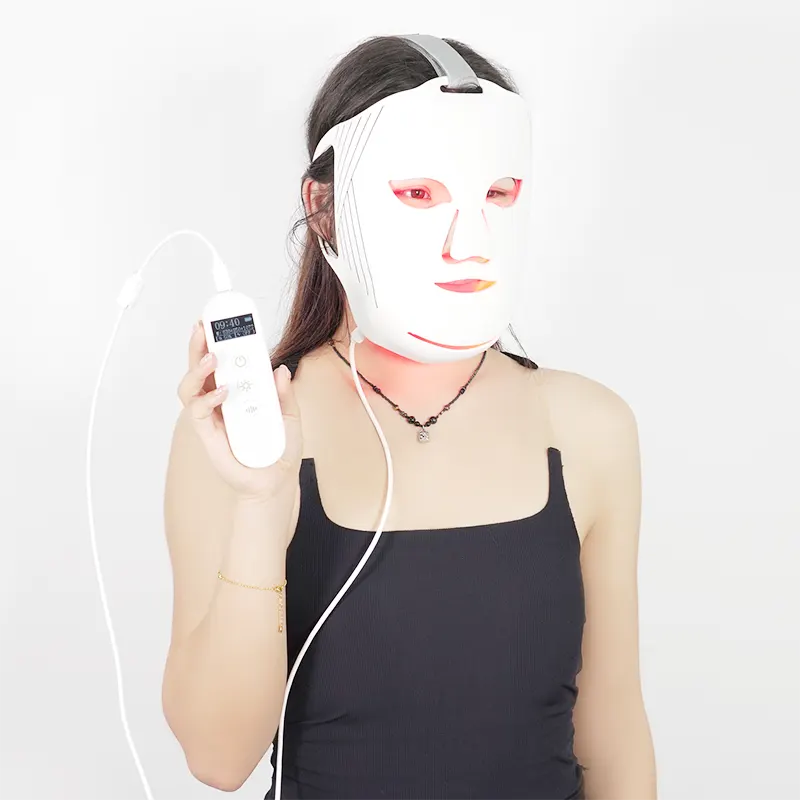
La science simplifiée: Comment la lumière devient un outil de soin de la peau
- La production d'ATP augmente, donner aux cellules plus d’énergie pour réparer et se régénérer.
- Les espèces réactives de l'oxygène se normalisent, réduire le stress oxydatif et l’inflammation chronique.
- Les facteurs de transcription s'activent, signaler aux fibroblastes de produire du nouveau collagène et de l'élastine.
- La microcirculation s'améliore, fournir de l'oxygène et des nutriments tout en éliminant les déchets métaboliques.
- 630–660 nm (Lumière rouge): Pénètre 1 à 3 mm dans le derme. Stimule la synthèse du collagène, réduit les ridules, et calme les rougeurs superficielles.
- 810–880 nm (Proche infrarouge): Atteint 3 à 5 mm de profondeur. Accélère la réparation des tissus, module l'inflammation, et soutient la fermeté structurelle.
- 415–460 nm (Lumière bleue): Cible les bactéries responsables de l'acné (C. acnés) en activant les porphyrines sensibles à la lumière qui détruisent les agents pathogènes de l'intérieur. Aide également à réguler la production de sébum.
Ce que montre réellement la recherche clinique
- UN 2014 étudier dans Photomédecine et chirurgie au laser ont constaté que les participants utilisaient une lumière rouge de 633 nm pour 12 semaines ont montré une amélioration significative du teint de la peau, densité de collagène, et la profondeur des rides par rapport au placebo.
- Recherche publiée dans Journal de thérapie cosmétique et laser démontré que la thérapie combinée par LED rouges et bleues réduisait les lésions inflammatoires de l'acné jusqu'à 46% après 4 à 6 semaines d'utilisation constante.
- UN 2021 revoir dans Chirurgie dermatologique a conclu que les appareils LED à usage domestique avec une irradiance vérifiée et des protocoles de dosage appropriés produisent des améliorations cliniquement significatives du photovieillissement, élasticité de la peau, et fonction barrière.
Pourquoi de nombreux masques « ne fonctionnent pas » (Le test de la réalité)
- Longueurs d'onde incorrectes ou non vérifiées: Les masques étiquetés « lumière rouge » qui émettent en réalité des LED à large spectre ou mal calibrées manquent les cibles biologiques.
- Irradiation subthérapeutique: De nombreux masques économiques sont efficaces <10 mW/cm² à la surface de la peau. Ci-dessous 20 mW/cm², la lumière peut sembler agréable mais ne parvient pas à déclencher une activation mitochondriale significative.
- Mauvais ajustement du visage: Les modèles en plastique rigide ou en tissu plat créent des zones d'ombre le long de la mâchoire., joues, et sillons nasogéniens, laissant les zones critiques sous-traitées.
- Manque de contrôles de dosage: Sans luminosité réglable, minuteries, ou modulation d'impulsions, les utilisateurs risquent de sous-doser (aucun résultat) ou surdosage (inhibition cellulaire).
- Allégations trompeuses: « Enregistré par la FDA » signifie uniquement qu'une usine de fabrication est répertoriée auprès de l'agence.. C'est le cas pas signifie que l'appareil a fait l'objet d'un examen de performance ou de sécurité. Seuls les appareils « FDA Cleared » ou « FDA Approved » ont réussi l’évaluation clinique.
4 Spécifications non négociables qui déterminent les résultats réels
1️⃣ Précision de la longueur d'onde (Tolérance ± 5 nm)
2️⃣ Irradiance ≥20 mW/cm² à la surface de la peau
3️⃣ Ajustement ergonomique 3D/4D & Couverture ≥95 %
4️⃣ Certifications réglementaires & Conformité à la sécurité
- FDA 510(k) autorisation: Confirme la sécurité et la performance des allégations relatives aux traitements de la peau.
- CE MDR marking: Conformité des dispositifs médicaux de l'UE à la surveillance post-commercialisation.
- CEI 62471: Sécurité photobiologique (protection des yeux et de la peau).
- CEI 60601-1: Sécurité électrique pour les appareils à usage facial.
- OIN 10993: Tests de biocompatibilité pour les matériaux en contact avec la peau. Les certifications ne sont pas un luxe facultatif. Ils vous garantissent que l'appareil ne fournira pas de sortie erratique, pointes thermiques, ou des réactions allergiques.
Chronologie réaliste: À quoi s'attendre & Quand
|
Laps de temps
|
Que se passe-t-il biologiquement
|
Signes visibles
|
|---|---|---|
|
Semaines 1 à 2
|
Activation mitochondriale, modulation de l'inflammation
|
La peau est plus calme, moins réactif, un peu plus rayonnant
|
|
Semaines 3 à 4
|
Stimulation des fibroblastes, renouvellement cellulaire accéléré
|
Moins de nouvelles éruptions cutanées, guérison plus rapide, texture plus lisse
|
|
Semaines 5 à 8
|
Collagène & synthèse d'élastine, boost de la microcirculation
|
Les ridules s'adoucissent, les pores semblent affinés, la fermeté s'améliore
|
|
Semaines 9 à 12+
|
Remodelage de la matrice extracellulaire, support structurel
|
Profondeur des rides visiblement réduite, la définition de la mâchoire/des joues est améliorée, résilience à long terme
|
Comment obtenir réellement des résultats: Protocole & Meilleures pratiques
- Fréquence: 3–5 séances par semaine. Une utilisation quotidienne n’accélérera pas les résultats et peut provoquer une sécheresse temporaire ou une fatigue cellulaire.
- Durée de la session: 10 les minutes sont le point idéal clinique. Les minuteries automatiques empêchent la surexposition.
- Préparation: Nettoyer en profondeur. Démaquiller, crème solaire, et sérums lourds. La lumière doit atteindre la peau nue.
- Position: Fixez le masque de manière à ce que les LED s'alignent sur les zones à forte préoccupation. Assurez-vous qu’il n’y a pas d’espace ou de pression excessive.
- Post-soins: Dans 10 minutes, appliquer un complexe peptidique, hydratant aux céramides, ou acide hyaluronique. L'activité mitochondriale améliorée augmente l'absorption des nutriments jusqu'à 60 minutes.
- Éviter: Rétinoïdes, AHA/BHA, ou de la vitamine C à haute concentration immédiatement avant ou après les séances. Espacez-les 2+ heures d'intervalle pour éviter la rupture des barrières.
- Hygiène: Essuyez la surface intérieure avec 70% alcool isopropylique ou lingettes désinfectantes de qualité médicale après chaque utilisation. Sécher complètement à l’air.
Mythes contre. Faits
|
Mythe
|
Fait
|
|---|---|
|
"Les résultats apparaissent dans 3 à 7 jours."
|
Le remodelage du collagène et la clairance bactérienne nécessitent 4 à 8 semaines. Les réclamations rapides indiquent du marketing, pas de science.
|
|
"Plus de couleurs = meilleurs résultats."
|
Seulement du rouge, proche infrarouge, et le bleu ont une validation clinique robuste pour un usage dermatologique à domicile. Les couleurs supplémentaires diluent l’irradiation et manquent de ciblage biologique.
|
|
"Vous n'avez pas besoin de protection oculaire."
|
Une exposition directe prolongée à des LED lumineuses n’est pas recommandée. Utilisez toujours des lunettes de protection opaques ou gardez les yeux doucement fermés..
|
|
"Les masques LED remplacent les traitements dermatologiques."
|
Ils sont excellents pour la maintenance et l’intervention précoce, mais acné sévère, rides profondes, ou des conditions médicales nécessitent des soins professionnels.
|
|
"N'importe quel masque alimenté par USB fonctionne."
|
Les appareils électroniques grand public basse tension manquent souvent de pilotes stables, entraînant une sortie incohérente et une dégradation rapide de la batterie. Les circuits de qualité médicale maintiennent la dose thérapeutique.
|